
Barcelona is a fabulous city, and it is famous throughout the world as a must-visit destination. But what is Barcelona famous for? What makes Barcelona so special? In this post, I’ll share 15 of the top reasons to visit Barcelona, from magnificent architecture to delicious food and more. Although, of course, there is far more to Barcelona than meets the eye, but if you’re wondering “what is Barcelona known for”, read on to find out why you should visit Barcelona!
Why Visit Barcelona?
There are literally hundreds of reasons to visit Barcelona, and this article just dips a toe into what makes Barcelona so special, with some of the most popular things to do in Barcelona. If you’re not sure why you should visit Barcelona, then these things that Barcelona is famous for should give you some inspiration for what to do in the city.
However, please also consider whether you should visit Barcelona, and make sure you are aware of the overtourism issues and how we can be responsible tourists in Barcelona.
What is Barcelona Known For?
Barcelona’s Football Team: FC Barcelona
There is no doubt that Barcelona is famous for its football team of the same name: Futbol Club Barcelona. More commonly known as FC Barcelona or Barça, the Barcelona Football Club is known across the world thanks to the skill of its players and the team’s success in international competitions and La Liga (the Spanish football league).
FC Barcelona play at Camp Nou stadium, famous in its own right for being the largest stadium in Europe and the fourth largest in the world, with a seating capacity of over 99 thousand.
The stadium opened in 1957 and a Camp Nou stadium tour is one of the most popular things to do in Barcelona, although construction work is underway to renovate and extend the stadium to seat 105,000 people.
If you visit Barcelona during the football season, you might be able to get tickets to watch Barça play. While Camp Nou is undergoing renovations, home matches take place at Lluís Companys Olympic Stadium. Check fixture dates and buy tickets to see a match on the official FC Barcelona website here.

PLANNING TO VISIT CAMP NOU?
Camp Nou is currently undergoing construction work so the stadium tours are not running but the FC Barcelona museum is open, with an option to view the stadium from a Construction Viewpoint. Barça were playing their home games at Lluís Companys Olympic Stadium while the major work was going on, and they have now returned to Camp Nou Stadium, although with limited seating until the works are completed. Tickets for matches are available here which shows you the venue where matches are played, and you can book a museum visit here.While most of the Camp Nou is off limits you can still visit the FC Barcelona museum where you can:
- Immerse yourself in Barça’s history and feel the field’s magic firsthand
- Be captivated by the 360º audiovisuals at Camp Nou
- Engage with the legends through interactive showcases
- Get an exclusive glimpse into the future home of FC Barcelona at Espai Barça

Modernist Architecture
Antoni Gaudí is Catalunya’s best-known architect, and Barcelona is famous for Gaudí’s modernist designs, which you can find all across the city. La Sagrada Familia is Gaudí’s most famous work (more on that below), but don’t overlook Gaudí’s other incredible works, such as Casa Batlló, La Pedrera, and Casa Vicens, among others, seven of which have been given UNESCO World Heritage status.
Gaudí isn’t the only architect to leave his mark on Barcelona, there are several others who have left iconic and beautiful buildings in the city, with modernist architecture one of the many things that make Barcelona worth visiting.
Other famous architects of the period include Lluís Domènech i Montaner, who designed the World Heritage-listed Palau de la Musica Catalana concert venue and Hospital de Sant Pau, and Josep Puig i Cadafalch, whose work includes Casa Terrades, also known as Casa de les Punxes, and Casa Amatller, next door to Gaudí’s Casa Batlló.
Even just wandering around the streets of Barcelona you can see incredible buildings everywhere, so take time to stroll around the city and look up at the architecture all around you.

La Sagrada Familia
This iconic Barcelona landmark is one of the most famous cathedrals in the world, alongside Notre Dame and St Peter’s, so is understandably one of the top things Barcelona is famous for.
Work began on the Sagrada Familia in 1882, and it was intended to be a temple dedicated to the Holy Family. Originally, another architect, Francisco de Paula del Villar was commissioned to lead the project, but Gaudí took over a year later and transformed the design from a Neo-Gothic style cathedral to the Modernist one that is so recognisable today.
Gaudí dedicated his life to the construction of the cathedral, and worked tirelessly for the next 43 years to realise his dream. Unfortunately, he was killed by a tram in 1926 and never got to see his masterpiece completed.
Work has continued on the Sagrada Familia over the years, with interruptions due to Civil War and COVID, among other delays. The cathedral was due to be completed in 2026 on the 100th anniversary of Gaudí’s death, and although the main tower is due to be finished then it won’t be fully finished for another few years.
The cathedral is an incredible sight, and you can see the towers of La Sagrada Familia from all around the city. It is the tallest building in Barcelona and will be the tallest cathedral in the world once it is completed. Visiting La Sagrada Familia is one of the top things to do in Barcelona, even if you just admire it from the outside.
However, going inside the Sagrada Familia is definitely worth it as you can only truly appreciate Gaudí’s work from inside the cathedral, as the light pours in through the stained glass windows and the columns reach up to the ceiling like trees in a forest.
BUY SAGRADA FAMILIA TICKETS

Park Güell
I mentioned Park Güell above, but I really feel like it deserves a section all of its own as one of Antoni Gaudí’s most famous works. Images from the park are plastered across postcards and guidebooks, and it is one of the most recognisable and Instagrammable places in Barcelona thanks to the striking mosaics of the curved terrace and the iconic dragon fountain.
Gaudí was the first person to use this style of mosaic known as trencadis, where he took discarded pieces of broken tiles from a local factory to create unique patterns. Park Güell was originally designed as a housing estate, but in the end, the project failed and the park was donated to the city.
The park is a delight to explore, although it does get very busy, so you need to buy a timed entry ticket into the park (after which you can spend as much time as you like here). There is a one-way system in place to control the flow of people around the park.
BUY TICKETS FOR PARK GUELL

The Eixample District
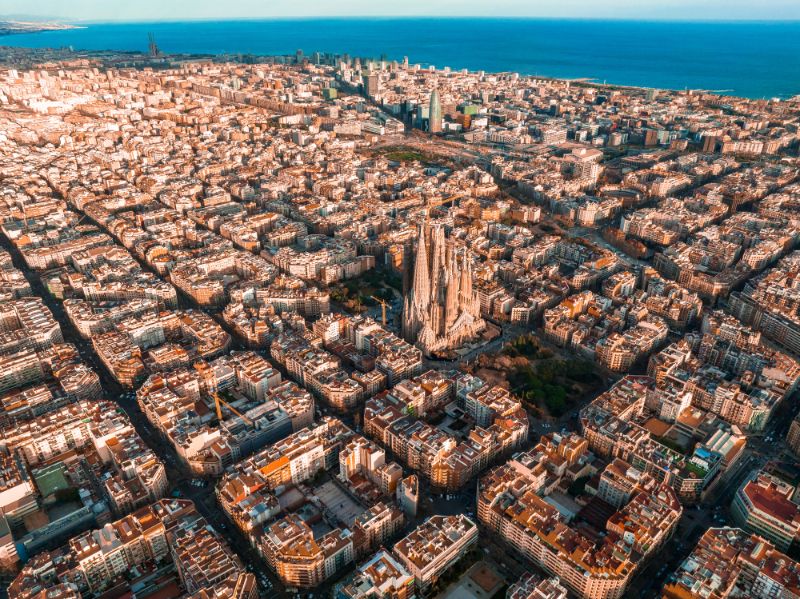
You may not realise it just by walking around the streets, but if you’ve ever seen a photograph of Barcelona from above, you will see that the whole Eixample district was designed in a series of grid blocks, sliced through by Diagonal, a wide avenue which runs diagonally across the Eixample neighbourhood.
Eixample means extension in English, and the Eixample is just that – an extension of the old town as the population was vastly outgrowing the old city walls. In 1855, the city held a competition to design the new extension of Barcelona, and the competition was won by another person, but in the end, a civil engineer named Ildefons Cerdà was tasked with creating a new Barcelona outside the old city.
Cerdà had a unique approach to planning and is now considered the founder of modern town planning. He was the first person to use the term urbanisation, and his design for the square blocks of the Eixample revolutionised how people would live, work and socialise in the city.
Nearly 200 years on, the Eixample is undergoing some changes once again, with the creation of a network of green hubs and squares where pedestrians have priority. According to Barcelona City Council, these Superillas or “Superblocks” will transform the Eixample into a “healthy, greener, fairer and safer public space that promotes social relations and the local economy”.
La Rambla
You can’t talk about things Barcelona is known for without mentioning La Rambla, the most famous street in Barcelona. La Rambla is also known as Las Ramblas, as it is actually a series of streets that follow one another, stretching from Plaça de Catalunya to the Columbus Monument at Port Vell. There is even La Rambla del Mar which crosses the street and continues over the water.
La Rambla is a great place if you like street photography, with the human statues close to the Columbus Monument providing entertainment and some great photo opportunities. All along Las Ramblas, there are different things to see and visit, including the iconic Boqueria Market, the Liceu Theatre and the Wax Museum.
Be sure to look up at the buildings on either of La Rambla as you walk – the Liceu Theatre is lovely when it is lit up at night, and don’t miss Casa Bruno Cuadros with umbrellas, fans and a Chinese-style dragon perched on the side of the building.
Look down too, for the ground mural designed by Joan Miro and a memorial plaque dedicated to those who were killed and injured in the 2017 terrorist attacks in the city. The 12-metre long plaque is laid into the pavement and carries the words ‘May peace cover you, oh city of peace’, written in Arabic, Catalan, Spanish and English.
La Rambla is also the busiest street in Barcelona, and notorious for pickpockets, so keep a close eye on your belongings as you wander!

Beautiful Beaches
Barcelona and beaches go hand in hand – there aren’t many major cities in the world where you can walk from the city centre to a sandy beach within half an hour, but you can in Barcelona. While Barcelona’s beaches aren’t necessarily the cleanest, they are very popular, and a lovely place to take in the sunshine in Barcelona.
Barceloneta is the busiest beach in Barcelona, as it is closest to the metro station and most convenient for many people coming from the city. In general, though, the further out of the city you go, the cleaner and quieter the beaches in Barcelona become, so if you want to stretch your legs and get some exercise, I love to cycle or walk along the beachfront and just stare out to sea.
Even in the winter, seeing a swathe of blue always makes me feel calmer and more relaxed than being in the busy city!

Catalan Culture & Language
Did you know that Barcelona has two official languages? Barcelona is the capital of the region of Catalonia, which has Catalan as the official language as well as Spanish. Catalan is a romance language that evolved from Latin, and while it is similar in many ways to Spanish and to French (or even a blend of the two), it is a completely different language.
When I first came to Barcelona in my 20s to learn Spanish, it took me a while to get my head around Catalan, and to even begin to differentiate between the two languages! Alongside the language, many aspects of Catalan culture are unique to the region, with traditions, foods, music and dances you won’t find anywhere else.
Castellers (human towers), a dance called the Sardana, and Christmas traditions like the Caganer (a pooping man who is placed in Nativity Scenes) are all parts of Catalan culture and are well worth learning more about.

Fabulous Festivals
Speaking of culture, Catalans know how to throw a party! Throughout the year there are some incredible festivals in Barcelona and the surrounding regions where you can join in local events and activities.
Some of my personal favourites include La Merce in September, a week-long celebration including street parties with live music stages around the city, fireworks and parades, and Las Festes da Gracia in August when locals decorate their streets with elaborate designs, arrange shared dinners and host various other activities including the fire-tastic Correfoc when people dressed as devils dance through the streets with fireworks.
Probably the most beautiful festival in Barcelona is Sant Jordi in April, when tradition states you buy a book or a rose for your loved ones. It used to be that roses were for women and books were for men, but these days it can be either or both, but it is wonderful to see all of the flower and book stalls popping up on every corner and in every square.
Sitges, a seaside town 30 minutes south of Barcelona is known for its fabulous Carnival celebrations in February, and music festivals like Cruilla, Primavera Sound and Sónar bring international stars to the city.

Delicious Food Barcelona is Famous For
While there are plenty of international restaurants in Barcelona to enjoy, sampling Spanish and Catalan cuisine is without a doubt one of the most enjoyable things to do in Barcelona.
You could take a food tour to sample a variety of dishes while you explore Barcelona foodie destinations like the Boqueria Market with a knowledgeable guide, learn to cook some dishes yourself with a cooking class, or try out your pick of the best restaurants in Barcelona.
There is something tasty to suit every budget in Barcelona, from cheap eats and tapas served with lashings of cava (Catalan sparkling wine) to market-fresh seafood and the very best Michelin-starred restaurants.
As for what to eat in Barcelona, while I adore paella, try the Arros Negre – seafood rice coloured black with squid ink, best served with a dollop of garlic aioli on the side. Typical Barcelona tapas dishes include La Bomba, a large, round potato croquette filled with minced meat and deep fried, topped with a spicy garlic sauce.
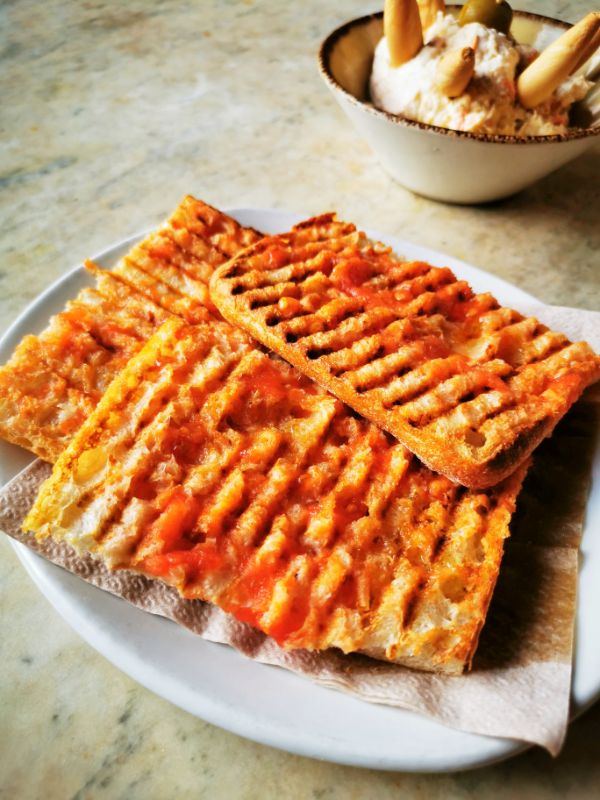
Whatever you choose, order a side of pa amb tomaquet (bread with tomato) the ubiquitous Catalan dish which is as simple as it is delicious – toasted bread rubbed with garlic, smothered with tomato and drizzled with olive oil and a sprinkle of salt: YUM!
Political Demonstrations
Catalonia has had a troubled history, even in recent times. During the dictatorship of General Francisco Franco from the Spanish Civil War until 1975, Catalan culture was suppressed, and the Catalan people fight hard for political and cultural freedom.
This continues to be a challenge for the central government in Madrid, with many Catalans regularly calling for independence from Spain, leading to political unrest. Catalonia held an independence referendum in 2019, which the Spanish Government declared illegal, and charged several leading Catalan politicians with sedition and treason.
Understandably, this provoked outrage in Catalonia and sparked mass demonstrations when the politicians were imprisoned. While they have since been released, political demonstrations are still quite common, especially on September 11th, Catalonia’s national day.
While these are largely peaceful, some demonstrators have clashed with police, and gatherings can turn violent, so while they are a spectacle, it is best to keep your distance.

Climate & Location
Barcelona sits on the Mediterranean and the warm climate makes the city a wonderful destination to visit at any time of year. Temperatures of 20°C / 68°F during the winter aren’t unheard of, and with around 50 days of rain a year, if you’re looking for some sunshine, then Barcelona is the perfect place for you.
Barcelona is unique for its location, which means you have a variety of landscapes within an hour or two of the city. Known as the city between “el mar y la montaña” (the sea and the mountains), you can spend the morning at the beach, the afternoon hiking in the hills and then go skiing in the mountains!
Visiting 3 countries in one day is also possible in Barcelona, with breakfast in Spain, lunch in France and dinner in Andorra – there are even day trips from Barcelona with that itinerary so you can make the most of your time here – yet another tempting reason to visit Barcelona!

World-Class Museums & Art
There are some incredible museums in Barcelona, and something for everyone to enjoy and soak up some knowledge and culture. While most museums charge an entry fee, there are some free museums in Barcelona and some days of the week or month when you can visit many more for free.
The FC Barcelona Museum is Europe’s most visited museum and a must for football fans. For history buffs, Barcelona History Museum (MUHBA) has several locations around the city showcasing impressive remnants of Barcelona’s past from Roman ruins beneath the city to civil war bunkers on the hills of Carmel. The Maritime Museum is also fascinating, showcasing Barcelona’s seafaring history.
The most famous art museums in Barcelona include the Picasso Museum, which has pieces by Pablo Picasso throughout all stages of his life and the Barcelona Museum of Contemporary Art (MACBA), where you can enjoy a range of works from some of the world’s most famous modern artists.
The National Museum of Catalan Art (the MNAC) in Montjuic is filled with art from Catalonia, and is also a beautiful building in its own right. The Magic Fountain below the museum is a popular attraction in Barcelona, recently re-opened after several years out of action due to drought.
The Joan Miró Foundation is another wonderful art museum in Barcelona, showcasing colourful works by the artist. Salvador Dalí is often mentioned when talking about art in Barcelona, and although there is no museum dedicated to him here, you can take a day trip to Figueres to visit the Dalí Museum there.
Street art is popular in Barcelona too, with various sculptures and public works by artists including Joan Miró, Roy Lichtenstein and Keith Haring, as well as hundreds of colourful murals and street art across the city.

Shopping
If you’re looking for a fabulous European destination for shopping, look no further than Barcelona. Barcelona city center is filled with shops to suit every budget, taste and style. Head to the Gothic and Born neighbourhoods with narrow streets like Carrer dels Banys Vells for independent boutiques selling cool clothes and artisan goods as well as souvenirs.
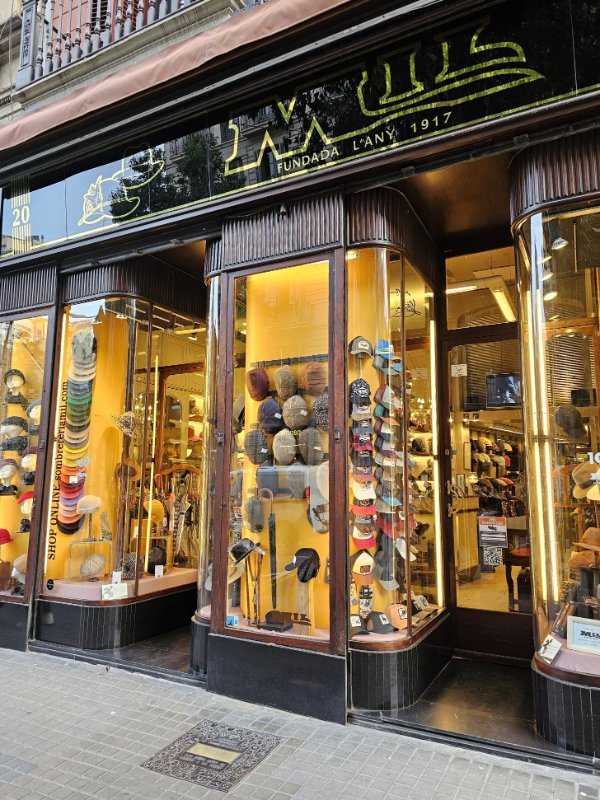
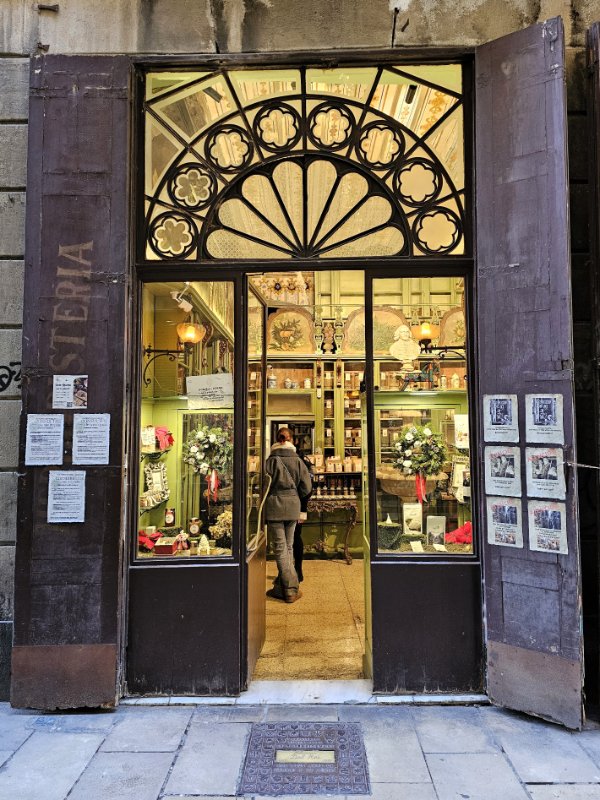
Some of my favourite shops in Barcelona are traditional businesses that have survived for more than 100 years, and have been named as Emblematic Businesses. If you see a special plaque on the pavement in front of the shop, this is usually a sign it is an Emblematic Business, so go in and take a look! Some examples include the Herbolista del Rei, which sells herbal teas and handmade toiletries, Casa Gispert, which sells roasted nuts, dried fruits and other local gourmet products, and Mil hat shop.
Keep your eyes open for street markets that pop up around Sagrada Familia, Plaça Catalunya, La Rambla and Port Vell, among others, and the Arenas Mall was converted from an old bullfighting ring into a shopping centre if you want to shop somewhere unusual!
For high-end and designer brands, Passeig de Gràcia is the place to go. This wide avenue in the Eixample is lined with stores from names like Armani, Burberry, Louis Vuitton, Jimmy Choo and many more. If you can’t afford to buy, even window-shopping in Barcelona can be enjoyable! Especially if you finish your day with a drink in one of the rooftop bars.
Overtourism
While there are many reasons to visit Barcelona, it is important to do so responsibly. Barcelona is such a popular destination that pre-pandemic it was suffering from the sheer volume of visitors who flocked to the city, and is again in a similar position as travel is opening up again.
However, instead of simply telling you not to visit Barcelona, I want to help you to do so sustainably. I have a separate article dedicated to the problems (and possible solutions) of overtourism, including advice for visiting outside of the peak summer season as well as planning what to do in Barcelona to have a minimal negative impact on the residents.
Other suggestions include things like supporting local businesses and spending more time in the city instead of just whizzing around the top sights in Barcelona, so please do check that out for tips!

While I hope this has given you some insight into what Barcelona is known for, the city has so much more to offer than the most famous sights, activities and things to do. When you visit Barcelona be sure to take time to discover the city beyond the tourist sites and explore more!