
Want to know what to eat in Barcelona? There is some incredible food in Barcelona, but sometimes it’s hard to know where to find it, and then how to choose from the huge menus! So many people end up eating in tourist traps on La Rambla so I’m here to help you avoid that with my essential Barcelona food guide! We’ve got the tastiest traditional Catalan dishes you MUST try in Barcelona, including my personal favourite Catalan foods, and some classics that will have your tastebuds tingling!
How to Find the Best Food in Barcelona
There are hundreds of restaurants in Barcelona, from traditional tapas bars and bodegas to modern Michelin-starred restaurants, there are countless options for any taste and budget.
However, choosing the right restaurant when visiting Barcelona can be tricky, as the city is full of tourist traps serving frozen paella, and overpriced eateries where you pay an arm and a leg for below average food. To make sure you have the best possible experience, it’s important to do some research before your trip.
My Favourite Food Tours in Barcelona
At a glance, these are my top 3 favourite Barcelona food tours:
- Ultimate Barcelona Food Tour: Taste Barcelona’s Most Iconic Bites – my number 1 recommendation, this tour hits all the highlights, including tapas tastings, a market visit, and paella in Barceloneta!
- Gracia Neighbourhood Food Tour – discover a less-touristy neighbourhood of Barcelona with these local spots in Gracia.
- El Born/Gothic Quarter Wine and Tapas Bar Tour – choose between lunch and dinner time tours on this classic old town food tour in Barcelona
And can check out the full list of the best Barcelona food tours here.
Do Your Research
First of all, check out the reviews online for the restaurants in the area; this will give you an idea of what other travellers have experienced during their visit. However, using a site like Tripadvisor will only give you a picture of what tourists say – I prefer using Google Maps as there is usually a mix of reviews from visitors and locals.
As you’re reading this Barcelona food blog post you’re doing more by looking into local recommendations from friends or travel guides so great job! We know which places are truly worth checking out!
If possible, try to talk to locals that you meet and ask them where they like to eat (not where they recommend that you eat as they’re likely to be different!) – chances are they’ll know the best spots that tourists don’t usually find.
Finally, as you don’t judge a book by its cover, don’t judge a restaurant by how it looks from the outside – some of the best foodie gems in Barcelona are behind those simple, unassuming doorways.
By following these tips you should be able to find a great place to eat and enjoy some of the best food in Barcelona. However, if you prefer to have some guaranteed delicious experiences, join a food tour in Barcelona so you can be guided around some incredible restaurants and bars.

Join a Food Tour in Barcelona
One of my favourite ways to learn about food in a new destination is to join a food tour and have a knowledgeable guide explain the basics. I usually try to do this near the start of my visit so I have a good idea of what to eat during the rest of my trip. There are lots of food tours in Barcelona to choose from, or you could try a market tour and cooking class to learn how to cook up some delicious Catalan dishes yourself!
Devour Tours in Barcelona
Devour have some fantastic Barcelona food tours to choose from, each one focussing on a different style of food and drink in Barcelona, and with different neighbourhoods to explore. This one is my personal favourite as it has a wider variety of food options to try, but you can browse all of their food tours here.
- The Ultimate Barcelona Food Tour by Devour Tours combines a market visit with tapas tastings in the El Born neighbourhood and ends with a traditional paella in Barceloneta so you get to try a wide range of foods. It’s quite rare to have paella included on a food tour so I love how this one combines tapas and paella in one food-filled adventure! ➡️Check prices and availability here.
These are some more of my favourite food tours and cooking classes in Barcelona:
What to Eat in Barcelona: Traditional Catalan Dishes
OK so let’s get down to business! As I have already mentioned, there is a wide variety of tasty food to try in Barcelona but these are some of my personal favourites:
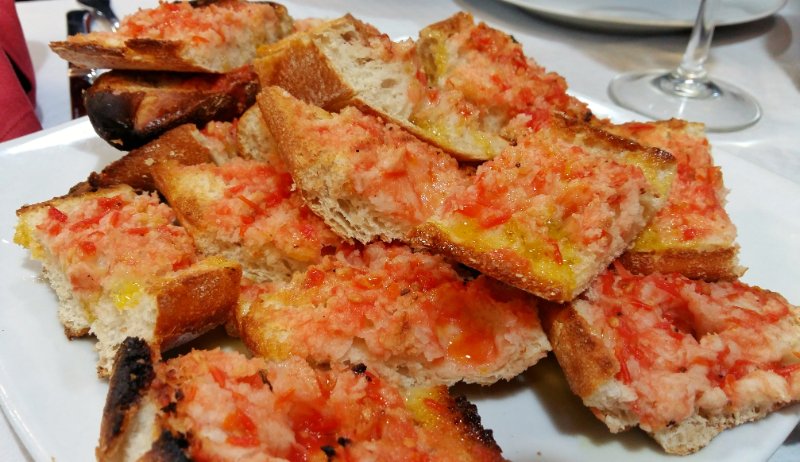
Pa amb Tomàquet – Bread with Tomato
One of the most commonly eaten foods in Barcelona, pa amb tomàquet (or pan con tomate in Spanish) is so simple to make and also very delicious. In principle, all you have to do is take pieces of bread, lightly toast them and rub garlic and tomato over the bread, drizzle with olive oil and sprinkle with salt.
Despite it being so simple, every tapas bar and restaurant has its own special way of making it. Some will serve you the separate ingredients and you make your own, while most will serve it already prepared. The key to a good pa amb tomàquet is in the type of bread used, and the type of tomatoes.
For me, the bread should be a little crispy so you have a good surface to rub the tomato on, although if you have pre-prepared tomato puree then you can apply it with a spoon. The tomatoes should be ripe and juicy.
Pa amb tomàquet can be served as a tapa, or as an accompaniment to pretty much any dish on a Catalan menu. Most bocata sandwiches also come with tomato instead of butter, adding moisture and flavour to the sandwich.
What to Eat in Barcelona: A Bomba
A Bomba is a Barcelona speciality and a staple on all good tapas menus in the city. Originally said to have been invented in the Barceloneta neighbourhood, at a tapas bar called La Cova Fumada, a bomba is a ball of mashed potato filled with meat and deep-fried.
This tasty ball is served with a spicy sauce and often with aioli garlic sauce too. I’ve heard different stories as to the origin of the name bomba – which means bomb in English – as some say the bomba was specifically designed to be the shape of a bomb, served with an explosive spicy sauce ignited with a fuse of allioli, referencing the anarchist revolutionaries who used Barceloneta’s tavern-filled streets to plot attacks against fascist forces in the city.
Others say the name came from a customer who ate the particularly plump, round croqueta and exclaimed “¡Que picante, es una bomba!” – This is so spicy it’s like a bomb! I personally prefer the first story, but no matter what the origin of this tasty tapa, it’s one food you certainly have to eat in Barcelona.

Jamón Ibérico
Thinly sliced cured ham from the Iberian pig, Spanish ham is delicious and a must-try in Barcelona. You will see the legs of ham hanging from hooks in bars, restaurants, markets and Xarcuterias (butchers).
If you have time to sit and enjoy it, order a plate of ham and a tapa of bread with tomato so you can savour every mouthful! Or if you’re in a hurry you can find snacks at the Boqueria Market and other take-aways served in a paper cone as a snack (often with Manchego cheese) or in a bocadillo sandwich.

Patatas Bravas
Fried potatoes served with a spicy tomato sauce and aioli. A classic tapa found in most bars and restaurants, you can’t miss it! A dish of bravas is a great way to test out a tapas bar if you’re not sure how good it is. If they can’t make a good bravas then don’t trust the rest of the menu!
Despite being such a simple dish, there are always variations on a classic. Whether they go for small potatoes that are fried whole or create a unique sauce, every plate of patatas bravas I’ve tried has been slightly different.

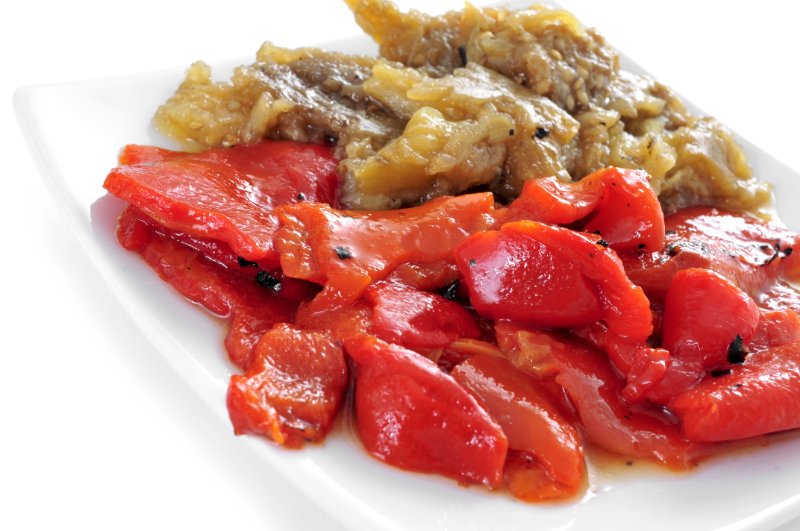
Escalivada
Escalivada is a traditional Catalan dish made from roasted vegetables, typically red peppers, aubergines (eggplants), onions, and tomatoes. The name comes from the Catalan word “escalivar”, meaning “to cook in ashes,” as the dish was traditionally prepared by roasting the vegetables over an open fire or in hot embers.
Once roasted, the vegetables are peeled, sliced into strips, and drizzled with extra virgin olive oil, salt, and sometimes garlic or vinegar for extra flavour. Some variations also include anchovies or olives for added depth.
Escalivada is usually served cold or at room temperature as a starter or side dish often eaten toasted bread. It can also accompany grilled meats or fish, or even be served with romesco sauce for an extra burst of flavour.
Esqueixada de Bacallà
Esqueixada de Bacallà is a refreshing Catalan salad made with shredded salt cod (bacallà), tomatoes, onions, olives, and olive oil. The name esqueixada comes from the Catalan verb “esqueixar,” which means “to tear or shred,” referring to the way the salt cod is hand-pulled into bite-sized pieces rather than being cut with a knife.
This dish is served cold and is especially popular in the hot weather over summer due to its light and fresh flavours. The salt cod is traditionally soaked in water for at least 24 hours to remove any excess salt before being combined with ripe tomatoes, finely sliced onions, black olives, and sometimes green peppers.
A drizzle of extra virgin olive oil ties everything together, and some variations include hard-boiled eggs or red wine vinegar for an extra tangy kick. It’s commonly enjoyed as a starter or light main course, usually accompanied by crusty bread or served as part of a tapas meal.
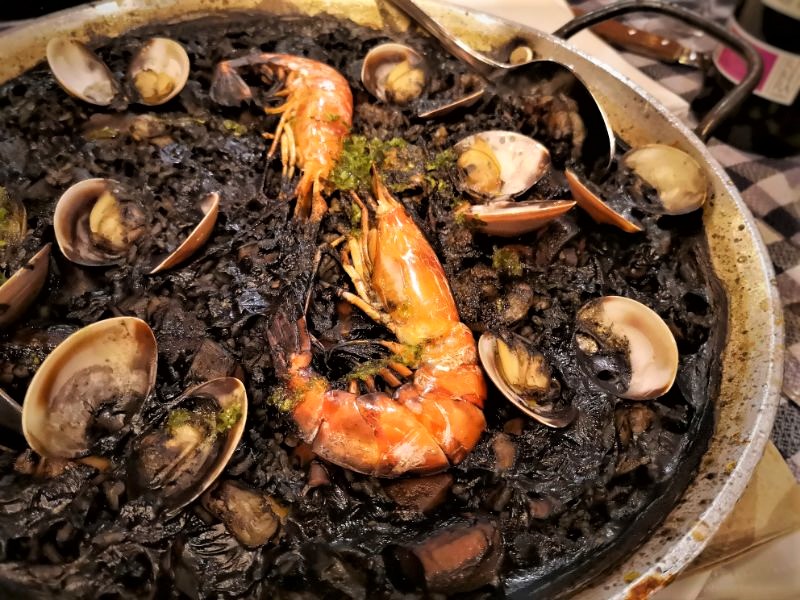
Arròs Negre – Black Rice
Instead of the usual paella (which comes from Valencia), try this delectable dish instead. While black rice might not sound particularly appetising, once you realise that the colour comes from rich squid ink that gives this dish an incredible seafood flavour, it sounds much tastier!
Squid and cuttlefish are the main ingredients along with the rice, and you’ll often find clams and prawns mixed in there too. Serve with a dollop of garlic allioli (garlic mayonnaise) to give an extra depth of flavour – just make sure to wipe your mouth afterwards as the black ink can turn your teeth black too!
YOU MAY ALSO LIKE: Where to Find Paella for One Person in Barcelona
Fideuà
Fideuà is a traditional Catalan-Valencian seafood dish that is similar to paella, but instead of rice, it is made with short, thin noodles called fideus. Originating from the coastal town of Gandia in Valencia, fideuà has become a popular dish in Barcelona and throughout Catalonia, especially in seafood restaurants along the coast.
The dish is typically cooked in a large, shallow paella pan, where the noodles are toasted in olive oil before being simmered in a rich seafood broth. It is usually prepared with a mix of prawns, squid, cuttlefish, and mussels, along with garlic, tomatoes, and sometimes a touch of saffron or pimentón (smoked paprika) for added depth – and a generous side of allioli!

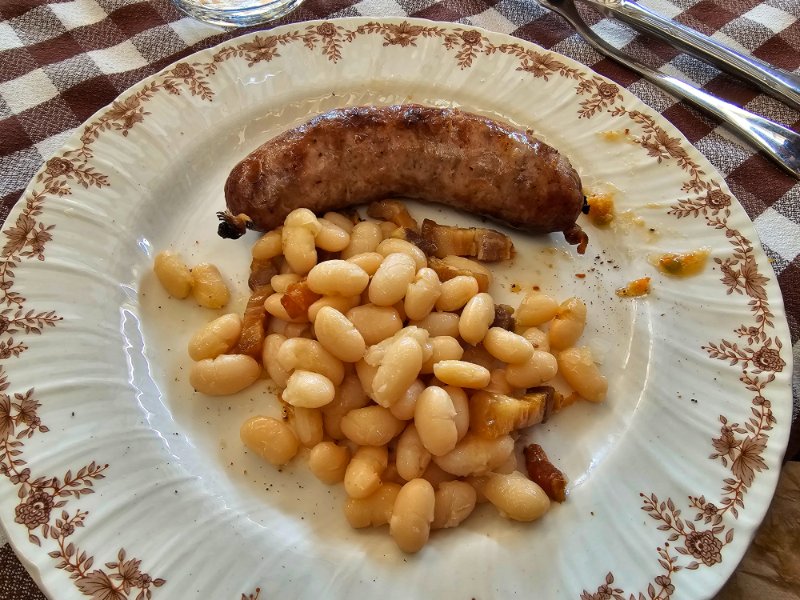
Botifarra amb Mongetes
Botifarra amb Mongetes is a classic Catalan dish featuring grilled botifarra sausage served with white beans. It’s a simple yet hearty meal that uses traditional Catalan flavours and ingredients.
Botifarra is a type of pork sausage, typically seasoned with salt and pepper, though some variations include garlic or spices. It has a rich, meaty flavour and a slightly coarse texture. The mongetes (white beans) are usually pan-fried with garlic and olive oil, and some versions also include parsley or a touch of pimentón (smoked paprika) for extra flavour.
This dish is classic Catalan comfort food and is often enjoyed in traditional restaurants, countryside masias (farmhouse restaurants), or at calçot barbecues (more on that below!).
Seasonal Foods to Eat in Barcelona & Catalonia
With a heavy reliance on seasonal, local produce, there are various traditional Catalan dishes which you can only find at certain times of the year. If there is something here you really want to try, time your visit to match the season and dive into some of these delicious dishes!
Calçots
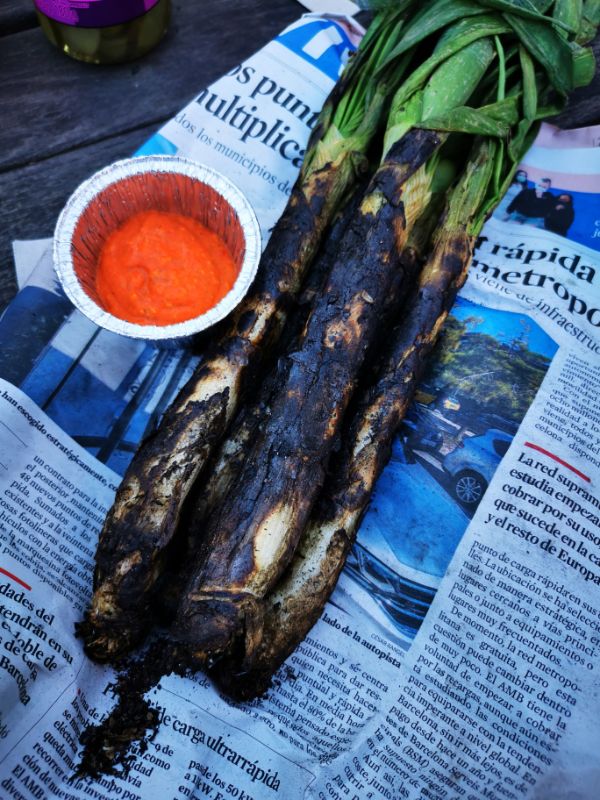
Calçots are a Catalan delicacy and are a special foodie experience to enjoy in January, February and March. They are basically a cross between a leek and a spring onion, and these long, thick onions are grilled over an open flame until black, then wrapped in newspaper to cook through.
The result is a delicately flavoured vegetable that, once separated from the charred outer layer, is dipped in thick romesco sauce and devoured. It’s hard to describe the joy you can get from pulling a sweet onion from its blackened shell and dangling it over your mouth. YUM!
Calçots are best enjoyed as part of a larger barbecue, with botifarra sausage and white beans as a traditional main course, usually accompanied by copious amounts of red wine or cava in my case!
During calçot season you can find community Calçotadas to attend, or many restaurants have them on the menu which isn’t as much fun but a great opportunity to try them.

Escudella i Carn d’Olla
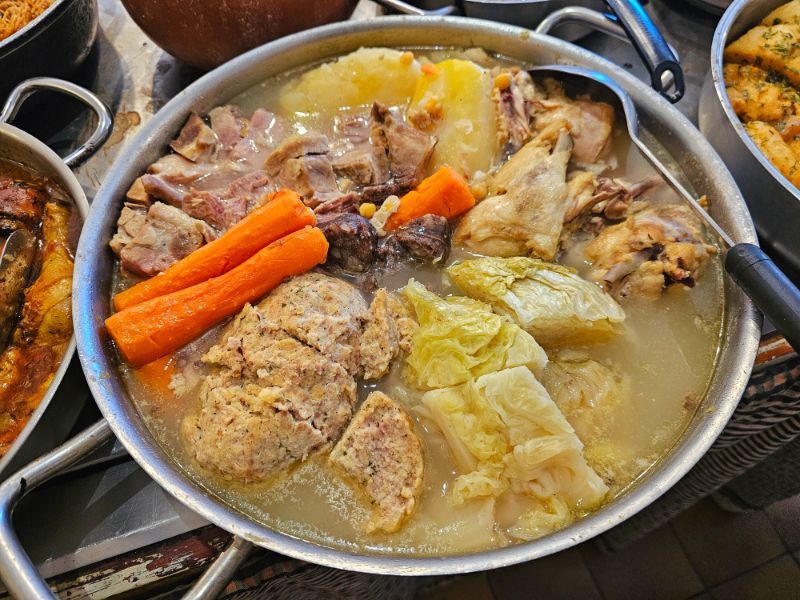
This is a traditional Catalan Christmas dish, which is a broth containing a variety of meats and vegetables. You can either eat it all at once or have the meat and vegetables as one dish, and then the broth with large pasta shapes called “galets” (known as sopa de galets) separately. It is a festive staple in many Catalan households and is utterly delicious!
Canelons
In Catalonia, it’s a tradition to serve canelons (cannelloni) on December 26th – Saint Stephen’s Day. These pasta tubes are stuffed with the leftover meat from the Christmas day escudella, and served baked in a creamy bechamel sauce.
While traditionally a winter dish, you can find canelons in many traditional Catalan restaurants and tapas bars all year, but especially throughout December.

Roasted Chestnuts
Buy some roasted chestnuts (castanyas) from one of the stalls around the city, a tradition around the 31st of October for La Castanyada. You’ll often find roasted sweet potatoes alongside the chestnuts, another typical winter food in Barcelona and a warming street food.
Mushrooms (Bolets)
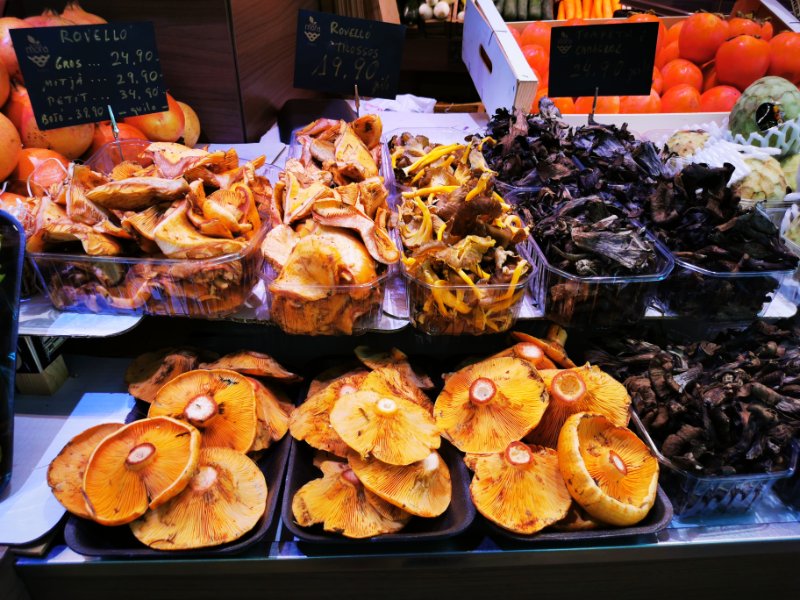
October is mushroom season in Catalonia and you’ll find a variety of these delicious funghi in the local markets. Enjoy dishes featuring local mushrooms, such as wild mushroom risotto, stews, or simple sautéed mushrooms.
Bonus Foods to Try in Barcelona
Catalan cuisine is well known for using all ingredients to their maximum potential, without wasting anything. These Catalan dishes may not be for the faint-hearted but they are certainly traditional!
Cargols a la Llauna
Cargols are snails, a popular delicacy in Catalan cuisine, often enjoyed in rustic, family-run restaurants throughout Barcelona and Catalonia. It’s usually a shared dish to enjoy with friends or family over a long, leisurely meal, or you can often find it as part of a menu del dia.
Cargols a la llauna is the most traditional way of preparing snails. In this dish, the snails are grilled or baked in a metal pan (la llauna) with a generous amount of garlic, parsley, olive oil, and sometimes pimentón (smoked paprika) or herbs.
The result is a smoky, garlicky, and slightly spicy dish, with the snails absorbing the rich flavours of the sauce as they cook. Cargols are typically eaten with toothpicks or special snail forks to extract the tender meat from the shells. The dish is served with crusty bread to soak up the delicious garlic-infused oil.

Cap i Pota
Cap i Pota is a traditional Catalan stew made with slow-cooked beef head (cap) and leg (pota), resulting in a rich, gelatinous, and flavourful dish. It’s a classic example of Catalan peasant cuisine, where every part of the animal is used to create a hearty meal.
The dish is typically prepared by braising the meat for several hours with tomatoes, onions, garlic, paprika, and sometimes white wine or brandy. The slow cooking process makes the meat incredibly tender, and the natural gelatin from the cuts gives the sauce a velvety texture. Some versions include chickpeas or potatoes, and it’s often served with pa amb tomàquet or crusty bread to soak up the rich sauce.
Cap i Pota is a favourite among locals, especially in traditional Catalan restaurants and old-school bodegas in Barcelona. It’s a great dish to try if you enjoy slow-cooked, comforting meals with deep, meaty flavours but if you’re a bit squeamish about what you’re eating you might want to give it a miss.
Morcilla
Morcilla is a type of blood sausage that is popular in many Spanish regions, including Catalonia. It is made by cooking pig’s blood with rice, onions, fat, and various spices such as cumin, paprika, and sometimes herbs. The mixture is then stuffed into a casing, usually made from the pig’s intestine, and cooked or cured before being served.
In Catalan cuisine, morcilla is often served as part of tapas, grilled alongside meats or added to stews for extra richness. A common variation is morcilla de cebolla, which includes onions as one of the main ingredients, giving the sausage a slightly sweet and savoury flavour.
Morcilla has a rich, earthy flavour and a soft, slightly grainy texture from the rice, complemented by the spices. It’s a great dish to try if you enjoy hearty, savoury foods and are looking to explore more traditional Spanish sausages.

Catalan Desserts & Sweet Dishes to Eat in Barcelona
Crema Catalana
You can’t talk about Catalan food without mentioning the iconic Crema Catalana dessert. Similar to the French Crème Brulee, this creamy custard dessert is lightly flavoured with lemon and cinnamon and finished with a caramelized sugar layer that gives the most satisfying sound when you crack into it. A Crema Catalana is the perfect way to end any meal in Barcelona.

Mel i Mató
Mel i Mató is a simple yet delicious Catalan dessert made with mató, a soft, fresh cheese, and drizzled with honey (mel). This dish dates back to medieval times and is a staple of traditional Catalan cuisine, often enjoyed as a light and relatively healthy sweet treat.
Mató is a mild, unsalted cheese made from cow’s or goat’s milk, with a smooth, slightly grainy texture similar to ricotta. It has a delicate, milky flavour that pairs beautifully with the sweetness of the honey. Some variations also include toasted nuts, such as almonds or walnuts, for extra crunch.
Mel i Mató is usually served chilled and is a great option if you’re looking for a lighter dessert after a hearty Catalan meal. It’s commonly found in traditional restaurants and local markets throughout Barcelona, and mató from Montserrat is a particular favourite.

Chocolate & Xurros
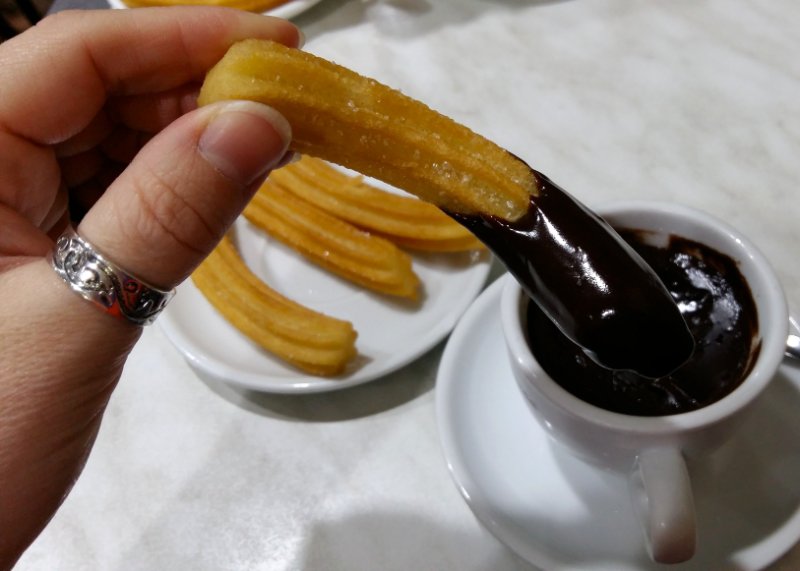
Thick gloopy hot chocolate and long, finger-shaped donuts to dip are a heavenly combination, especially on a cold day.
Xurros (in Catalan) or Churros (in Spanish) are made from a simple dough of flour, water, and salt, piped through a star-shaped nozzle and fried until golden brown. They are often dusted with sugar and can be straight, looped, or spiral-shaped. Long straight ones are best for dipping in hot chocolate!
The hot chocolate in Spain is much thicker than standard drinking chocolate. It’s made with dark chocolate, milk or water, and sometimes cornstarch to create a pudding-like consistency, perfect for dipping churros.
Xurros are a common breakfast or afternoon snack in Barcelona and all over Spain. You can find them in Xurrerías (specialist Xurro shops), cafés, and traditional cafes known as granges. You’ll find some of the best churros and chocolate in Barcelona on Carrer de Petrixol at La Pallaresa or Granja Dulcinea.
Torrons
Torron is a nougat confection made with almonds and honey, and you’ll find a variety of torrons (different types of nougat) and marzipan all year round these days, but especially during the holiday season. These sweets are often enjoyed after meals or as sweet snacks and also make excellent souvenirs to take home.
You can buy torrons in supermarkets and a variety of specialist sweet shops, but my favourite place to get torron is Torrons La Campana on carrer Princesa, which is a family-owned shop that has sold torron and other sweets here for more than 100 years.

Panellets
These small, sweet marzipan-based pastries are traditional for the Castanyada and All Saints’ Day (November 1st) but are enjoyed throughout October and into November. They come in various flavours, often coated with pine nuts (pinyons), and are delicious treats!

What to Drink in Barcelona?
Now we’ve talked about the incredible food to eat in Barcelona, what will you wash it all down with?
Vermut
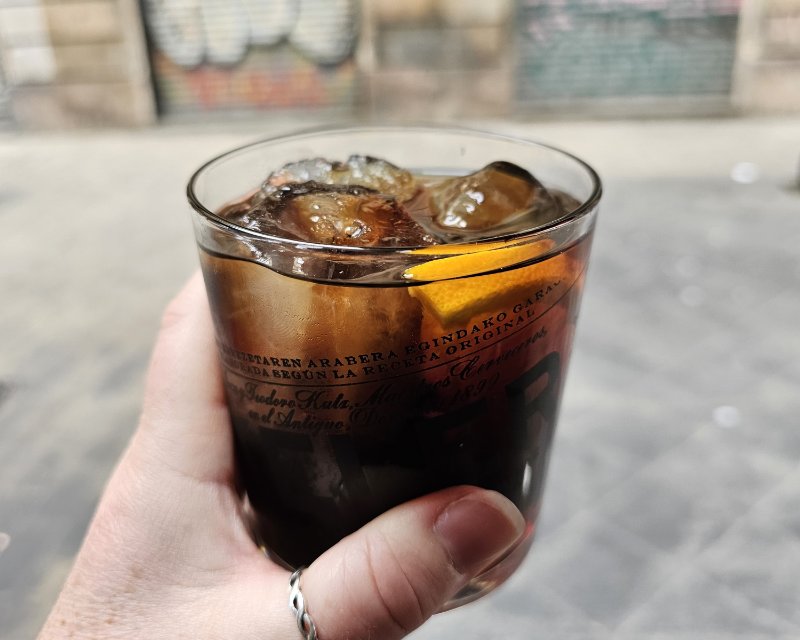
Vermut (vermouth in English) is an aromatised, fortified wine that is infused with herbs, spices, and botanicals. It has a slightly bitter, sweet, and aromatic taste and is typically enjoyed as an apéritif before lunch. In Barcelona, it is usually served over ice with an orange slice and an olive, often served with a sifón of soda water on the side so you can add a splash to your vermut if you like.
Vermut has deep roots in Catalonia, especially in Barcelona and Reus, which was historically one of the most important centres for vermouth production. The tradition of “fer el vermut” (literally “doing the vermouth”) refers not just to drinking vermouth but to the social ritual of gathering with friends or family for a pre-lunch drink, often accompanied by tapas such as olives, potato chips, boquerones (marinated anchovies), or conservas (canned seafood like mussels or clams).
Many bars in Barcelona make their own vermut, so you’ll find lots of different variations as each has their own unique recipe. You can find places to taste different vermuts in Barcelona, or even learn how to make your own!
Cava
Cava is a Catalan sparkling wine, made in the Penedès region close to Barcelona. You can find it everywhere in Barcelona, either by the glass, by the bottle, or in a Cava Sangria which blends the sparkling wine with fruit.
Cava Sangria is a tourist favourite, but a glass of good cava is a must for locals and visitors to try in Barcelona. You can try white sangria or pink rosado sangria, and they are both delicious!
Can Paixano and El Xampanyet are two excellent tapas bars in Barcelona which specialise in cava, served with a variety of delicious tapas dishes. They’re both very popular spots, Can Paixano is definitely more casual as you stand at the bar – you may be lucky enough to snag a table at El Xampanyet.

Catalan Wine
In Catalonia, there are ten wine regions that have been recognized as Denominación de Origen Protegida (DOP) by the European Union. These regions are known for producing high-quality wines that reflect the unique terroir of Catalonia.
You may have heard of Penedès or Priorat wines, but look out for wines from lesser-known regions too like Montsant and Alella. To learn more about Catalan wine I’d highly recommend a wine tasting in Barcelona, or joining a tour to visit some wineries close to Barcelona.
Most wine tours in Barcelona visit wineries in Penedès where you can taste red and white wine as well as cava, or Alella which is often coupled with a boat trip or bike ride along the coast.


Beer
I’m not a beer drinker myself, but there are breweries in Barcelona so you can try some local beers here too. Estrella Damm is the most famous Barcelona beer, and has been brewed here since 1876. You can take a tour of the brewery which includes a tasting of Estrella Damm and other beers.
Moritz is another popular choice, but smaller craft breweries are booming too. Look out for Garage Beer Co and La Cervesera Artesana in particular. Black Lab Brewery is another popular bar which brews its own beer.
Gin
While you’re in town you really need to check out the nightlife in Barcelona. In particular, the cocktail bars in Barcelona are exceptional, with three of the “Best Bars in the World” found in the city it would be a shame to miss out on tasty cocktails and gin.
I say gin specifically because Barcelona really has embraced this tipple as its own. There are specialist gin bars where you can sample gins from all over the world as well as ones distilled right here.
There are a couple of gin distilleries in Barcelona, my favourite is Corpen Barcelona (run by my good friend Brian) and you can arrange a tour of the small distillery and try some of his delicious gin and tonics.

Where to Eat in Barcelona
OK so now we’ve covered what to eat, but where should you eat it? Really whatever you eat in Barcelona just try to make sure it is from a local restaurant or tapas bar, and not a fast food joint with something you normally eat at home!
A general rule is to steer clear of La Rambla and other tourist-heavy areas, although you don’t have to go far of the beaten track to find some excellent Catalan restaurants in Barcelona. Here are some of my favourites:
My Pick of Traditional Catalan Restaurants in Barcelona
If you’re looking for traditional, family-run Catalan restaurants in Barcelona, here are some of the best spots where you can enjoy authentic, home-style Catalan cuisine:
Can Culleretes – The Oldest Restaurant in Barcelona
Location: Carrer d’en Quintana, 5 (Gothic Quarter)
Founded in 1786, this is one of the oldest restaurants in Spain. It’s a family-run spot that serves classic Catalan dishes like escudella i carn d’olla, botifarra amb mongetes, and crema catalana. The historic decor adds to the charm.
Ca l’Isidre – Traditional Food with a Personal Touch
Location: Carrer de les Flors, 12 (El Raval)
A cosy, family-run restaurant where the owner personally greets guests. The menu is seasonal and features high-quality, market-fresh ingredients, with dishes like suquet de peix and canelons.
Cal Boter – Neighbourhood Favourite in Gràcia
Location: Carrer de Tordera, 62 (Gràcia)
A no-frills, old-school Gràcia institution known for its botifarra amb mongetes, snails (cargols), and escudella. It’s a great place to escape the tourist crowds and experience local Catalan dining.
La Pubilla – Best for a Catalan-style Lunch (menú del dia)
Location: Plaça de la Llibertat, 23 (Gràcia, near Mercat de la Llibertat)
Popular for its fantastic lunch menus, this spot serves modern takes on Catalan classics, like bacallà with romesco sauce and canelons.


Can Vilaró – Market-fresh and Homemade
Location: Carrer del Comte Borrell, 61 (Sant Antoni, near Mercat de Sant Antoni)
A small, welcoming restaurant that sources its ingredients directly from the market next door. Expect hearty Catalan stews, fideuà, and the classic cap i pota (slow-cooked beef head and leg stew).
El Disbarat – Rustic and Budget-friendly
Location: Carrer de Montseny, 14 (Gràcia)
A casual, cosy tavern that serves affordable Catalan dishes like esqueixada de bacallà, calçots (in season), and cargols a la llauna (snails grilled with garlic and herbs). A great choice for budget-conscious travellers.
Can Punyetes – Authentic Catalan Grills
Location: Carrer de Marià Cubí, 189 (Sarrià-Sant Gervasi)
A classic Catalan grill house where you can try botifarra, grilled meats, and pa amb tomàquet. The rustic, tavern-like atmosphere makes it feel like an authentic rural Catalan experience in the city.
I hope my Barcelona food guide has given you lots of ideas for what to eat in Barcelona. Have you tried any of these dishes? Which is your favourite? Let me know in the comments!