
How much do you know about Catalan culture? I’m guessing if you’ve never been to Barcelona or Catalonia, probably not much. While you might know that Barcelona is located in the Catalonia region of Spain, you might not realise how different Catalan history and culture are from the rest of Spain. In this post, I’ll summarise some key parts of Catalan culture, explain why it is important to preserve and celebrate them, and show you how to experience Catalan culture in Barcelona.
I love learning about Catalan culture and sharing everything I have discovered! It’s a topic I am passionate about and I hope this overview will give you a taste of what to expect, and encourage you to find out more during your visit to Barcelona.
A Brief Introduction to Catalan Culture
While Catalonia is part of Spain, it hasn’t always been that way, and Catalonia has its own language, traditions, history, and cultural practices that are distinct from the rest of Spain, with some unique aspects you won’t find anywhere else.
By learning about Catalan culture, you are showing respect for the local people and their customs, which will help you to understand more about the place you are visiting. It can also make your stay more enjoyable, as locals usually appreciate it when visitors make an effort to understand and interact with them instead of just doing the typical tourist stuff.

Key Aspects of Catalan Culture
Culture can be defined as “the ideas, customs, and social behaviour of a particular people or society”, and it has many different aspects that are part of everyday life. In Barcelona and Catalonia as a whole, these are some of the key parts of Catalan culture that you might come across:
- Language: Catalan is a Romance language (not a dialect of Spanish!) spoken by somewhere between 9 and 10 million people in Catalonia, parts of Valencia, the Balearic Islands, Andorra, and even in small regions of France and Italy. It is a central part of Catalan identity, and even learning a few words of Catalan can be very useful when communicating with Catalan people.
- Traditions and Festivals: Catalonia is known for its unique festivals, such as La Mercè in September, and Sant Jordi’s Day in April, where books and roses are exchanged as gifts. Festivals in Barcelona are also a great opportunity to see more unique Catalan traditions, such as the Castellers (human towers), Gegants (model giants that are paraded through the streets), and much more.
- Cuisine: Catalan cuisine includes delicious dishes from the mountains and the sea, like fish stew or roasted snails. Unique foods you can only find in Catalonia include pa amb tomàquet (bread with tomato), calçots (a type of green onion eaten in winter & early spring), and crema catalana (a custard dessert similar to crème brûlée).
- Architecture and Art: Catalonia has a strong tradition of art and architecture, particularly Modernisme (Catalan Art Nouveau), exemplified by Antoni Gaudí’s works like the Sagrada Família and Park Güell. The works of artists such as Salvador Dalí and Pablo Picasso, as well as more modern artists like Joan Miró are visible on the streets or in museums around the region.
- Music: Traditional Catalan music includes the sardana dance, often played with a cobla band, and Catalan rumba, a vibrant genre that blends flamenco with Cuban rhythms.
- Political Identity: Catalonia was not always part of Spain, and throughout history has often sought greater autonomy or even independence from Spain, a sentiment that has shaped its political landscape for centuries. While the independence movement seems to have lost momentum in recent years, it is still a topic that many Catalan people feel passionate about.

Repression of Catalan Culture During the Franco Era
One of the reasons why Catalans are so passionate about their culture and traditions is the terrible repression they suffered during the dictatorship of Francisco Franco.
After the Spanish Civil War (1936-1939), General Francisco Franco established a dictatorial regime that lasted more than 30 years until he died in 1975. Franco’s government was characterised by nationalist policies, which aimed to suppress regional identities, languages, and cultures within Spain, and only promoted Castilian Spanish and culture.
Catalonia was one of the regions in Spain that suffered the most during this period, and many Catalan leaders, intellectuals, and cultural figures were imprisoned, exiled, or executed for simply speaking their language and being who they were.
Language Suppression: The Catalan language was heavily restricted by Franco. It was banned in public administration, education, and the media, and only Castilian Spanish was allowed. Publishing books or newspapers in Catalan was forbidden for most of the dictatorship, and speaking Catalan in public spaces could be risky.
Cultural Suppression: Many Catalan traditions, festivals, and symbols were outlawed or discouraged. For example, public performances of the Sardana dance and the display of the Senyera (Catalan flag) were banned.
Political Repression: Catalan political institutions were dismantled, and any movements or expressions of Catalan nationalism were harshly repressed.
Education: The education system was used to promote Spanish nationalism, and Catalan history and culture were either ignored or presented in a negative light. Children were taught exclusively in Spanish, with Catalan banned in schools as well as everywhere else.
As a result, many Catalans who grew up during Franco’s regime were not formally taught how to read or write in Catalan, which severely impacted literacy in the language.

Resistance & Survival of Catalan Culture in Barcelona
Despite the repression, Catalan culture continued to survive underground and in private. Many Catalans maintained their language and traditions in secret, passing them down through families and small community groups. Cultural and intellectual resistance took the form of clandestine publications, secret meetings, and the preservation of Catalan customs at home.
After Franco’s death in 1975, Spain transitioned to democracy, and there was a cultural and linguistic revival in Catalonia. The Catalan language was reinstated as a co-official language along with Castilian Spanish, Catalan was reintroduced in schools, and a robust campaign to promote the language in media and public life began.
Catalan traditions were openly celebrated again, and regional autonomy was restored with the establishment of the Generalitat de Catalunya, the Catalan government.
Today, Catalonia enjoys a high degree of autonomy, and Catalan culture is celebrated in Barcelona and throughout the region, with Catalan widely spoken. However, the legacy of Franco’s repression is still felt, especially in the ongoing debates over Catalan independence.
Some Catalans want complete independence from Spain, while others are happy to have a level of autonomy. Independence is a complex topic that I’m not going to try to tackle here, but when you understand the history, you can appreciate why people feel so strongly about it!
Learning about Catalan culture when visiting Barcelona is not just about being a respectful tourist, it’s about fully immersing yourself in the rich identity of Catalonia and its people. It helps you understand the city on a deeper level, enhances your travel experience, and helps you connect with the local community in a more meaningful way.

33 Must-Do Cultural Experiences in Barcelona
During my time visiting and living in the city, here are some of the best activities to experience Catalan culture in Barcelona and immerse yourself in this rich heritage:
Explore the Espai Moja – Free Catalan Culture Museum
The Espai Moja is just off La Rambla and is a great place to get introduced to Catalan culture in Barcelona. It’s a free interactive museum that showcases Catalonia’s cultural heritage in an easy-to-understand way through visual and audio exhibits.
Collect your “compass” a wristband to scan at each exhibit, which allows you to save anything you are interested in. At the end of your visit, scan your compass at the exit point and you’ll get an email with all of the information you saved. Exhibits include an interactive map of places of interest, seasonal food and recipes, audio clips of historical figures, and a virtual reality headset.
You’ll also get 2-for-1 discount vouchers at cultural museums around Catalonia, including the History Museum of Catalonia and Archaeological Museum of Catalonia in Barcelona, and various archaeological sites in Tarragona, Girona and beyond. ➡️Get more information here.
Visit the Museu d’Història de Catalunya (Museum of Catalan History)
Located in the Palau de Mar at Barceloneta, this museum offers a comprehensive overview of Catalan history from prehistoric times to the modern era. There are interactive exhibits and multimedia presentations, with permanent and temporary exhibitions to enjoy. While you’re here, make sure you go up to the bar on the roof for a drink with a lovely view of Port Vell. ➡️Buy your Museum tickets here.
Explore the Gothic Quarter (Barri Gòtic)
Wander through the narrow, winding streets of this historic neighbourhood and admire the architecture. Visit landmarks like the Barcelona Cathedral (and go up on the roof for great views), Plaça del Rei, and the Roman and medieval remains like the Temple of Augustus to understand the city’s development and significance throughout history.

Visit the Museu d’Història de Barcelona (MUHBA)
The MUHBA has multiple sites across Barcelona, each focusing on different aspects of the city’s history. From the Roman remains at Plaça del Rei to the Refugi 307 air-raid shelter, these sites provide deep insights into Barcelona’s historical evolution and the Catalan experience during key historical periods. ➡️Get more information on the website here.
Book a Cultural Walking Tour with Me!
Since moving back to Barcelona, I’ve been learning everything I can about Catalan culture. It’s important to me to know about where I am living, and to be able to communicate with local people, so I’m taking Catalan classes, I’m learning the Sardana (a traditional Catalan dance) and I’m doing everything I can to immerse myself in the community.
Now I’m excited to share that with you! I have launched Barcelona Culture Tours with Claire, offering private cultural walking tours in El Born. El Born is my neighbourhood, I live here and I love sharing my favourite places to visit! We’ll go beyond the usual tourist sites as you discover Catalan culture through food, history, language and traditions.
Visit the El Born Cultural Centre
Now officially part of the MUHBA, this cultural centre in the Born neighbourhood is in a former market and contains archaeological remains of Barcelona from the early 18th century. It is free to go inside to look down on the remains, or you can join a guided tour to learn more about the city’s past.
The site is particularlarly important to understand what happening during and after the War of Spanish Succession and its impact on Catalonia. This is a topic I cover during my cultural walking tours in El Born – book a private tour with me to learn more!

Discover Jewish Heritage in Barcelona
Discover the lesser-known history of Barcelona’s Jewish community by visiting the old Jewish quarter (El Call) in the Gothic Quarter. The Sinagoga Major, one of the oldest synagogues in Europe, and the MUHBA El Call museum offer insights into this important part of Barcelona’s past.
Visit the MUHBA for free on the 1st Sunday of the month or after 3pm every Sunday – get more details about other free museums in Barcelona HERE
Experience a Local Festival
There are festivals throughout the year in Barcelona which are a great way to experience the best of Catalan culture.
Major Barcelona Festivals like La Mercè in September, La Festa Major de Gracia in August, and Santa Eulalia in February are a lot of fun and you can see demonstrations and performances of Catalan traditions like castells (human towers), correfocs (fire runs), and music and dance.
Other significant days like Sant Jordi (St George’s Day on 23rd April) and La Diada De Catalunya on September 11th are other important festivals with unique aspects. Sant Jordi is known as the day of roses and books, when some 500 stalls selling roses and books pop up around the city.
La Diada de Catalunya commemorates the events of the defence of Barcelona during the Spanish War of Succession in 1714, when Barcelona finally fell to the forces of Philip V and Catalonia lost its institutions and laws. That is usually marked with demonstrations or gatherings in Plaça de Catalunya and Catalan flags flying all of the city.

Watch a Sardana Dance Performance
The Sardana is the traditional Catalan dance, symbolising unity and pride. You can often find locals dancing the Sardana in front of the Barcelona Cathedral on weekends, where visitors are welcome to watch. Performances are usually on Saturdays at 6:30pm, and Sundays and holidays at midday. The dance steps aren’t easy to pick up though, so it’s best to watch instead of joining in and risk ruining everyone’s rhythm!
Visit the Palau de la Música Catalana
This UNESCO World Heritage site is a stunning example of Catalan modernist architecture, this time designed by Lluís Domènech i Montaner (not Gaudí!). It was built between 1905 and 1908 and has an incredible stained glass roof inside, as well as beautiful details throughout.
A self-guided tour is €18 and you can explore at your own pace – with plenty of time to take photos of this stunning place which is definitely one of the most beautiful places in Barcelona!
If you prefer, a guided tour is €22 per person and lasts for just under an hour, and is well worth the money. The last tour of the day is at 3pm (check the times and availability) so be careful not to miss your slot.
You could also buy tickets for evening performances if they match your travel dates, check the schedule here.

Explore Montjuïc and the Museu Nacional d’Art de Catalunya (MNAC)
Montjuïc, the hill overlooking Barcelona and the coastline, is a lovely area to explore on a sunny day, with gardens, museums and various other attractions.
For history buffs, Montjuïc Castle is a historic fortress perched on the summit that dates back to the 17th century and showcases Barcelona’s military history as well as panoramic views of the city and the Mediterranean Sea.
There is plenty to see and do for art lovers too, with the Fundació Joan Miró for modern art, and the Museu Nacional d’Art de Catalunya (MNAC) housed in the impressive Palau Nacional which houses an extensive collection of Catalan art from the Romanesque period to the 20th century. The view from the Palau Nacional of the Magic Fountain, Plaça Espanya and Tibidabo beyond should not be missed.
The Magic Fountain of Montjuïc is a stunning light and water show that takes place in front of the National Palace. It’s a free event and is a must-see if you’re in Barcelona at night, and the shows have recently restarted after being out of action for several years due to drought.
While you’re exploring Montjuic, keep an eye open for El Teatre Grec, a stone amphitheatre which hosts music festivals and live performances.
Poble Espanyol, which translates to “Spanish Village” in English, is an architectural open-air museum located in Barcelona, Spain. It was built in 1929 for the Barcelona International Exposition as a showcase of the diverse architectural styles and cultures across Spain, which is interesting to compare with those of Catalonia.
Discover Gaudí’s Masterpieces
You can’t come to Barcelona and not see some of Gaudí’s works, even if you don’t plan to visit them, you will come across them somewhere! La Sagrada Familia Cathedral is Barcelona’s most famous landmark and the emblem of the city. It is still unfinished some 140 years after construction began, and is probably the most famous building site in history!
Even just viewing this magnificent cathedral from the outside is an experience, but I’d highly recommend paying to go inside La Sagrada Familia to truly appreciate this incredible place.
Make sure you buy your tickets in advance as there is no longer a ticket office on site. I’d also recommend taking a guided tour as you will learn a lot more about Gaudí and his designs, and have as much time as you like after the tour to wander around.
My other personal favourite is Park Güell, originally designed to be a kind of housing estate, it is now a park with a magical mosaic dragon, fairytale style buildings and a mosaic terrace with fabulous views of the city. Get there early to take photos before the crowds arrive!
Aside from these, you could also pay a visit to La Pedrera (Casa Mila), Casa Batlló, Palau Guell and more.


Learn about Catalan Language and Literature
Visit the Biblioteca de Catalunya, housed in a former hospital, to explore the history of the Catalan language and literature. The library hosts exhibitions and events that highlight Catalonia’s literary heritage, and there is free entry to the temporary exhibitions or you can book a guided tour for €25 per group.
If you are staying in Barcelona for an extended period, you can take free Catalan courses with the Consortium for Linguistic Normalisation (website in Catalan only, so use Google Translate), or there are various online options available to learn Catalan at your own pace. I’m leaning Catalan using Duolingo, but that is only available if you already speak Spanish.
Eat Traditional Catalan Cuisine
Catalan food is delicious and takes inspiration from the bountiful produce from the mountains and the sea. Try traditional Catalan dishes such as escalivada, botifarra, calçots, and the sweet crema catalana. Eating at Catalan restaurants, joining a food tour or participating in a cooking class will show you more of Catalonia’s culinary heritage.

Join a Food Tour in Barcelona
One of my favourite ways to learn about food in a new destination is to join a food tour and have a knowledgeable guide explain the basics. I usually try to do this near the start of my visit so I have a good idea of what to eat during the rest of my trip.
There are lots of food tours in Barcelona to choose from, or you could try a market tour and cooking class to learn how to cook up some delicious Catalan dishes yourself! Devour Tours in Barcelona Devour have some fantastic Barcelona food tours to choose from, each one focusing on a different style of food and drink in Barcelona, and with different neighbourhoods to explore.
This is my personal favourite as it has a wider variety of food options to try, but you can browse all of their food tours here.
- Tastes and Traditions of Barcelona Food Tour by Devour Tours combines a market visit with tapas tastings in the El Born neighbourhood and ends with a traditional paella in Barceloneta so you get to try a wide range of foods. It’s quite rare to have paella included on a food tour so I love how this one combines tapas and paella in one food-filled adventure! ➡️Check prices and availability here.
These are some more of my favourite food tours and cooking classes in Barcelona:
Attend a Calçotada
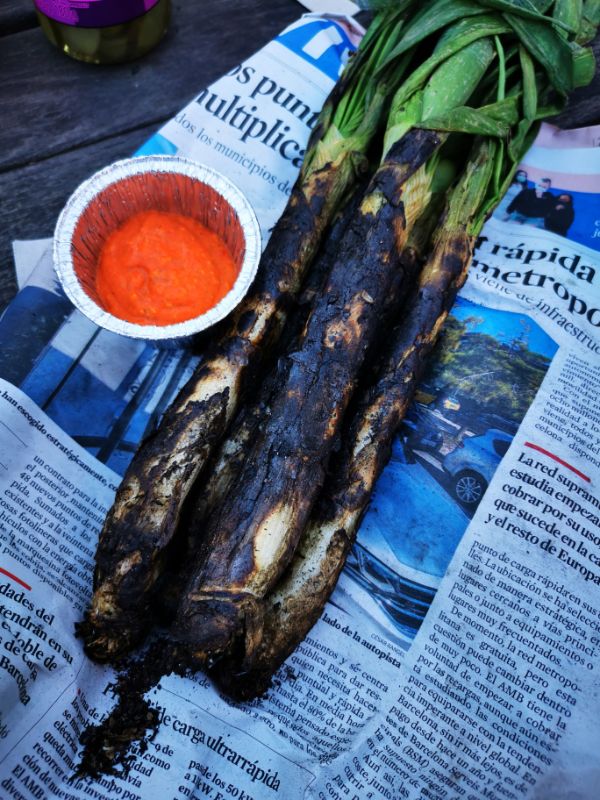
If you are visiting Barcelona in the winter, seek out a traditional calçotada, a sociable meal centred around the calçot, a type of green onion that is barbecued over an open flame until black, then wrapped in newspaper to cook through.
The result is a delicately flavoured vegetable that, once separated from the charred outer layer, is dipped in thick romesco sauce and devoured. It’s hard to describe the joy you can get from pulling a sweet onion from its blackened shell and dangling it over your mouth, they are truly delicious – if a little messy!
Calçots are best enjoyed as part of a larger barbecue, with botifarra sausage and white beans as a traditional main course, usually accompanied by copious amounts of red wine or cava in my case!
During calçot season you can find community Calçotadas to attend, or many restaurants have them on the menu which isn’t as much fun but a great opportunity to try them. These events are a deeply rooted Catalan tradition, often celebrated with friends and family in rural settings or local restaurants.
Take a Catalan Cooking Class
Go beyond tasting Catalan food by learning how to cook it. Many local chefs offer cooking classes where you can prepare traditional dishes like pa amb tomàquet, suquet de peix, or crema catalana, providing hands-on insight into the region’s culinary traditions.
Experience the Cava and Wine Culture
Take a trip to the Penedès wine region just outside Barcelona, which is known for producing cava, Catalonia’s sparkling wine. Many vineyards offer tours and tastings, or you can join a wine tour from Barcelona, which includes transport and usually a delicious lunch too!
Penedès is one of 10 DOP wine regions in Catalonia, which each has its own unique characteristics and wine styles. Alella DO is just outside Barcelona, close to the Mediterranean Sea and another great option to explore. The wines produced here are mainly white, made from Pansa Blanca and Garnacha Blanca grapes. ➡️Check out this incredible picnic & wine tasting in Alella!

See the Gegants Dance
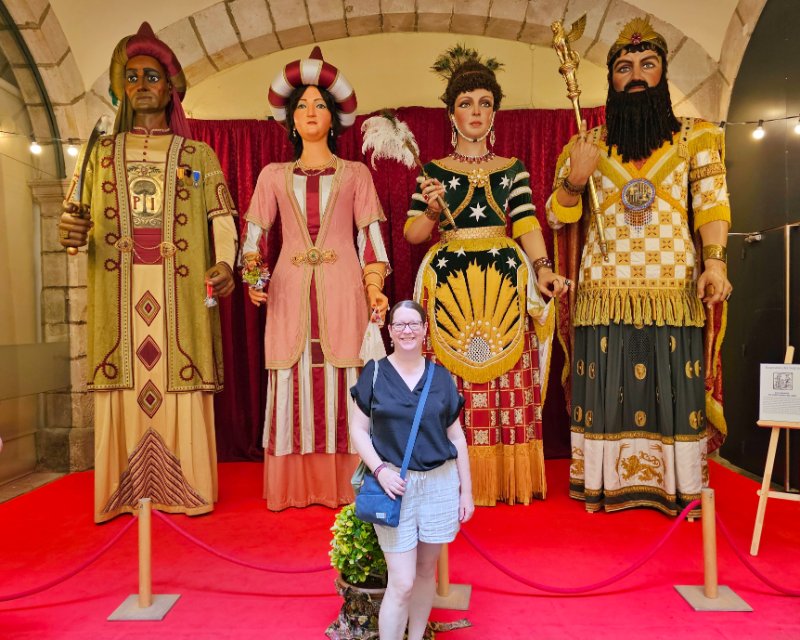
Gegants, or giants, are towering figures that play a significant role in Catalan culture, especially in traditional festivals and celebrations. These larger-than-life figures, often standing several meters tall, are designed to resemble kings, queens, nobles, and other important historical or mythical characters.
They are carried through the streets by individuals known as “geganters,” who are hidden inside the structure, guiding the giants through the crowds as they dance and parade during festivals.
Explore Gràcia Neighbourhood
Gràcia was a village separate from Barcelona until the city expanded to envelop it, the neighbourhood retains a strong local identity and is less touristy, allowing you to experience everyday Catalan life. Explore yourself or join a food tour in Gràcia to have a local guide share their knowledge and some of the best foodie spots.
Visit the Monastery of Montserrat
A fabulous day trip from Barcelona, Montserrat is a spiritual and cultural centre of Catalonia. The Benedictine monastery is home to the revered Black Madonna and is an important pilgrimage site. The mountain itself is also stunning, with jagged peaks like a saw (Montserrat means serrated mountain) and spectacular views.
Other things to see and do in Montserrat include exploring the hiking trails, visiting the Montserrat Museum and tasting local cheese and honey at the Farmer’s Market.

Take a Tour of the Eixample District
The Eixample district is a treasure trove of modernist architecture beyond Gaudí. A guided tour focusing on buildings like Casa Amatller, Casa Lleó Morera, and Hospital de Sant Pau will give you a broader perspective on Catalan Modernism and its significance in Barcelona’s cultural identity.
Explore El Raval’s Cultural Diversity
Historically one of the oldest neighbourhoods in Barcelona, El Raval offers a mix of Catalan heritage and immigrant cultures from Spain and all over the world. Visit the Centre de Cultura Contemporània de Barcelona (CCCB) for exhibitions on contemporary culture and MACBA (Museu d’Art Contemporani de Barcelona) to see modern art within a historical context.
Watch a Castellers Performance
Castells (human towers) were inscribed as UNESCO-listed Intangible Cultural Heritage of Humanity in 2010, and the chance to watch this spectacle should not be missed! Castellers are the builders of human towers, an extraordinary tradition that showcases the strength, balance, and collective effort of the Catalan people.
Taking place at various festivals and events throughout the year, it is mind-blowing how the towers go up and come down with seeming ease. Check this website for a schedule of all Casteller performances in Catalonia; you can filter the results to just search for Barcelona.
In some cases, you can arrange to visit one of the local colles (casteller groups) during their practice sessions; I’ve been to a session at the Castellers de Barcelona and it was amazing!

Attend a Flamenco Show with a Catalan Twist
While flamenco is traditionally associated with Andalusia, Barcelona has its unique interpretation called Rumba Catalana. Catalan Rumba is a distinct style of rumba that originated in Barcelona’s Romani (Gypsy) community in the 1950s. It blends Afro-Cuban rumba rhythms with flamenco and rock ‘n’ roll influences.
Made famous by groups like the Gipsy Kings, Catalan Rumba is quite hard to find in Barcelona these days unfortunately. There used to be a dedicated rumba venue called La Rumbeta which has sadly closed, and other places where you could catch a performance, like Taberna Tio Carlos have also closed.
I am collecting a list of venues where you can still see some Catalan Rumba shows, although I haven’t visited any myself – these include:
- Gran Bodega Saltó in Poble Sec, which has a varied program of live music, including some Rumba. Check their Facebook page for dates here.
- Quillo Bar in El Born with live flamenco and rumba music, although I’m not sure if its every night or just some nights – check out their website here.
Explore Poble Espanyol
Built for the 1929 International Exhibition, Poble Espanyol is an open-air museum that recreates various regions of Spain, including Catalonia. Wander through the Catalan section to see traditional architecture, crafts, and arts, and learn about the cultural diversity within Catalonia itself.
Visit the Santa Maria del Mar Church
This stunning Gothic church, located in the El Born district, is an iconic symbol of Barcelona’s medieval past and the importance of the merchant and maritime communities. The church is also central to the famous novel La Catedral del Mar, which delves into Barcelona’s history.

Visit the Museu del Disseny de Barcelona (Design Museum)
This museum showcases Catalonia’s rich history of design, from graphic arts to fashion and industrial design. It reflects the innovative spirit of Catalonia and its influence on contemporary culture.
Get Lost in the Laberint d’Horta
This historical garden, located in the Horta-Guinardó district, is the oldest preserved garden in Barcelona. Beyond its beautiful neoclassical and romantic design, it offers a serene space that reflects the influence of Catalan aristocracy and their connection to nature.
Take a Day Trip to Girona
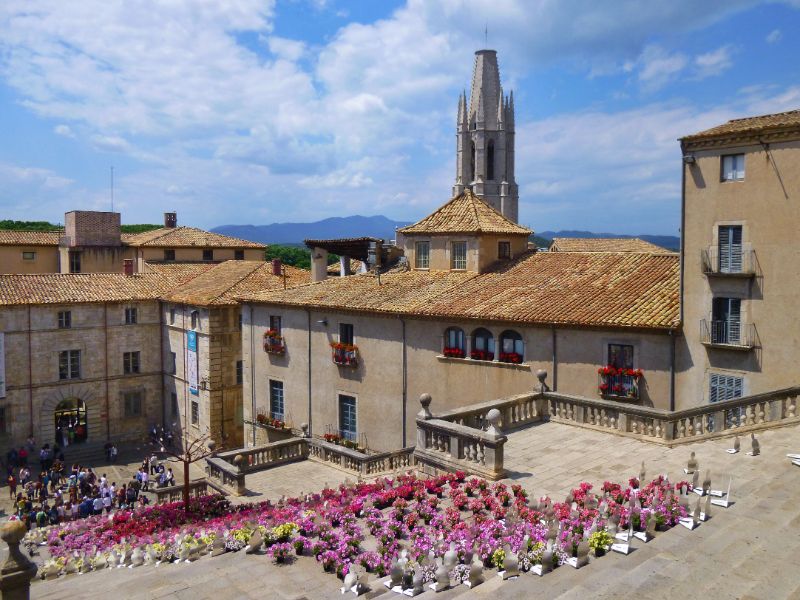
Just an hour by train from Barcelona, Girona is a lovely day trip from Barcelona and offers a rich historical experience, from its well-preserved medieval Jewish quarter to the impressive Cathedral of Girona. The city is deeply tied to Catalan history and identity, and has its own unique festivals such as the Festa de Flores Flower Festival in May.
Visit the Museu Frederic Marès
Located near the Barcelona Cathedral, this museum houses a vast collection of sculptures and other artefacts collected by Catalan sculptor Frederic Marès. The museum gives you a unique insight into the artistic tastes of the Catalan bourgeoisie.
Experience a Catalan Mass
Attending a Catholic Mass in Catalan, especially in a historic church like Santa Maria del Pi or the Sagrada Família, offers a spiritual perspective on the region’s deep religious roots and the role of the Catalan language in preserving cultural identity.
Bear in mind that any attention to mass should be reserved for those who genuinely want to worship – it is not an excuse to get inside the Sagrada Familia for free! During mass, photos are not permitted and the more tourists who go just to get inside the more it prevents residents from worshipping in their local cathedral.
Respectfully Visit Catalan Cemeteries
For a unique cultural experience, visit the Poblenou or Montjuïc cemeteries, where you can see elaborate tombs and mausoleums designed by modernist architects.
Poblenou cemetery’s most famous tomb is the Kiss of Death. At this grave, a winged skeleton cradles a young man, leaning over him and kissing him on the forehead. The grave belongs to the son of the Llaudet family, who were important textile manufacturers. Josep Llaudet Soler died in 1930 when he was young and seemingly so full of life until disease and death took him, and his father wanted a memorial to him that embodied that.
If you visit any cemeteries in Barcelona (or anywhere else) be sure to behave respectfully, without shouting or making too much noise.

These activities, ranging from culinary experiences to historical explorations, will help you to understand the diverse culture of Catalonia, and give you some unique experiences of Catalan culture in Barcelona!