
There are more than 50 incredible museums in Barcelona to visit, but they can be expensive. However, almost all Barcelona museums have free days or certain times or days when they offer free entry – you just have to know when that is! I’ve brought together all of the free museum days in Barcelona so you know exactly which free museums in Barcelona to visit on which day.
I do my best to keep these listings up to date, but timings and dates can change, so be sure to check with the specific museum before you plan your trip!
The Best Free Museums in Barcelona All The Time
There aren’t many museums in Barcelona that are always free, but there are a few. They are often small with specialised exhibitions that usually focus on Catalan culture, so it’s a great way to learn more about Catalonia and Barcelona. These are the best free museums in Barcelona that never charge a fee.
Espai Moja – Catalan Culture Museum
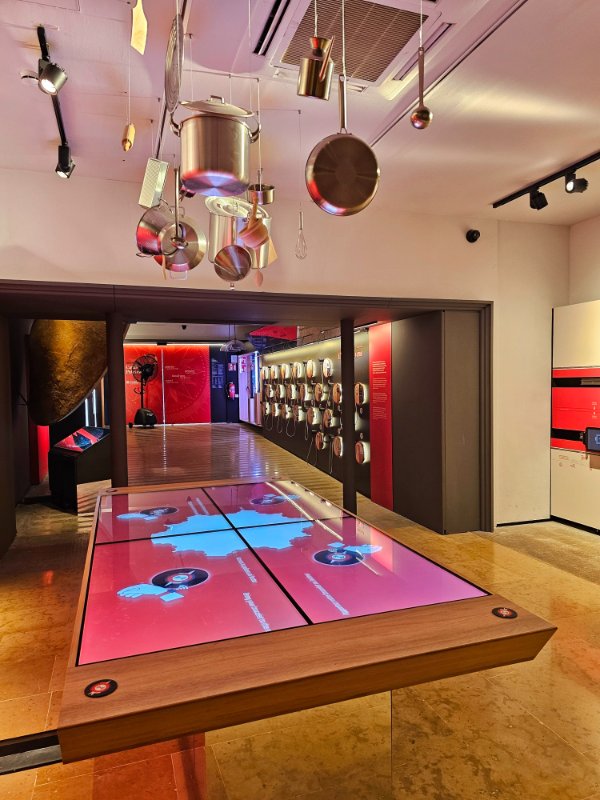
The Espai Moja is just off La Rambla and is a great place to get introduced to Catalan culture in Barcelona. It’s a free interactive museum that showcases Catalonia’s cultural heritage in an easy-to-understand way through visual and audio exhibits.
Collect your “compass” a wristband to scan at each exhibit, which allows you to save anything you are interested in. At the end of your visit, scan your compass at the exit point, and you’ll get an email with all of the information you saved. Exhibits include an interactive map of places of interest, seasonal food and recipes, audio clips of historical figures, Catalan language practice, and a virtual reality headset.
You’ll also get 2-for-1 discount vouchers at cultural museums around Catalonia, including the History Museum of Catalonia and Archaeological Museum of Catalonia in Barcelona, and various archaeological sites in Tarragona, Girona and beyond.
Free all the time
Opening times:
- Mondays to Saturdays, 10 a.m. to 8 p.m.
- Sundays and holidays, 11 a.m. to 3 p.m.
- 24-31 December, 11 a.m. to 3 p.m.
Annual closing days: 1 January, 25-26 December.

MUHBA El Born
The El Born Cultural and Memorial Centre used to be an independent museum but is now cared for by the History Museum of Barcelona (MUHBA). This museum and cultural centre in the Born neighbourhood is in a former market and contains archaeological remains of Barcelona from the 17th and early 18th century.
The market was undergoing renovations when the archaeological site was uncovered, and it was decided to keep it as a museum. It is always free to go inside and visit the upper level, where you can see the remains of 17th-century Barcelona, which was destroyed to make way for the Citadel.
There is an interesting display tracing the history of the building, and there are often additional exhibitions to visit. You can also do a guided tour, which takes you down into the ruins, although there is a charge for that except on the first Sunday of the month, and on Sundays after 3pm.
Free all the time
Closed on Mondays (except bank holidays)
From November to February, open Tuesday to Sunday from 10 am to 7 pm.
From March to October, open Tuesday to Sunday from 10 am to 8 pm.
Annual closing days: 1 January, 1 May, 24 June and 25 December. On 26 December, the centre closes at 2.30pm
Visit the official website here.

MUHBA Temple d’August
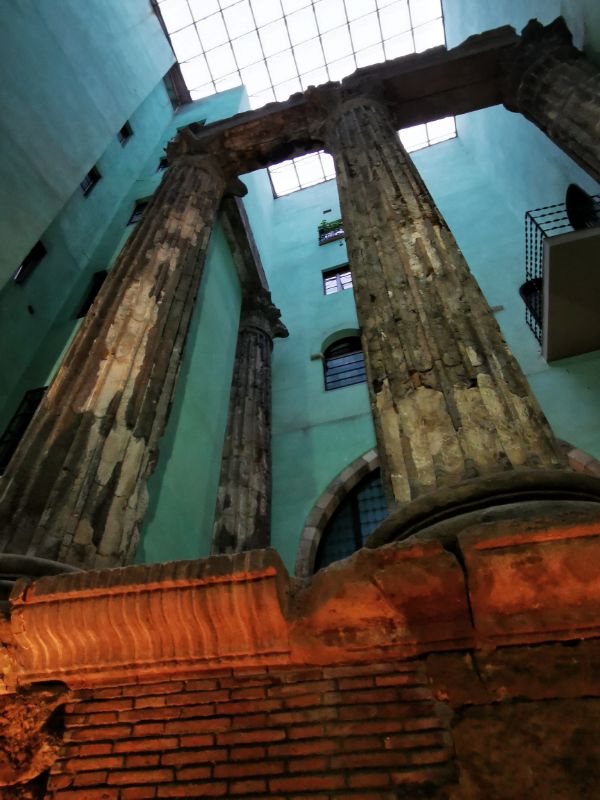
I am always amazed that the remains of this Roman temple is hidden away in an alley behind the cathedral. It was built 1st in century BCE as part of the Roman Forum, and now the three last remaining columns have been restored and stand in a small courtyard surrounded by apartments.
It’s a small site, and easily missed if you don’t know it’s there – make sure you stop in as you explore the rest of the Gothic Quarter.
Free all the time
Opening hours: Monday 10am – 2pm, Tuesday – Saturday 10am – 7pm, Sunday 10am – 8pm
Annual closing days: December 25th, January 1st, May 1st and 24th June.
Photography Archive of Barcelona – Arxiu Fotogràfic de Barcelona
The Photographic Archive of Barcelona is a goldmine of photographic history. It is dedicated to preserving and sharing the city’s photographic heritage. They conserve more than four million photographs in their archive, dating from 1844 to the present day.
Their free exhibitions show just a fraction of these and offer a fascinating insight into Barcelona over the years. The exhibition room is quite small (it’s maybe a 15-minute visit), so I wouldn’t say to go out of your way to see it, but if you’re in the area, it’s worth popping in to take a look. The descriptions were only in Catalan, so download Google Translate before you go.
They also offer an online consultation service where you can view and purchase some selected photographs, and guided visits for professional photographers and archivists.
While you’re here, I’d also recommend popping into the Convent of Sant Agusti Civic Centre which is at the other end of the same building; it’s not strictly speaking a museum but it hosts various cultural events in the old convent building, which has some beautiful architectural details.
Free all the time
Opening hours of the exhibition room: Monday to Saturday, from 10am to 7pm. Sundays and public holidays from 10am to 2pm
Annual closing days: January 1 and 6, May 1, June 24, December 25.
NB: The exhibition room will be closed during the installation of temporary exhibitions so check the website for details of the exhibitions before visiting.

La Virreina Palace – Palau de la Virreina
La Palau de la Virreina is a lovely building on La Rambla that has free temporary exhibitions. It is housed in an 18th-century Baroque–Rococo palace on La Rambla, and the building is worth a visit to take a look inside, even if you don’t visit the exhibition space upstairs!
Downstairs is home to the Giants of Barcelona – models which are used for street parades and celebrations, and you can often see exhibits for special events, for example, during La Mercè Festival in September.
Upstairs is where rotating exhibitions are hosted, usually dedicated to photography, audiovisuals and contemporary visual arts.
Free all the time
Opening hours: Tuesday to Sunday and public holidays, 11am to 8 pm
Annual closing days: January 1, May 1, June 24, December 25 & December 26
Visit the official website here.

Casa Dels Entremesos
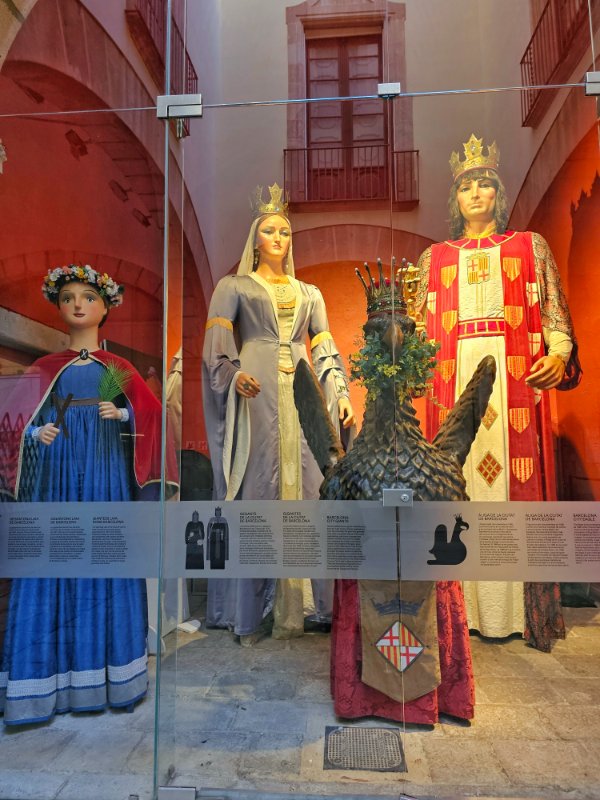
The Casa dels Entremesos is a cultural centre dedicated to preserving and promoting Catalan popular and festive traditions. Located near the Palau de la Música Catalana, the Casa dels Entremesos is a small but fascinating museum where you can find an exhibition of traditional figures used in Barcelona’s festivities, including historical gegants representing kings, queens, nobles, and folkloric characters.
The centre also hosts paid workshops, performances, puppet shows, and other temporary exhibitions. During city festivals, some of the gegants may be displayed elsewhere, so it is best to visit on a normal day, but there are usually other exhibits on show to replace them.
Free all the time
Opening hours: Tuesday to Saturday: from 10am – 1pm and from 4pm to 7pm
Sunday and public holidays: from 11am to 2pm
Closed on Mondays, except public holidays.
Annual closing days: 25 and 26 December, 1 and 6 January, Good Friday and 1 May.
Get more details on the website here.

Santa Monica Arts Centre
At the bottom end of La Rambla near Drassanes metro station, this public arts centre is free and open to everyone. The building began as a convent, built in 1636 on the Rambla de Santa Mònica, and was repurposed for various uses over the years, including Red Cross offices, a military barracks, and the neighbourhood parish, before becoming an arts centre in 1988 after the convent was declared a national historical-artistic monument.
It was Barcelona’s first public contemporary art centre, and has hosted hundreds of exhibitions and events and has become a Catalan cultural landmark, focusing on local artists, with 75% of participating artists being women or non-binary individuals.
There is also a bar and lounge area with free wifi, and a terrace on the 1st floor which overlooks La Rambla.
Free all the time
Opening hours: Tuesday to Sunday and public holidays: 11am – 8:30pm. On 24 and 31 December open from 11am – 5pm
Closed on Mondays, except public holidays.
Annual closing days: 25 and 26 December, 1 and 6 January, Good Friday and 1 May.
Get more details on the website here.
Palau Robert
Palau Robert is a neoclassical building on the corner of Passeig de Gracia and Diagonal. Once the home of an aristocrat, it is now a free exhibition space and hosts exhibitions & concerts, primarily about Catalan culture and history, with some explanations translated but others just in Catalan. There is also a nice garden area with seating where you can take a break.
Free all the time
Opening hours: Monday to Saturday, 9am to 8pm, Sunday and Holidays, 9am to 2.30pm. On 24 and 31 December and 5 January, open from 9am to 2.30pm
Annual closing days: December 25 and 26, and January 1 and 6
Get more details on the website here.


La Capella
La Capella is the Chapel of the former Hospital de la Santa Creu and la Casa de la Convalescència, and is a building catalogued as a Historic Monument of National Interest. La Capella hosts free art exhibits by Barcelona’s up-and-coming artists in a beautiful historic space.
The chapel itself has a fascinating history and there are explanations of the history of the hospital and chapel. It’s worth stopping in here to see the exhibits and the space.
Location: Carrer de l’Hospital, 56, Ciutat Vella, 08001 Barcelona
Opening hours: From Tuesday to Saturday from noon to 8 p.m.
Sundays and holidays from 11 a.m. to 2 p.m.
Annual closing days: Mondays except public holidays. December 25th and 26th, January 1st and 6th, and May 1st. On 24th and 31st December noon to 7 p.m.

Museum of Funeral Carriages
This museum is in the Montjuic Cemetary and focuses on local funerary customs, including a magnificent display of ornate horse-drawn hearses that used to be used in funerals before cars took over.
It’s a small collection and only open for a few hours over the weekend, but a fascinating insight into funerals and horse-drawn carriages. Signage is in Catalan, Spanish and English.
You can combine your visit with the Montjuic Cemetery, and then walk up to Montjuic Castle. On Sunday mornings there is a bus which goes through the cemetery which is useful if you’re there on Sunday. Check the bus route and timetable here.
Opening hours: Saturday and Sunday only, from 10am to 2pm.
Castell de Montjuïc – Montjuic Castle
Montjuic Castle is a historic fortress perched on a hill overlooking Barcelona, with panoramic views of the city, harbour, and Mediterranean Sea.
Originally built in the 17th century as a military fortress, it has a dark history, having served as a prison and execution site during various conflicts, including the Spanish Civil War, and during the Franco Dictatorship.
Today, it’s a peaceful place to explore, with wide ramparts, open courtyards, and exhibitions about the castle’s history and military architecture. You can walk or take a cable car up to the castle, and the views alone are worth the visit.
INSIDER TIP: If you buy tickets for the Montjuic Cable Car through the Barcelona Tourist Office HERE, tickets include FREE entry into Montjuic castle at any time during opening hours! NB: tickets bought at the cable car station don’t include entry to the castle so buy them in advance online.
Free entry always on:
- Sunday afternoons, from 3pm till closing time
- The first Sunday of each month from 10am till closing time
- February 11 (Saint Eulàlia’s Day)
- May 18 (International Museum Day)
- September 24 (La Mercè).

Free Museum Days in Barcelona
Several of the museums in Barcelona are free to visit on certain special days of the year, month or even on set days every week. It’s best to check each museum for their specific free days, but these are some of the most popular days and dates when you can visit museums in Barcelona for free!
- Sunday Afternoons
- 1st Sunday of the Month
- Santa Eulàlia (February 12th and 13th)
- Món Llibre Children’s Book Festival (Early April, dates vary each year)
- Sant Jordi (April 23rd)
- Night of the Museums (mid-May, date varies each year, check the official website here)
- International Museums Day (May 18th)
- National Day of Catalonia (September 11th)
- La Mercè (September 24th)
If you time your visit well, you can visit some of the best museums in Barcelona for free – here’s my pick of the best free museums in Barcelona, and the days and times you can enjoy them for free!
The Best Free Museums in Barcelona (On Certain Days)
Museu Picasso – The Picasso Museum
One of the most popular museums in Barcelona, the Picasso Museum, is always busy – and even more so when entry tickets are free. The museum is housed in a beautiful palace in the Gothic Quarter and has examples from every period of Picasso’s life as an artist.
It used to be that you had to line up and hope that you could get a free spot, but now you must book a time to visit in advance. Timings are released 4 days before the free visit days to allow people to book a spot, and they often sell out.
Free entry on:
- First Sunday of every month all day
- From 14th October to 13th April: Thursday from 4pm to 7pm
- From 15th April to 12th October: Thursday, Friday and Saturday, from 7pm to 9pm
- 4th & 5th January
- 12th February
- 18th May
- 24th September
Check out the details on the official website here.

Museu Nacional d’Art de Catalunya (MNAC)
The National Museum of Catalan Art is a fabulous museum, housed in one of the most iconic buildings in Barcelona, the beautiful National Palace (Palau Nacional) at Montjuic. It has an impressive collection of Catalan art from the 11th Century through to the present day, as well as temporary exhibitions.
Free entry on:
- Every Saturday afternoon, from 3pm
- First Sunday of every month, all day
- 18th May
- 11th September
You must book your visit online to guarantee entry. Visit the official website for details.

Museu d’Art Contemporani de Barcelona (MACBA) – The Modern Art Museum in Barcelona
The MACBA is Barcelona’s leading contemporary art museum, known for its bold white architecture and ever-evolving exhibitions. The museum focuses on post-1945 art, with a particular emphasis on Catalan and Spanish artists. Its collection explores themes such as identity, politics, urban life, and social issues through various media—video art, installations, painting, and photography.
Located in the heart of the Raval neighbourhood, the building, designed by Richard Meier, is as much a part of the experience as the art it contains. The square outside has also become an iconic gathering place for skateboarders and artists, although an expansion of the site could mean an end to the skate boarders.
General admission is 12 € if you buy a ticket in the museum, or discounted to €10,80 if you buy a ticket online in advance. There are also cheaper off-peak tickets available.
Tickets include unlimited visits to all current exhibits and the permanent collection within one month of the purchase. Remember to activate your ticket at the reception desk if you think you’ll want to go back within a month.
Free entry on:
- Saturday afternoons from 4pm
- February 12th from 11am – 7pm
- 17th May (Night of the Museums) from 7pm to 1am
- 18th May 10am to 3pm
- 24th & 25th May (Mon Llibre)
- September 24th 10am to 8pm
Book your tickets on the official MACBA website here.

The CCCB (Barcelona Centre of Contemporary Culture)
The CCCB (Centre de Cultura Contemporània de Barcelona) is one of the city’s most important cultural venues, focusing on contemporary culture, thought, and creativity. It is in the same museum complex as the MACBA, housed in a beautifully renovated 19th-century building that was once a charity house and orphanage, with a striking modern extension featuring a mirrored glass façade.
The CCCB hosts temporary exhibitions, film screenings, debates, lectures, and festivals, often exploring themes such as urban life, technology, science, memory, and social change. It doesn’t have a permanent collection, which means there’s always something new and thought-provoking to see.
Instead of getting tickets for the whole museum, you sign up for each exhibition separately, so if you’re visiting when the museum has free entry, you’ll need to reserve a free ticket for each exhibition, leaving enough time for you to visit each one.
There’s a bookshop, a café, and a rooftop viewpoint (Mirador) that is open once a month for city views that everyone can access for free. The view isn’t as spectacular as other viewpoints I’ve seen but if you’re going to the free exhibitions on Sunday it’s worth checking if the Mirador is open.
Free entry on:
- Sunday afternoons from 3pm to 8pm
- February 12th
- 17th May (Night of the Museums)
- 18th May
- September 24th
Book your tickets on the official CCB website here.

Maritime Museum of Barcelona (MMB)
Housed in the impressive 13th-century royal shipyards, the Maritime Museum explores Catalonia’s rich seafaring heritage. Its vast, vaulted halls house full-size replicas of historic ships, including a beautifully recreated 16th-century galley.
Exhibitions focus on naval construction, trade, piracy, exploration, and the evolution of maritime technology, and recently hosted a temporary exhibition on Barcelona’s historic links to slavery. The museum also delves into Barcelona’s role as a Mediterranean port city, with a mix of historic artefacts with multimedia displays.
As a bonus, on the 1st and 3rd Sunday of the month between 11am and 2pm, The Maritime Museum allows free entry to the Portal de Santa Madrona, part of the city wall and Baluard Gardens, which usually aren’t open to the public.
Free entry on
- Sundays after 3pm
- February 12 (Santa Eulàlia)
- April 23rd (Sant Jordi)
- The Night of Museums
- May 18th, International Museum Day
- September 11 (The Day of Catalonia)
- September 24 (La Mercè)
NB: Tickets must be purchased physically at the Museum box office. Online ticket sales are not available.
Learn more on the official MMB website

Museum of the History of Barcelona (MUHBA)
MUHBA offers a fascinating journey into Barcelona’s past, from its Roman origins through to the civil war and modern history. The main site at Plaça del Rei allows you to walk beneath the city’s streets through extensive Roman ruins, including a laundry, wine and fish-sauce factories, and parts of ancient walls.
MUHBA also operates smaller sites around the city, such as the Temple of Augustus and the Roman Domus of Sant Honorat, as well as the El Born archaeological site listed above.
Free entry on:
- First Sunday of the month all day
- all other Sundays free after 15:00

Disseny Hub – Barcelona Design Museum
Barcelona’s Design Museum is a must-visit for anyone interested in aesthetics, innovation, and how design shapes everyday life. Located in the striking Disseny Hub near Plaça de les Glòries, the museum brings together collections of decorative arts, fashion, graphic design, and industrial design.
Exhibits cover everything from 19th-century ceramics to contemporary product prototypes and packaging. It’s a thoughtful space that makes you consider how much design influences the world around us, from chairs to signage. The museum also hosts temporary exhibitions and workshops, and the building’s angular, modern architecture is a unique landmark in its own right.
Free entry on:
- Sunday afternoons, from 3 to 8 pm
- The first Sunday of each month.
- February 11 (Saint Eulàlia’s Day)
- September 24 (La Mercè).

Museu Etnològic i de Cultures del Món – Ethnology and World Culture Museum
This museum explores global cultures and human diversity, and I loved it! There are two different venues to explore. Its main site in Montjuïc focuses on Catalan ethnology, showcasing everyday objects, crafts, and traditions from different parts of the region.
The branch in the Born area, set in historic palaces on Carrer Montcada (opposite the Picasso Museum), is dedicated to non-European cultures with impressive artefacts from Africa, Asia, the Americas, and Oceania.
The exhibitions are thoughtful and often thematic, examining shared human experiences such as migration, rituals, and storytelling. I went into the museum after being put off by the lines of people at the Picasso Museum, and spent a peaceful couple of hours here. If you’re interested in world culture, don’t miss it!
Free entry on:
- Sunday afternoons, from 3 to 7.30 pm
- The first Sunday of each month from 10am to 7.30pm
- February 11 (Saint Eulàlia’s Day)
- May 18 (International Museum Day)
- September 24 (La Mercè).

Museu Frederic Marès
The Museu Frederic Marès is a lovely museum in Barcelona’s Gothic Quarter that is often overlooked by visitors. It is housed in a former royal palace next to the cathedral. Created by sculptor Frederic Marès, the museum showcases his vast personal collection and has a huge range of items on display.
One of the highlights is the collection of Hispanic sculptures from Roman times to the 19th century, and the curiosities on the upper floors – filled with everyday objects from the 19th century—fans, toys, photographs, and more—offering a fascinating glimpse into the past.
There is a nice courtyard garden too, and the museum often has free entry into the courtyard for events such as the Dancing Egg during Corpus Christi, and a nativity scene during Christmas.
Free entry on:
- Sunday afternoons, from 3 to 8 pm
- The first Sunday of each month from 11am to 8pm
- February 11 (Saint Eulàlia’s Day)
- May 18 (International Museum Day)
- September 24 (La Mercè).

Monestir de Pedralbes – Pedralbes Monastery
If you are a lover of religious buildings, then the Pedralbes Monastery should be on your list of places to visit in Barcelona. Even if not, it makes for a very peaceful afternoon.
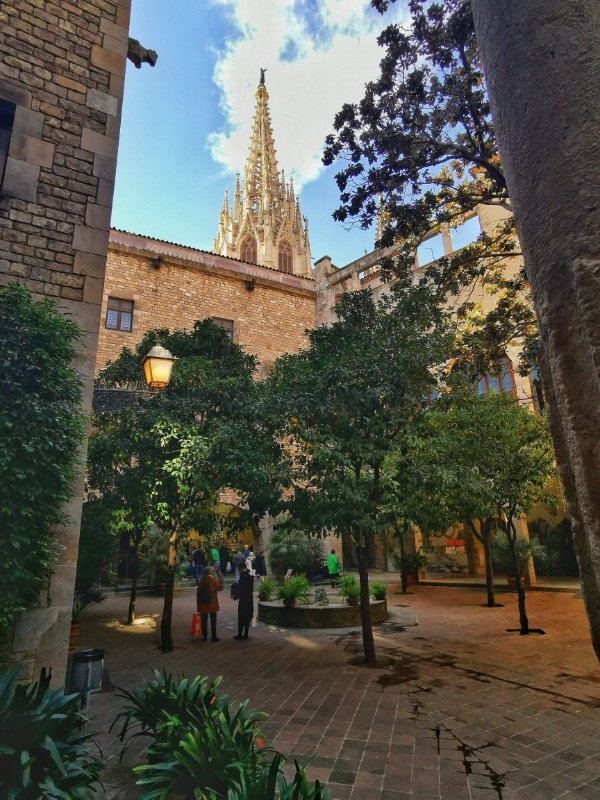
The Monestir de Pedralbes is a beautifully preserved 14th‑century Gothic monastery turned museum in Barcelona’s Pedralbes neighbourhood. Founded by Queen Elisenda de Montcada in 1327 for a community of Poor Clares, the complex centres on a three-tiered cloister—one of Europe’s largest—filled with orange trees and medicinal herb beds, cultivated exactly as they would’ve been in medieval times.
The nuns no longer live in the monastery, with the three remaining nuns leaving in early 2025.
An audio guide is included in the visit, and the pretty gardens in the centre of the monastery are filled with flowers and herbs, and you can get some nice photographs of the arches around the outside.
A short visit of 45 mins to an hour is plenty to wander around the grounds, and although I wouldn’t say this is a must-see for every visitor, it certainly is a hidden gem in Barcelona that I would recommend if you are craving some peace and quiet in a relatively tourist-free part of the city.
Free entry on:
- Sunday afternoons, from 3 to 7.30 pm
- The first Sunday of each month from 11am to 7.30pm
- February 11 (Saint Eulàlia’s Day)
- May 18 (International Museum Day)
- September 24 (La Mercè).
Barcelona Free Museum Entry for Certain People
Some museums are always free for certain groups of people.
Free Museums in Barcelona for Children
Most of the museums in Barcelona offer free entry for children. The age limit varies though, so check with the individual museum for details. Sometimes it is under 16, under 15 or under 14 or even younger.
Free Entry for Seniors
Over 65s benefit from free entry to many of the museums in Barcelona, although in some cases that is limited to people from the European Community.
Free Entrance for Disabled People
In many cases, disabled people with the appropriate accreditation can get free entry to museums in Barcelona. Sometimes that also extends to a carer or person accompanying them as well.
Unemployed People Living in Catalonia
If you are a resident of Barcelona or Catalonia and are unemployed and claiming the paro unemployment benefit, you can get free entry into most of the museums in the city.
Young People Living in Catalonia
If you’re aged between 12 and 30 and living in Barcelona or Catalonia you can buy a Carnet Jove for 8,65 € which is valid for a year and grants you free entry to many of the museums in Barcelona, as well as discounts for lots of other attractions. Buy the Carnet Jove on the official website here.
Tips for Visiting the Free Museums in Barcelona
Unfortunately, given that you usually have to pay to visit the museums in Barcelona, on free days they can get really busy. To help you enjoy your free Barcelona museum visits as much as possible, check out these tips:
- Plan ahead which museum you really want to visit, and book your tickets online when available. In the past, there used to be long queues to get free entry, but now you have to book in advance which guarantees you entry. Don’t be late for the time you booked, otherwise you may not be allowed in.
- Children often get free entry to museums in Barcelona, or get a significant discount but it does vary – if you’re visiting Barcelona with kids, then check the age limits before you purchase any tickets for them.
- Have a backup plan. If you really want to visit a certain museum but find that it is too busy to get in, have a look at other museums or attractions in the same area that you could visit instead. One day I was hoping to visit the Picasso Museum but didn’t want to wait in line for hours, and had a lovely quiet visit of the Museum of Ethnology and World Culture across the street instead!
- Come back another day and pay for entry. If it is just too busy on the free days, you can always come back another time and buy a ticket for the museum, which is a better way to guarantee you can go inside. Bear in mind that most museums are closed on Mondays.
- If you don’t want to wait for a specific time or day to visit your favourite museum, consider buying a Barcelona Card, which will grant you access to a whole bunch of museums included in the card price, as well as free journeys on public transport.
- Do something completely different. If you’re visiting Barcelona on a budget and can’t afford to pay to come back another day, then there are plenty of other free things to do in Barcelona.
I hope this has given you some ideas of when to visit the free museums in Barcelona, and how to make the most of the museums in Barcelona without breaking the bank! If you have any other questions about Barcelona’s museums, head over to our Facebook group and post your question there.