
There is lots of delicious food to try in Barcelona, but tapas is the most widespread and varied kind of meal you can find. Because there is so much choice, it can also be hard to decide what to order! So, I’ve created this tapas guide for you, with a list and description (with a photo) of all the tastiest must-eat tapas in Barcelona.
The photos are all mine from various tapas bars in Barcelona, unless I’ve mentioned otherwise. I’ve been taking pictures of food for years and it’s so useful to have these so you don’t have to guess at what the tapas means – you can see it without having to choose a restaurant with a photo menu (a typical sign of a tourist trap)!
What Is Tapas?
Before we get started on the details, let’s cover the basics. Tapas are small dishes served as snacks, appetisers, or light meals, and can be combined to make a filling feast! Tapas dishes range from simple plates of olives and cured meats to more substantial dishes such as patatas bravas, meatballs, and grilled seafood.
Tapas are designed to be shared, so you can try a variety of flavours in one meal. The word tapa comes from the Spanish verb tapar which means “to cover” – the first tapas were served as simple chunks of bread to cover a beer to stop flies getting into it. The covers gradually evolved to be more elaborate and delicious, with lots of different options to choose from!
The Best Tapas in Barcelona
I’ve done my best with this list of typical Barcelona tapas dishes, but every time I thought I was finished I remembered another delicious dish that I had to include! Even now, this is not an exhaustive list as there are just too many to list, and a lot of tapas restaurants in Barcelona have their own specialities in addition to the usual options, but these are a mix of the most common Barcelona tapas and my personal favourites.
There are literally hundreds of tapas restaurants in Barcelona so I need a separate article to list all of my favourites. This is just to help you choose which dishes to try on the menu.
The best thing about tapas? You can order a bunch of different things to try, they all come in small portions so if you don’t like something you can leave it and order something else, usually without breaking the bank!
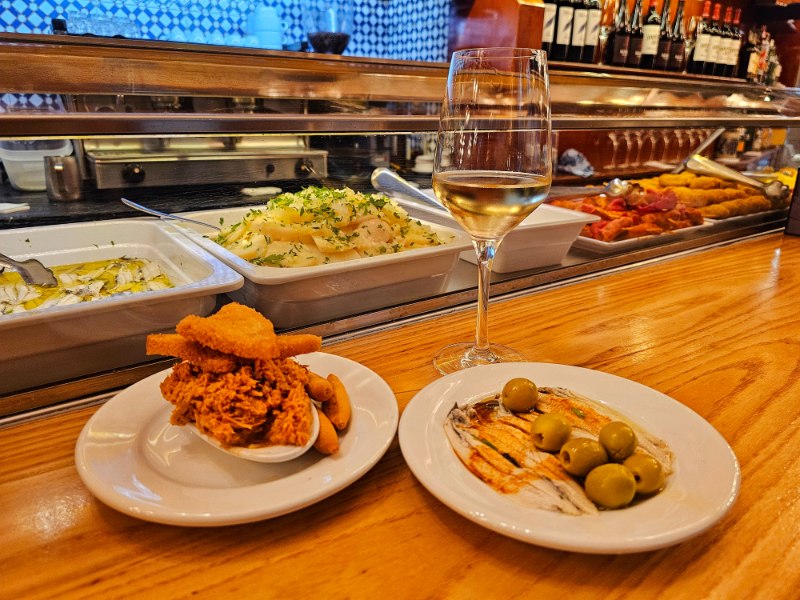
Tapas dishes are often displayed on the bar so you can take a look and see what you fancy. Sitting at the bar is a great way to see up close what’s on offer (and what comes out of the kitchen) so it’s a favourite spot of mine – especially if I’m eating alone.
Tapas is designed to be shared, but solo travellers can still enjoy it – it’s just harder to pick what to order without being able to share with someone else!
Barcelona Tapas Tours
Having a guide take you around some of the best tapas bars in Barcelona to try some of the iconic tapas dishes is a great way to learn more about the history of the city, and each dish. I’d recommend taking a tapas tour in Barcelona near the beginning of your stay so you can get more tips for the rest of your trip. My favourite tapas tours in Barcelona are
- Ultimate Barcelona Food Tour: Taste Barcelona’s Most Iconic Bites – my number 1 recommendation, this tour hits all the highlights, including tapas tastings, a market visit, and paella in Barceloneta
- El Born/Gothic Quarter Wine and Tapas Bar Tour – choose between lunch and dinner time tours on this classic old town food tour in Barcelona
Vegetarian Tapas in Barcelona
There is actually quite a lot of vegetarian tapas options in Barcelona, if you’re not too strict about things being cooked in the same oil as meat dishes. If you’re unsure about anything you can ask, and there are various vegetarian restaurants that specialise in plant-based dishes too.
Vegans will find it harder, there is only so much tomato bread and padron peppers you can eat, so looking specifically for vegetarian and vegan restaurants will give you more choice of dishes – but there are a few vegan options below, and you might find extra options like grilled vegetables, or seasonal dishes like asparagus or gazpacho (chilled tomato soup).
Pescatarians can also enjoy the wide selection of seafood tapas in the section below, so you’ll be fine!
Pan con Tomate (Pa amb Tomàquet)
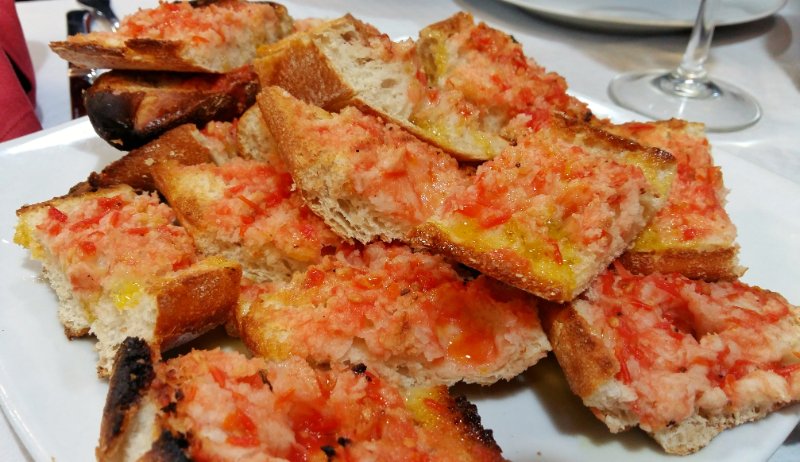
Probably the most iconic Catalan tapa, pa amb tomàquet is made by rubbing ripe tomatoes onto toasted bread, then drizzling it with olive oil and a pinch of salt. It can also be made with garlic, by rubbing a peeled garlic clove onto the toasted bread before the tomato.
It’s often served alongside cured meats, cheeses, or grilled dishes although it goes with everything, and I order it every time I have tapas! Cheap and filling and delicious, don’t miss it! It is traditionally Catalan but you can find it in other parts of Spain too.
Patatas Bravas
One of Spain’s most famous tapas, patatas bravas consists of crispy fried potato chunks served with a spicy tomato sauce. In Catalonia (and Barcelona) a dollop of garlic aioli is also added on top.
Every bar has its own version, making them a favourite dish to compare around the city. If a bar does good bravas then chances are the rest of the food is good too, but the opposite is also true!

Tortilla Española
This thick Spanish omelette is made with potatoes, eggs, and often onions. There is some debate about whether the recipe should include onions or not but for me they should definitely have onion as it adds so much flavour!
Usually served in wedges, or sometimes as a whole, it can be eaten hot or cold and is a common sight in tapas bars throughout Barcelona and across Spain. They are usually slightly undercooked so the inside is gooey – that is the best way to eat it!

Pimientos de Padrón
These small green peppers are lightly fried in olive oil and sprinkled with sea salt. Most are mild, but they say that 1 in every 100 is spicy! Personally they’re not my favourite but my friend loves them, especially with a cold beer.

Manchego Cheese
Spain’s best-known cheese is made from sheep’s milk and served in slices or wedges. It pairs perfectly with cured meats and a glass of wine.
You can also find different cheeses, or tablas de queso – cheese plates with a variety of different cheeses.

Berenjenas con Miel
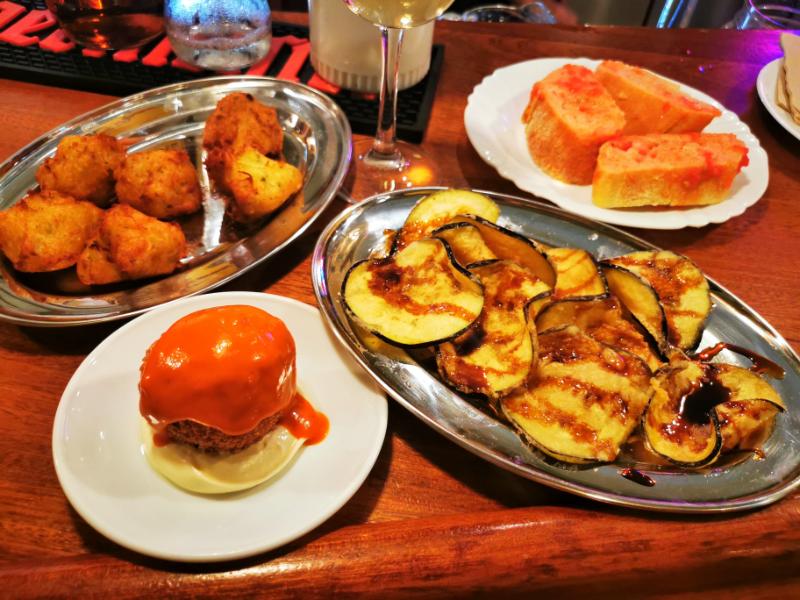
Berenjenas con miel is a popular tapa of thin slices of aubergine that are lightly battered and fried until crisp, then drizzled with honey. The combination of savoury aubergine and sweet syrup creates a delicious contrast of flavours and textures.
Crispy on the outside and soft in the middle, it’s a favourite vegetarian tapa that has spread from southern Spain to tapas bars across the country, including Barcelona.

Escalivada
A classic Catalan vegetable dish featuring roasted aubergines, peppers, and onions dressed with olive oil. It’s often served on bread or as a side dish and usually served cold or at room temperature. This one was served on as a tostada (on toasted bread) and topped with olives and anchovies, but usually it is just the veggies.

Grilled Artichokes (Alcachofas a la Plancha)
Grilled artichokes are a simple but delicious tapa made by cooking fresh artichoke hearts on a hot griddle until tender and lightly charred. They are typically dressed with olive oil and sea salt, allowing the natural flavour of the artichokes to shine through, although some can be topped with chunks of Spanish ham.
Peel of the leaves (petals) one by one and bite off the soft flesh – if you get any dry chewy bits just leave them, the tender inner parts are the best.
Popular during artichoke season in Catalonia, you can’t find them all year round so I always order them if I see them on the menu! I love the slightly smoky flavour and crisp edges, delicious! These are my favourite, but you can also find artichoke crisps which are deep fried slices of artichokes, or sometimes a boiled artichoke hearts.

Meat Tapas to Try in Barcelona
Croquetas
These creamy, breadcrumb-coated fritters are filled with a thick bechamel sauce with ham, chicken, vegetables, cheese or fish before being deep-fried until golden. Crispy on the outside and soft inside, they’re a staple of Spanish tapas menus all over the country.
Check how many are included in the serving before you order; sometimes they are per priced unit, or they could come in pairs or larger servings. Some options such as cheese or spinach may be vegetarian, but will usually be fried in the same oil as everything else so not for vegans or strict veggies.

Jamón Ibérico
Thin slices of cured Iberian ham are considered one of Spain’s finest delicacies. Rich, nutty, and melt-in-the-mouth, jamón ibérico is often served simply on a plate to showcase its flavour.
The highest quality hams are darker in colour and have a high price tag to match the quality; it’s made with pork from pure-bred black Iberian pigs and cured for up to four years so the price is justified!
There are different quality levels of ham, which I need a whole other blog post to talk about, but if you want to taste the different options, you can book a tasting here.

A Bomba
Created in the Barceloneta neighbourhood at La Cova Fumada, bombas are large round potato croquettes stuffed with minced meat, coated in breadcrumbs, and fried. They’re traditionally topped with spicy sauce and aioli and are a must-eat tapas dish in Barcelona!

Albóndigas
Another favourite of mine, albóndigas are Spanish meatballs simmered in a rich tomato sauce or savoury gravy. They make a hearty tapa and are perfect for sharing, especially in winter.
They are usually pork or a mixture of pork and beef, and sometimes are served with a seafood sauce for a kind of surf and turf flavour! Make sure you order some bread to mop up the extra sauce.

Chorizo al Vino or a la Cidra
Slices of spicy chorizo sausage cooked slowly in red wine or cider until tender and packed with flavour. The liquid creates a rich sauce that’s ideal for dipping bread into.
You may also find chistorra instead of chorizo served the same way, it is very similar but a thinner sausage.

Morcilla
Morcilla is a type of blood sausage that is popular in many Spanish regions, including Catalonia. It is made by cooking pig’s blood with rice, onions, fat, and various spices such as cumin, paprika, and sometimes herbs. The mixture is then stuffed into a casing, usually made from the pig’s intestine, and cooked or cured before being served.
A common variation is morcilla de cebolla, which includes onions as one of the main ingredients, giving the sausage a slightly sweet and savoury flavour. In Catalan cuisine, morcilla is often served as a tapas dish, or you can also find it grilled alongside meats or added to stews for extra richness.

Fuet
Fuet is a traditional Catalan cured sausage made from finely minced pork, seasoned with garlic, black pepper, and salt, then stuffed into a thin casing and air-dried. The flavour is mild, slightly sweet, and gently peppery.
In Barcelona tapas bars, fuet is usually served sliced into thin rounds as part of a tabla board with other cured meats or cheeses, or simply on its own.

Huevos Rotos
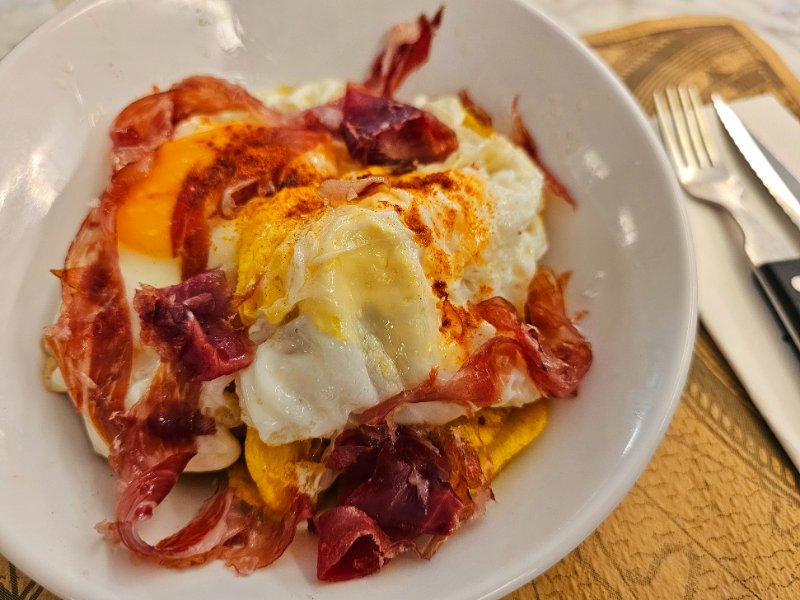
Huevos rotos literally means “broken eggs”, and is a comforting Spanish dish made with crispy fried potatoes topped with fried eggs. The eggs are traditionally broken just before serving, allowing the runny yolks to coat the potatoes and create a rich, flavourful sauce.
Most versions also include toppings such as jamón ibérico, chorizo, or grilled peppers. It’s often substantial enough to be a main meal, but smaller portions are commonly served as a tapa to share. It’s also excellent hangover food, should you need it!
Seafood Tapas Dishes in Barcelona
Boquerones
Fresh, white anchovies marinated in vinegar, garlic, and parsley. Unlike the salty anchovies many people know, boquerones are mild, tender, and refreshing with a tangy kick from the vinegar. Perfect on a hot day.

Calamares a la Romana
A personal favourite, calamares a la romana are squid rings coated in batter and fried until crisp. Served with lemon, and hopefully some alioli to dip into, they’re a popular seafood tapa found in bars across Barcelona.
NB watch out for calamares a la plancha, these are usually served whole and grilled, no batter. Also delicious but often served as a main course instead of a tapa, although you can also find them as individual tapas.

Bunyols de Bacallà/ Buñuelos de Bacalao
Salt cod fritters. They are not salty, but more creamy, and lightly fried so they are crispy on the outside and very tasty.

Pulpo a la Gallega
A speciality from Galicia that has become popular throughout Spain and Barcelona, this tapas dish is a plate of tender sliced octopus sprinkled with paprika, olive oil, and sea salt, often served with sliced potatoes.

Gambas al Ajillo
Prawns cooked in sizzling olive oil with garlic and chilli. The fragrant oil is often mopped up with bread once the prawns have been eaten. They’re not as common in Barcelona as they are in Madrid for example, but they are very good! It’s more common in Barcelona to have them grilled whole then drizzled with olive oild and salsa verde – if you’re not keen on shelled seafood it’s worth checking before you order.

Chipirones
Small squid, either grilled or lightly fried, often served with garlic, parsley, and lemon. They offer a more delicate flavour than larger squid dishes.

Chocos
Chocos are pieces of cuttlefish, typically cut into strips or bite-sized chunks and then lightly floured or breadcrumbed and fried until golden. They’re usually served simply with a squeeze of lemon, sometimes with a little garlic alioli on the side.
You’ll most often find them in tapas bars in Catalonia and along the Mediterranean coast, where they’re a staple alongside other fried seafood dishes. The texture is the key thing here: when done well, chocos are crisp on the outside but tender on the inside!

Navajas a la plancha
Grilled razor clams drizzled with garlic, parsley and olive oil. Very popular in seafood restaurants and a real local favourite.

Zamburiñas
Zamburiñas are small scallops, native to the coastline of Galicia in northwest Spain, Smaller and more intensely flavoured than regular scallops, they are usually served grilled on the half shell (a la plancha) with a little garlic, olive oil, and parsley
They are not on every menu, so if you spot them, order them – you won’t regret it!

Paella
While paella is usually served as a main dish, for a minimum of 2 people, some tapas restaurants have the option to order a small portion of paella in a tapa size. This might be in an individual paella dish or served on a plate from a large paella they’re making for everyone.
Thursday is traditionally a day for paella, so you’ll have more luck then finding it as a dish of the day.

Ensaladilla Rusa
Originally from Russia, hence the name, this potato salad combines potatoes, tuna, carrots, peas, and mayonnaise, usually topped with crumbled boiled egg.. It’s served cold and is a common tapa in traditional bars, often served with little breadsticks. More upmarket versions have slices of tuna belly on top, otherwise it is mixed in with the rest of the ingredients.

Tuna, Onion & Tomato Salad
This simple dish is perfect in summer or if you’ve overdone the fried tapas dishes! Chunks or slices of tomato, red onion and tuna, often served with a few olives and drizzled in olive oil. It’s refreshing a nice change from deep-fried meat heavy options.

More Things You Might See on a Barcelona Tapas Menu
Pinchos (Pintxos)
Originally from the Basque Country, pintxos are a popular kind of tapa in Barcelona. These small bites are served on bread and topped with ingredients such as cured meats, seafood, cheese, or vegetables, secured with a toothpick.
They are usually displayed on the bar and you can choose from whatever looks best! Keep the toothpicks so they can be counted up at the end to calculate your bill.

Vermouth Snacks
One of Barcelona’s most beloved rituals is fer el vermut — literally “doing the vermouth” a late morning tradition typically enjoyed on Sundays from around 11am through to 2pm before lunch.
Locals meet at a traditional bodega bar to sip vermouth (usually served over ice with an olive and a slice of orange) and graze on a relaxed spread of small snacks. These are simpler than a full tapas order and are usually salty to get those digestive juices ready for the main meal!
Olives: Usually served with the stone in, so watch your teeth!
Boquerones or anchoas: the salty tinned anchovies work perfectly here alongside a bitter vermouth
Chips or patatas fritas: a simple bag or bowl of potato chips (crisps to my fellow Brits!)
Conservas – tinned seafood like mussels, cockles and clams
Gildas: a skewer of anchovy, olive, and pickled guindilla pepper, originally Basque but now very common in Barcelona vermut and tapas bars
Encurtidos: various pickled things generally: baby onions, cornichons, peppers

How to Order Tapas in Barcelona
Ordering tapas in Barcelona can be overwhelming, especially if there is no written menu to choose from. Here are a few things to know before you sit down.
First, the terminology: in Barcelona and Catalonia you’ll often see tapes (the Catalan word) on menus rather than tapas, and portions may be listed as racions (larger, designed for sharing), mitges racions (half portions), or individual tapes.
It’s always worth checking before you order, as prices and portion sizes vary enormously between them. If you’re dining alone you can also ask about half portions, which are useful so you can try more things!
In most traditional bars you order directly from a server or at the bar. There’s rarely any rush, and it’s completely normal to order in rounds rather than all at once.

How much Tapas to Order?
Start with a couple of dishes, see how hungry you are, and keep ordering as you go. A general rule is around three tapas dishes per person, but that depends on the portion size as I mentioned above.
In busier or more touristy spots you may find a written menu, but in local neighbourhood bars don’t be surprised if the day’s dishes are simply written on a chalkboard, displayed in cabinets on the bar, or just recited by the server.
If you’re not sure about anything, ask or use Google translate to help you figure it out.
Two golden rules:
- Don’t expect everything to arrive at the same time. Tapas come out as they’re ready, which could be after you’ve finished eating one thing while you’re waiting!
- Tapas is designed to share. Order a mix of dishes so you can taste different things, and share everything.
The hardest part of eating tapas is deciding who gets the last of something, especially a croqueta as that’s a favourite! Locals call it the croqueta de la verguenza – the croqueta of shame as no-one wants to be the one to take it!

Got More Questions about Tapas?
Here’s a quick FAQ about tapas if you need answers without reading the whole post.
Is Tapas Originally from Barcelona?
No, tapas originated in other parts of Spain, particularly Andalusia, but they have become an important part of Barcelona’s food culture. Alongside Spanish favourites, many Barcelona tapas bars also serve Catalan specialities unique to this region, like pa amb tomàquet, bombas, escalivada, and fuet.
What are the Most Popular Tapas in Barcelona?
Some of the most popular tapas in Barcelona include patatas bravas, croquetas, pan con tomate (pa amb tomàquet), jamón ibérico, bombas, pimientos de Padrón, grilled artichokes, boquerones, and gambas al ajillo.
What’s the Difference between Tapas and Pintxos?
Tapas are usually ordered from a menu and served on small plates to share. Pintxos, which originated in the Basque Country, are often served on slices of bread with toppings held in place by a cocktail stick. Many bars in Barcelona offer both tapas and pintxos. NB: if you go to the Basque Country, all tapas are referred to as pintxos.
How Many Tapas Should I Order per Person?
As a general rule, around three tapas per person should be enough for a full meal, depending on the size of the dishes and your appetite. If you’re sharing, it’s often best to order a few dishes at a time and then add more if needed so you don’t overorder.
What Time do People Eat Tapas in Barcelona?
Locals typically eat lunch between 2pm and 4pm and dinner from around 9pm onwards. Tapas can be enjoyed throughout the day, but the busiest time in tapas bars is usually in the evening before dinner or as a casual dinner itself.
Are Tapas Free in Barcelona?
Unlike some parts of southern Spain, tapas are not usually free in Barcelona. You’ll generally pay for each dish you order, although some bars may include complimentary olives or snacks with drinks.
What are the Best Catalan Tapas to Try in Barcelona?
If you want to sample local flavours, look for pa amb tomàquet, bombas, esqueixada, escalivada, fuet, botifarra, grilled artichokes, and anchovies from L’Escala. These dishes showcase ingredients and traditions that are closely associated with Catalonia.
What is the Most Traditional Tapa in Barcelona?
Pa amb tomàquet is arguably the most iconic Catalan tapa, while bombas are often considered Barcelona’s signature tapa as it was created here in the city. Both are closely associated with the Barcelona food culture and if you only try two tapas dishes it should be those!
Are there Vegetarian Tapas in Barcelona?
Yes, many tapas are naturally vegetarian. Popular options include patatas bravas, pimientos de Padrón, grilled artichokes, escalivada, berenjenas con miel, tortilla española, olives, and a variety of local cheeses.
Can Vegetarians and Vegans Eat Tapas in Barcelona?
Vegetarians will find plenty of choices in most tapas bars. Vegan options are becoming increasingly common as well, particularly in central Barcelona, with dishes such as grilled vegetables, olives, pan con tomate, and vegan versions of traditional tapas.
What Should I Drink with Tapas in Barcelona?
Popular drinks include local wine, cava, vermouth, and beer. Vermouth is especially associated with Barcelona’s aperitif culture, where locals gather before lunch for a glass of vermouth accompanied by small tapas like olives and gildas.
What is a Tapas Crawl?
A tapas crawl involves visiting several bars in one evening and enjoying one or two dishes and a drink at each stop. It’s a great way to experience different restaurants (and even different neighbourhoods!) and sample a wider variety of food than you could in a single restaurant.
Are Tapas Enough for Dinner?
The great thing about tapas is that you can order as much or as little as you like, and many people in Barcelona eat tapas as a complete meal. Ordering a selection of dishes to share is a common and sociable way to eat, especially with friends or family.
Do you Tip in Tapas Bars in Barcelona?
Tipping is not obligatory in Barcelona, but it is becoming more common to leave small change or round up the bill if you’ve received good service. For larger meals, some people leave around 5–10%, although this is entirely discretionary. ➡️Read more about Barcelona tipping etiquette here.