
Are you wondering what to eat in Madrid? I really enjoyed the food in Madrid, but sometimes it’s hard to know where to find it, and how to choose from the menus, especially if it’s in a language you don’t understand! I’m here to help with my essential Madrid food guide, which includes my pick of the tastiest traditional Spanish dishes you MUST try in Madrid, with my personal favourite Spanish foods and some classic Spanish dishes from Madrid. I’ll also give you some tips on Madrid food tours too, so prepare to get hungry!
How to Find the Best Food in Madrid
There are hundreds of restaurants in Madrid, from traditional tapas bars and bodegas and the oldest restaurant in the world, to more than 30 Michelin-starred restaurants! Whatever your budget, with these tips you can find delicious local cuisine to fill your belly without emptying your wallet!
Do Your Research
This is the same advice I give everyone, wherever they are visiting. First of all, read the reviews online for the restaurants in the area; this will give you an idea of what other travellers have experienced during their visit. However, using a site like Tripadvisor will only give you a picture of what tourists say.
Instead of TripAdvisor, I prefer using Google Maps as there is usually a mix of reviews from visitors and locals – and you can see which language the original review was posted in, so Spanish reviews are more likely to be from people who live in Madrid. Before I go anywhere, I always look for restaurants on Google Maps to check out what I might want to try.
Ask the Locals
If possible, try to talk to locals that you meet and ask them where they like to eat (not where they recommend that you eat as they’re likely to be different!). Chances are they’ll know the best spots that tourists don’t usually find.
Finally, as you don’t judge a book by its cover, don’t judge a restaurant by how it looks from the outside – some of the best foodie gems in Madrid are behind those simple, unassuming doorways.
Before I decided where to eat in Madrid I had a shortlist of places saved in my Google Maps after chatting with anyone I could find who knew Madrid. Then I walked past the place to get the feel of the vibe. I don’t like places that are too empty or too full – I don’t have the patience to wait in line for something, even if I know it’s good, so if it’s too busy I might come back another time or choose somewhere else nearby.
If there is somewhere I know is a must-visit then I make a reservation if I can, so then I know I don’t have to wait in line and I’ve got a table waiting for me.
By following these tips you should be able to find a great place to eat and enjoy some of the best food in Madrid. However, if you prefer to have some guaranteed delicious experiences, consider joining a food tour in Madrid so you can get some insider knowledge from a local guide while they take you around some incredible restaurants and bars.
Join a Food Tour in Madrid
One of my favourite ways to learn about food in a new destination is to join a food tour. I love having a knowledgeable guide to explain the basics of local cuisine and give me tips for what to eat and where after the tour. I usually try to do this near the start of my visit, so I have a good idea of what to eat during the rest of my trip.
There are lots of food tours in Madrid to choose from, or you could try a market tour and cooking class to learn how to cook up some delicious Madrileño dishes yourself!
Devour Tours in Madrid
Devour have some fantastic Madrid food tours to choose from. They invited me to join a variation of their Tapas, Taverns & History tour and it was fabulous so I definitely recommend that, or you can browse all of their food tours here.
-
Madrid Tapas, Taverns & History Tour takes you to Madrid’s century-old taverns, historic plazas, and hidden gems to discover the history of Madrid through its delicious food. Tastings include 9 + tapas & 4 drinks at 4 family-run tapas bars so you’ll be full at the end! It’s usually an afternoon/evening tour but some lunchtime slots are available. ➡️ Check prices and availability here (This is the one I did)
- The Ultimate Spanish Cuisine Tour is all about the classics. If you want to try the most iconic dishes in Madrid, this is the one for you. You’ll try 15+ bites across 8 legendary stops; from churros and calamari to cheese, jamón, tasting seasonal produce at a local market and sipping vermouth. It’s usually a lunchtime tour, but some afternoon/evening slots are available ➡️ Check prices and availability here.
-
Devour’s Prado Museum Tour & VIP Botin Lunch is a chance to dine at the world’s oldest restaurant, and visit Madrid’s most famous art museum in one unique tour. Your guide will lead a tour of the museum, explaining the most important artworks, before heading to the iconic Botín restaurant for their signature suckling pig. You’ll also get VIP access and a tour of the kitchen & cellars – a wonderful experience for foodies! ➡️ Check prices and availability here.
These are some more of my favourite food tours and cooking classes in Madrid:
What to Eat in Madrid: Traditional Spanish Dishes You’ll Love!
If you prefer to eat your way around Madrid without a guide, then I’ve got you covered. There is so much delicious food in Madrid it was hard to pick out my favourites, but these are the Spanish dishes you absolutely must not miss!
Cocido Madrileño
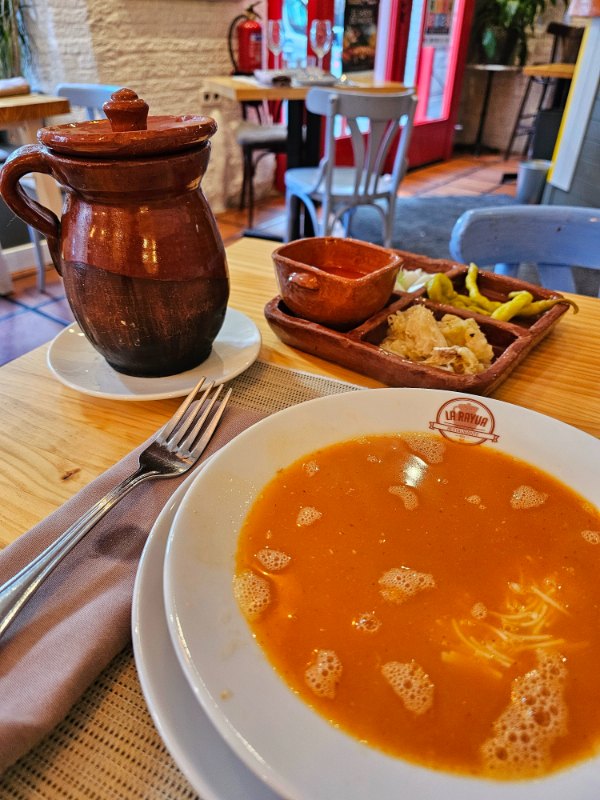
This iconic Madrid stew is a hearty one-pot meal of chickpeas, assorted meats (like chorizo, pork and beef), and vegetables. Traditionally served in stages (broth first, then the solids), it’s a delicious and filling dish, perfect if you’re visiting Madrid in winter.
Traditionally, Cocido Madrileño is cooked in individual clay pots over a wood fire, and you can still find restaurants in Madrid that prepare it this way. When it comes to serving, you’ll have a bowl with noodles in, and the waiter will pour the broth from the pot into your bowl of noodles.
Once you’ve eaten the noodle soup, the waiter will come back and tip out what’s left in the pot – a surprisingly large amount of meat, chickpeas and vegetables to gorge on! You’ll also get some garnishes you can add if you like – I had spicy pickled peppers, cabbage, tomato sauce and spring onions with mine. DELICIOUS!
Bocadillo de Calamares
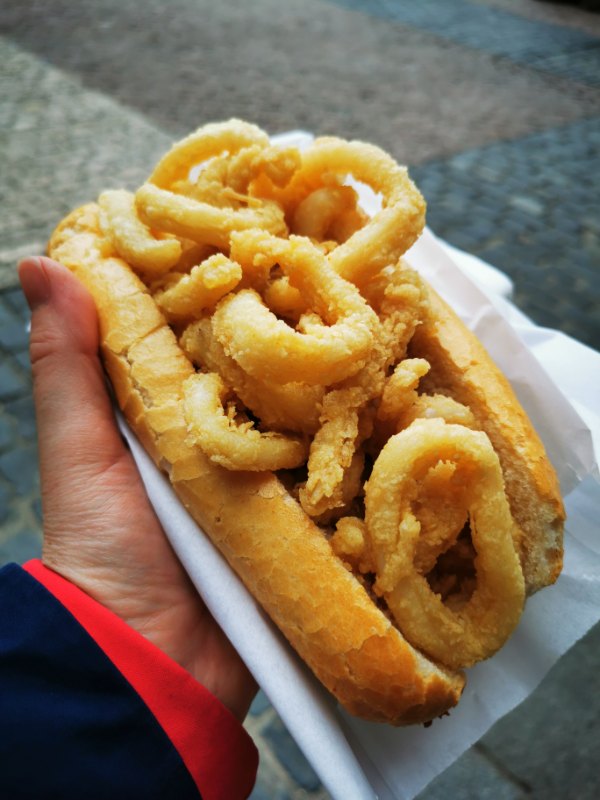
A simple but beloved Madrid sandwich of lightly battered, fried squid rings served in a crusty baguette. It’s strange to think that a calamari sandwich is a typical Madrid food (especially considering that Madrid is pretty much as far from the sea as you can get in Spain!) but there is a good reason for this.
Although Madrid is landlocked, it is well connected to Spain’s ports. From the late 19th and early 20th centuries, improved rail links made it easier to bring fresh and preserved seafood from coastal regions, particularly Galicia and Andalusia, into the capital.
Fried squid was already common in coastal taverns, and migrants brought those cooking habits with them when they moved to Madrid for work. The area around Plaza Mayor filled with simple bars catering to workers and traders (and later tourists), offering cheap, filling food that could be eaten quickly.
Deep-fried calamares are easy to prepare in bulk and stuffing them into a bread roll makes them portable and even more satisfying!
A warning – it can be dry though, so make sure you get some alioli garlic mayo to moisten your meal!
Tostas
A tosta is essentially a thick slice of toasted bread topped with generous, often high-quality ingredients. In Madrid, they’re usually far more substantial than a tapa and are commonly ordered as a light lunch or casual dinner, especially in wine bars and modern taverns.
Some of the most typical Madrid-style tostas include tosta de jamón ibérico, often with grated tomato or olive oil; tosta de queso de cabra con cebolla caramelizada (goats cheese and caramelized onion), a classic you’ll see all over the city; tosta de solomillo (pork or beef fillet) with onion or blue cheese; and tosta de sardinas o boquerones en vinagre, which reflects Madrid’s long-standing love of seafood despite being landlocked.
Tostas became popular in Madrid in the late 20th century as bars modernised their menus, and started offering something more refined than a simple bocadillo but less formal than a plated main. The city’s strong culture of wine and vermouth bars also helped – tostas pair perfectly with a glass of red or a vermut de grifo!

Asados (Roast Meats)
Roast lamb and suckling pig are part of Madrid’s food culture, and restaurants like Casa Botín and El Landó serve them as a speciality. Slow-cooked in a traditional oven, the skin is crispy while the meat should be tender and juicy.
Because of the quality of the meat and the long cooking time, these dishes can be on the expensive side, so if you’re visiting Madrid on a budget you might have to give it as miss, but if you can taste it you will see where your money goes!
The Best Tapas in Madrid
Tapas dishes in Madrid are in general very similar to the tapas in Barcelona, but with a Madrileño twist. A lot of the best taverns and tapas bars in Madrid have their own speciality which makes them stand out from other standard tapas menus. The best way to try all of these is to do a tapas crawl, stopping at several bars to have their speciality and then moving on to the next!
Patatas Bravas
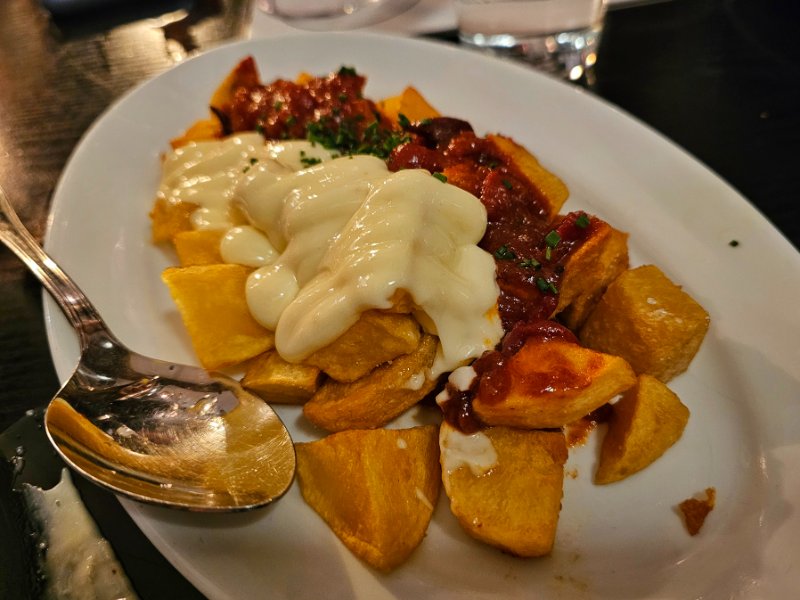
Probably the most famous tapas dish in Spain, Patatas Bravas are fried potato chunks topped with a spicy pimenton (paprika) based sauce. They’re a staple in almost every tapas bar in Madrid and throughout Spain.
In Barcelona they almost always come with a mix of spicy sauce and a dollop of alioli (garlic mayo) but in Madrid it could be just the spicy sauce or a mix, which are usually referred to as patatas mixtas.
Huevos Rotos (or Huevos Estrellados)
This classic tapas dish of fried eggs “broken” over a bed of crispy potatoes is often paired with jamón or chorizo. It’s unpretentious, comforting food that’s ideal for lunch or as part of a tapas dinner, and a reminder that great food doesn’t have to be fancy.
That’s one of the things I look most about the best food in Madrid, it’s often cheap and simple but sooooo delicious!
Casa Lucio is famed for its version, but you can also sample great plates at Restaurante Los Huevos de Lucio nearby. I had a fabulous portion of eggs with mushrooms and morcilla black pudding at Bodegas Rosell by Atocha Station.

Tortilla Española (Spanish omelette)
Eggs, potatoes and sometimes onion make up this Spanish staple. It can be served as a tapa or a main dish and varies from thick and fluffy to almost custardy in the centre.
There is a huge debate around whether onions should be added to the recipe or not – I am 100% a with onion girl myself as it adds extra flavour but see if you can taste a few different ones to help you make your decision!
I am annoyed at myself for not taking a photo of the delicious tortilla I had at Pez Tortilla; I was so hungry I just wolfed it down before I remembered I should have taken a picture!! La Filomena or Casa Carola are also supposed to have great tortillas, so they’re on my list for next time.
Jamón Ibérico
Anywhere you go in Spain this thinly sliced Iberian ham is a must-taste, so make sure you try it either at markets like Mercado de San Miguel or as part of a tapas selection at any bar or restaurant in Madrid. It works beautifully with a glass of local wine or vermouth! We had this dish with a glass of Catalan cava which also went down very well!

Cheese & Cured Meats (Embutidos)
You can’t talk about tapas without mentioning the iconic Manchego Cheese, which appears on almost every tapas menu in Spain. You can either order a plate of it, or a smaller pintxo style tapa where it is served on a slice of baguette bread, sometimes drizzled with olive oil.
Similarly, cured meats like chorizo, salchichón and lomo embuchado, in addition to the Spanish ham, are often Served as sharing platters or simple bar snacks. Spain loves pork in all shapes and sizes so this kind of traditional charcuterie is a common feature of the Madrid food scene.
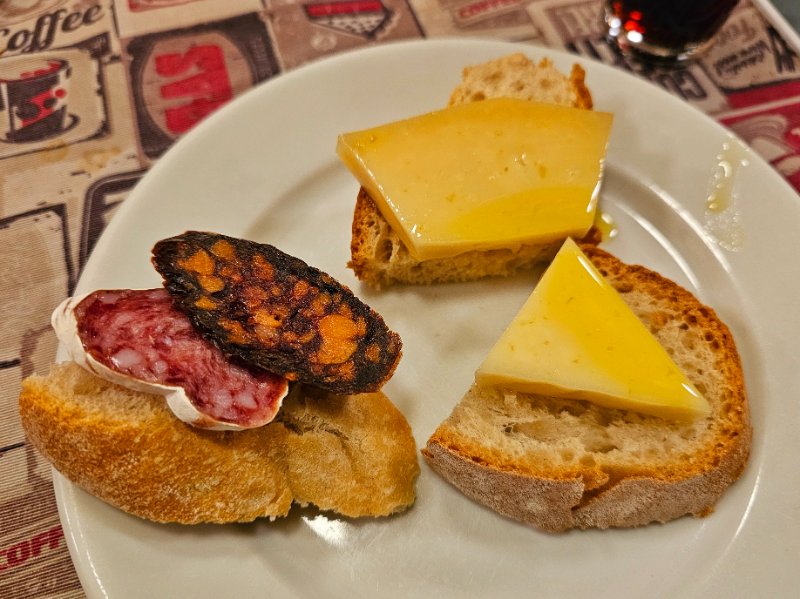
Chistorra
These spicy semi-cured sausages are made from minced pork, garlic, salt and plenty of paprika, which gives it a deep red colour and a slightly smoky, spicy flavour. Unlike fully cured sausages like chorizo, chistorra is usually semi-cured or fresh, meaning it needs to be cooked before eating. It’s usually served fried or grilled until the skin is crisp and the inside juicy – with some bread to mop up the flavoured oil!

Chicharrones
More pork! Chicharrones are pieces of pork skin and fat that are fried until crisp and crunchy. Depending on the region, they may contain a little meat or be almost entirely crackling – basically Spanish pork scratchings! They’re not my personal favourite but can be a tasty bar snack with a cold beer or tinto de verano.

Padrón Peppers
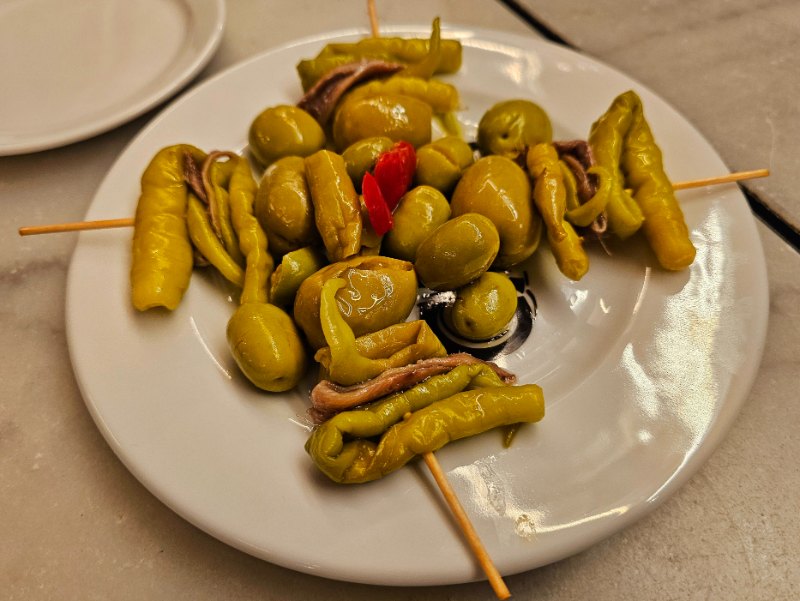
Small green peppers fried and sprinkled with sea salt are a tasty vegetarian tapas dish. Although they’re not originally Madrileño as they came from Galicia, you’ll see them in tapas bars throughout the city and the rest of Spain too, including Barcelona.
It’s said that one in every hundred peppers is spicy, but everyone I speak to about it has a different opinion on whether that is true or not – let me know if you get a spicy one!
They’re not my personal favourite, but you really should try them, and the salty savoury flavour goes great with a beer or vermouth.

Gambas al Ajillo
Definitely a favourite of mine, Gambas al Ajillo is a dish of prawns sizzling in olive oil with garlic, and sometimes chilli and herbs. It’s definitely a must-eat in Madrid as it is truly delicious – and you can mop up the garlicy oil with crusty bread to top it off: perfection!
Places like Casa Lucas or Casa Alberto do lovely versions alongside other tapas, or head to la Casa del Abuelo. The rest of their tapas can be hit and miss, but the garlic prawns are the best!

Champiñones al Ajillo
This delicious tapas dish is simple and delicious – mushrooms sautéed with garlic, olive oil and parsley, often finished with a splash of white wine or lemon.
In Madrid, garlic mushrooms are especially associated with Mesón del Champiñón, a famous bar near Plaza Mayor known for serving giant button mushrooms grilled with garlic and olive oil and stuffed with a chunk of chorizo – don’t miss them!

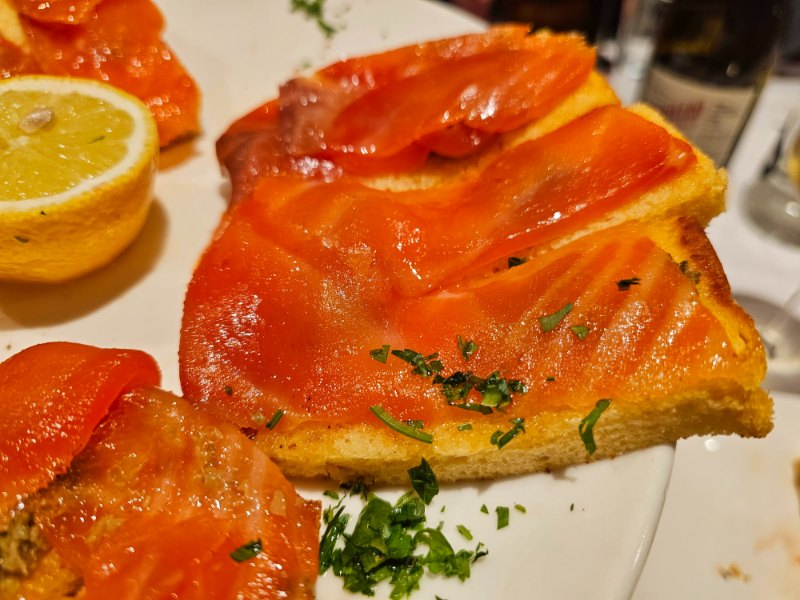
Smoked Trout
This is a speciality of Taberna La Trucha. The tavern has been famous since the 1950s not only for fried fish and aubergines but also for its “verbena de ahumados” (selection of smoked fish), which includes trout, salmon, cod and sardines. Served on a simple canapé, the delicately smoked fish is part of the tavern’s famous selection of ahumados and has been enjoyed by Madrileños for decades.
Some More Adventurous Food in Madrid
I must admit I am not a big lover of offal, which is casquería in Spanish. I like the idea of using every part of the animal to avoid waste, but I do not like actually eating it! Many traditional dishes in Madrid focus on offal, so if you enjoy it then these typical dishes from Madrid are for you!
Callos a la Madrileña
Callos means tripe, and this traditional tripe stew is slow-cooked with paprika, chorizo and morcilla (blood sausage). Rich and full-flavoured, it embodies Madrid’s historic hearth cooking and is probably delicious although I wasn’t brave enough to try it!
Oreja o Morro (Pig’s Ear or Snout)
For adventurous eaters, grilled or fried pig’s ear and morro (pig’s snout) are classic bar snacks reflecting Madrid’s traditional offal culture. Many taverns serve them, and they pair well with a chilled beer – apparently!
Dessert Dishes to Try in Madrid
Let’s come back to something a little easier to stomach: dessert! Traditionally, deserts and sweet treats in Madrid are closely tied to religious celebrations; for example Rosquillas de San Isidro (ring-shaped donuts) that are usually eaten in May for the festival of Madrid’s patron saint, but these two Spanish desserts are my favourites, and available all year round so make sure you don’t leave them off your Madrid food list.
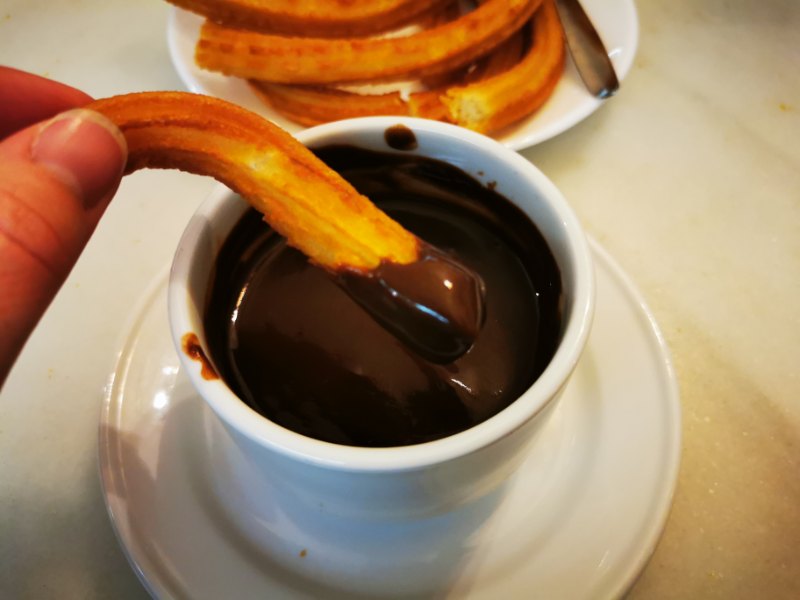
Churros con Chocolate
A sweet treat of deep-fried dough sticks served with a cup of thick drinking chocolate for dipping. It’s a quintessential Madrid breakfast or afternoon snack, so don’t miss it!
The most famous Churreria (Churros shop) is the historic Chocolatería San Ginés near Puerta del Sol and Plaza Mayor, and the nearby Churrería Chocolateria 1902 is also supposed to be very good. I had mine at Chocolatería San Ginés and they were excellent.
Torrijas
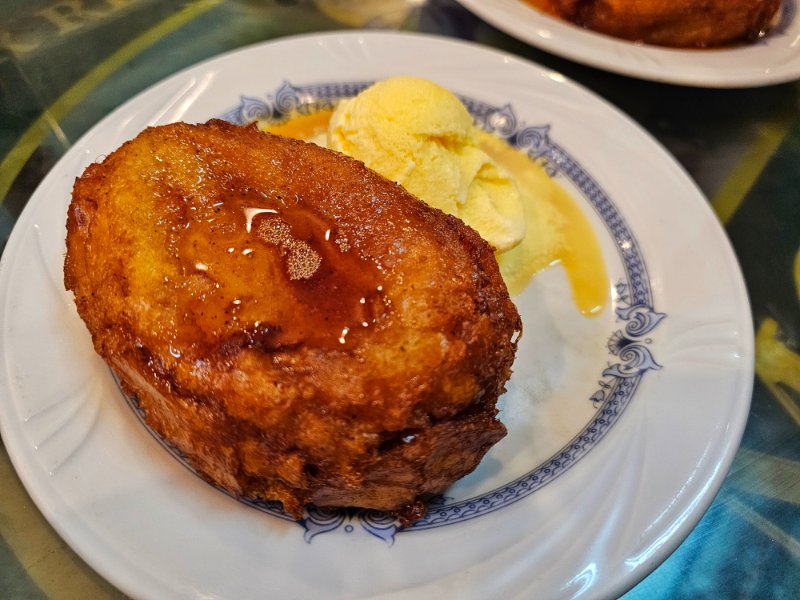
Torrijas are a traditional Spanish sweet made from slices of bread soaked in milk, dipped in egg, fried, and finished with sugar, honey or cinnamon. They’re often compared to French toast, but the flavour is richer and more indulgent.
In Madrid, torrijas are strongly associated with Semana Santa (Holy Week), when bakeries, bars and restaurants across the city put out their best versions, but you can find them all year round.
Madrid is particularly known for classic, no-frills torrijas, made with white bread, cinnamon and citrus peel, although modern pastry shops now do versions with brioche, infused milk or even caramelised tops. An additional scoop of ice-cream isn’t traditional, but it is delicious, and goes really well with the torrijas!
What to Drink in Madrid
Tinto de Verano
Forget sangría, if you want to drink like a local in Madrid, order a tinto de verano. It’s simple mid of red wine and lemon soda or gaseosa (sparkling soda) but very popular in warmer months. Tinto de verano is lighter and less sweet than sangría and far more common among locals. You’ll see it ordered casually with lunch or early evening tapas.
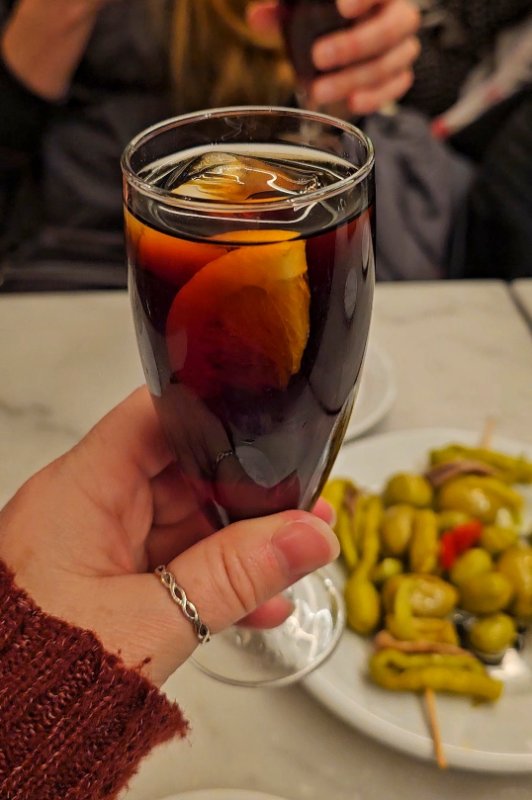
Vermut de Grifo
This red, slightly bitter fortified wine is usually served on tap over ice with an orange slice or olive, especially before lunch. Del Grifo translates as “from the tap”, where the vermut is traditionally poured directly from huge barrels. Drinking vermouth on a Sunday around midday is practically a ritual, particularly in neighbourhood bars and tabernas. It’s quite similar to vermut in Barcelona, with a lot of traditional taverns making their own recipe.
Caña de Cerveza
Cerveza is another must in Madrid. A caña is a small draught beer, poured very cold with a proper head, and designed to be drunk quickly before it warms up. Madrid has a strong beer-with-tapas culture, and hopping between bars for a caña or two is part of everyday life.
Wine
Madrid isn’t as famous for wine as other regions, but the nearby Vinos de Madrid DO wine region produces solid reds and whites that you’ll find on many local wine lists. Ordering the house wine with a menú del día is a very local habit, although I found that at a lot of bars the white wine on offer was always either verdejo or albariño from other Spanish wine regions and red was typically Rioja.
Next time I go back I’ve my eye on a wine tour to visit the Madrid DO to try the local wines!
If you want a sparkling wine then Cava is the usual option, almost always from the Penedes wine region near Barcelona, which is drunk throughout Spain.
I hope this has given you lots of ideas for what to eat in Madrid, and where to eat it! I loved eating all this Spanish food in Madrid, and every time I go back I try something new. Madrid is a big city so it’s impossible to over all of the restaurants in Madrid in a short trip, so it’s a good excuse to go back!
It’s an easy train trip from Barcelona, so while you’re visiting Barcelona see if you can spend more time in Spain and explore other cities like Madrid, Zaragoza or Bilbao. As I explore more of Spain I’ll add more articles to help you plan!