
Want to discover some hidden gems in Barcelona? I must admit, I write this with some reservations as there are so many people who come to Barcelona, I wonder whether anywhere in this city is really hidden anymore. But it is certainly full of gems that are overlooked by visitors who flock to the most iconic sites like La Sagrada Familia, Camp Nou and Park Güell. These secret spots in Barcelona are worth exploring – some take a bit of effort to get to, while others are tucked away down alleyways you would never think to walk down, and other Barcelona hidden gems are in plain sight! Either way, I hope you enjoy exploring Barcelona off the beaten track!
Hidden Gems in Barcelona
The Bunkers at Carmel
A popular date spot for locals is the Turro de Rovira, more commonly known as the Bunkers at Carmel, which has incredible views of Barcelona and the gorgeous blue sea beyond. While it certainly used to be a hidden gem in Barcelona, it is now popular with visitors and has become one of the top photo spots in the city.
That said, it is still relatively off the beaten track so I wanted to include it on the list here. It’s actually what remains of Civil War anti-aircraft bunkers which were built to defend the city against Fascist air raids. After the war, the bunkers became a shanty town known as the Canons district, as a reminder of the previous use of the buildings.
It wasn’t until the 1990s when the people living here were finally rehomed, and the shanty town was torn down. Now, there just remain a few stone buildings from the war, and the MUHBA (History Museum of Barcelona) is dedicated to preserving the site.
Most people just go for the view, though and don’t realise the historic significance of the place! Sunset was one of the best times to visit, when locals go for a romantic date and tourists go to enjoy panoramic views, but now it closes before the sun goes down, as locals complained about tourists leaving piles of trash behind. Entry is free, but please make sure you take all your rubbish away with you.

El Moll de Gregal
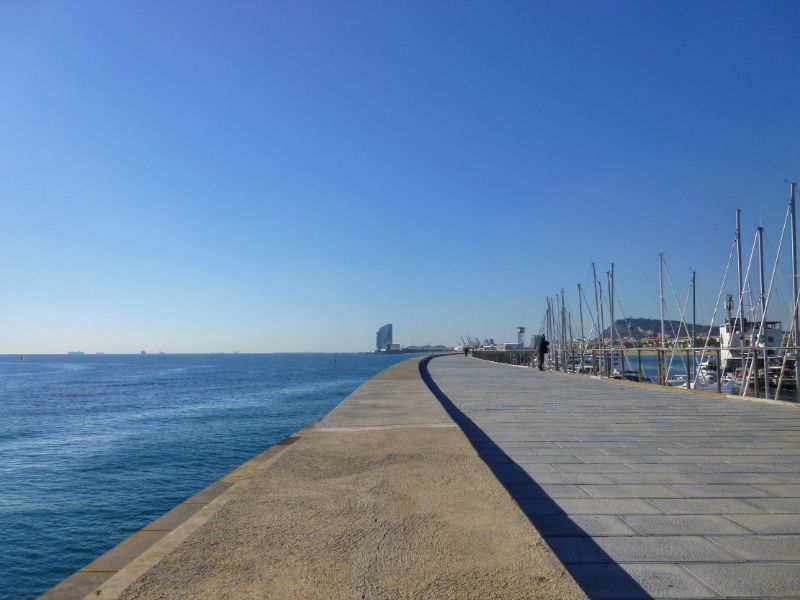
This is one of my favourite places to escape the crowds in Barcelona. I love being by the sea and could just stare out into the blue for hours, but the beaches and boardwalk are often overrun with people, especially during the summer.
However, this concrete walkway that encloses Port Olympic is usually blissfully quiet. Walk out onto the Moll de Gregal from Port Olympic, and continue onto the Escullera de Poblenou for peace and quiet, and lovely views of the beach all the way up to the sail-shaped W Hotel at Barceloneta.
Unfortunately, there aren’t any benches along the walkway, but at the end, there is a small space where people tend to sit. There is a statue commemorating the 1992 Olympic Games and steps down to the port if you fancy a different view on your walk back.
Collserolla Natural Park
If you want to get out of the city and go hiking in Barcelona, then this beautiful natural park is for you. Sandwiched between Barcelona and the town of Saint Cugat del Valles, the park covers some 8,000 hectares so you have plenty of space to get away from it all and breathe in the forest air.
Collserolla does get busier on the weekend when locals take to the hills to hike and bike their way around the park, so it’s best to visit during the week for a more peaceful time as most visitors still don’t venture here. Wild boar live in the park so keep an eye open for them!
There are hiking trails all around the park, Alltrails has some good ones listed or you can take a look on the official Collserolla Park website – some of which is in English, but not all. Some trails have wonderful views of Barcelona, and others take you deep into the forest and mountains.

Fabra Observatory
Close to Tibidabo Park and the Torre de Collserola is another hidden gem in Barcelona – the Fabra Observatory. This astronomical observatory has amazing views of the city, and its 1904 telescope is one of the largest and oldest in Europe still in operation.
You can visit the observatory during the day on Sunday mornings (tours given in Catalan only) or at night, with tours on Saturday provided in English, Spanish and Catalan.
Visits include a guided tour of the museum and the halls of Art Nouveau building including the auditorium and meridian telescope, a lecture, screening of a video on astronomy, and observing with the telescope, as well as a glass of cava or juice.
You can even book a table for dinner with an amazing view of the city before your visit! Get more details on the Observatory website here.

Sant Felip Neri Square – A Barcelona Hidden Gem in the Gothic Quarter
This peaceful square in the Gothic Quarter is a quiet oasis away from the crowds, and easily missed if you don’t specifically look for it, although if you join a tour of the Gothic Quarter, chances are they will bring you here.
The pretty square has a beautiful 17th-century church and an school building with a tragic history – it was the site of a bombing during the Spanish Civil War and 42 people were killed, most of them children who were sheltering in the church.
The walls of the church still bear shrapnel marks from the bombing, so while you’re here, take a moment to remember those who were killed. In the centre of the square is a little fountain, and it is a lovely place to take a moment for yourself – if you can avoid the tour groups who now come here!

The Temple of Augustus
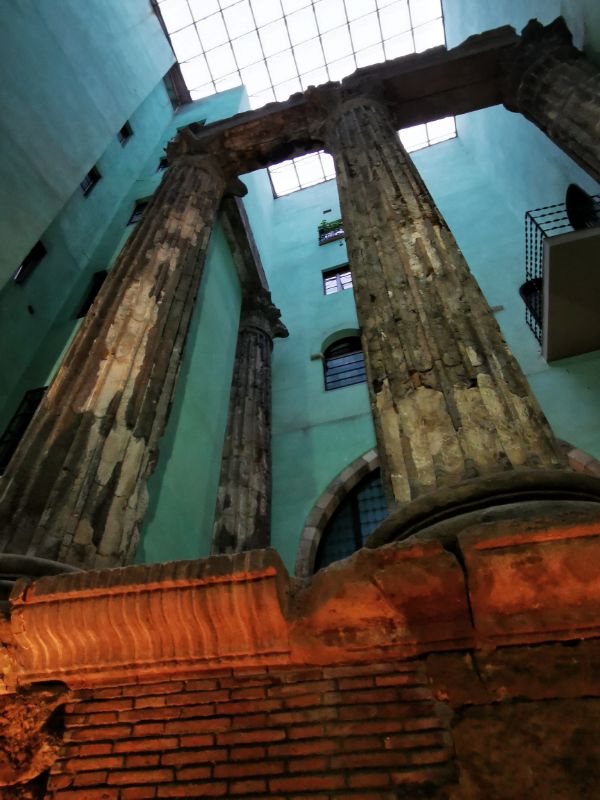
Another hidden gem in Barcelona, the Temple of Augustus is tucked away in an alleyway behind the Gothic Cathedral, and you could walk by just metres away and never know it existed. It’s places like this that remind me why Barcelona is worth visiting, beyond the typical tourist sites.
The Temple of Augustus is the remains of a Roman temple built in the 1st Century AD when Barcelona was known as the Roman settlement of Barcino. The four remaining columns, of this once 37-metre-long temple are enclosed in an internal courtyard. The funniest part is that the temple is surrounded by apartments – imagine looking out of your bedroom window to see this!
It is cared for by the MUHBA (Musuem of the History of Barcelona) and entry is free during the opening times of Monday to Friday (excluding public holidays) from 10am to 2pm and from 4pm to 7pm.
The Labyrinth Park at Horta
NB: The Labryinth Park is currently closed until further notice, due to restrictions on accessing Collserola Natural Park and measures against swine flu
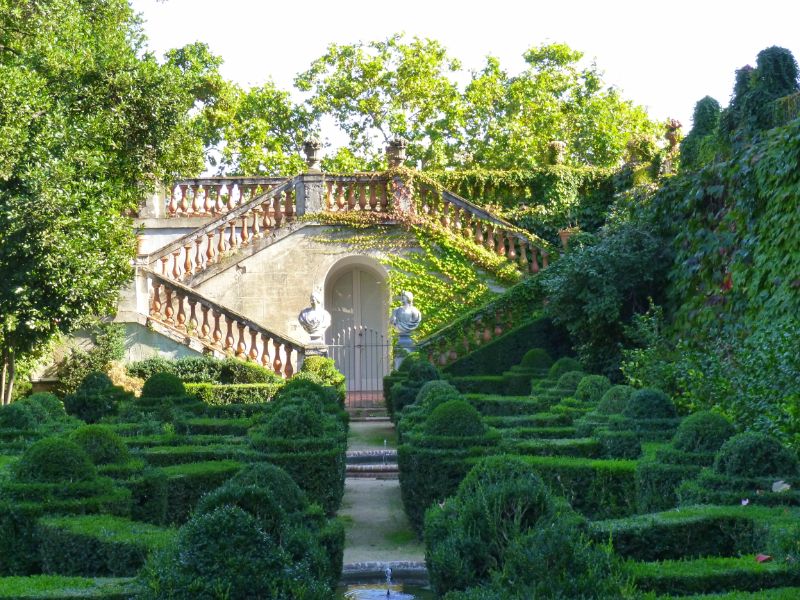
Parc del Laberint d’Horta takes a bit of dedication to get to, being pretty much at the end of the blue metro line, but this hidden place in Barcelona is well worth the effort. The garden is beautiful, and the hedgerow labyrinth will keep you busy as you try to figure out how to escape!
The Park houses Barcelona’s oldest conserved garden and is a blend of styles. Work on the garden began in 1791 when the owner decided to collaborate with an Italian architect to design a neoclassical garden, including the cypress tree hedge maze which gives the garden its name.
In mid-19th century, the park was expanded to include a romantic garden with flower beds, gazebos, huge trees and a waterfall. It’s a lovely place to wander around and to get away from the crowds for a while.
It’s free to visit on Sundays and Wednesdays, otherwise entry tickets are just a couple of euros. The Park is open daily from 10am till 8pm in the summer, and until 6pm in the winter. It’s even open on Christmas day from 10am till 2pm!
Casa Vicens
This lesser-known Gaudí masterpiece was first opened to the public in 2017 and is a stunning example of his early work – it was the first of the houses in Barcelona that Gaudí designed.
Casa Vicens is tucked away down a quiet street in Gracia, and while the news is spreading that this beautiful house is worth visiting, and is still a hidden gem in Barcelona and is much quieter than Casa Batlló and La Pedrera, the two most famous Gaudí houses.
Gaudí was commissioned to design a summer house for Manel Vicens y Montaner, and created something unique that was to be the beginning of the Modernist movement in Barcelona. The house features Oriental and Moorish influences and is covered with spectacular green and white tiles contrasting with dark red wood.
The house was declared a World Heritage Site by UNESCO in 2005 and you can join a guided tour or visit at your own pace with an audio guide. There are some beautiful nooks and crannies to take photos of here. My favourite photo spots are in the garden at this beautiful doorway, and in the blue smoking room which is a gorgeous colour.
From April to October Casa Vicens is open daily, from 10am to 8pm, with reduced hours over the winter. Entry costs €21 per adult.
BUY TICKETS FOR CASA VICENS

Torre Bellesguard
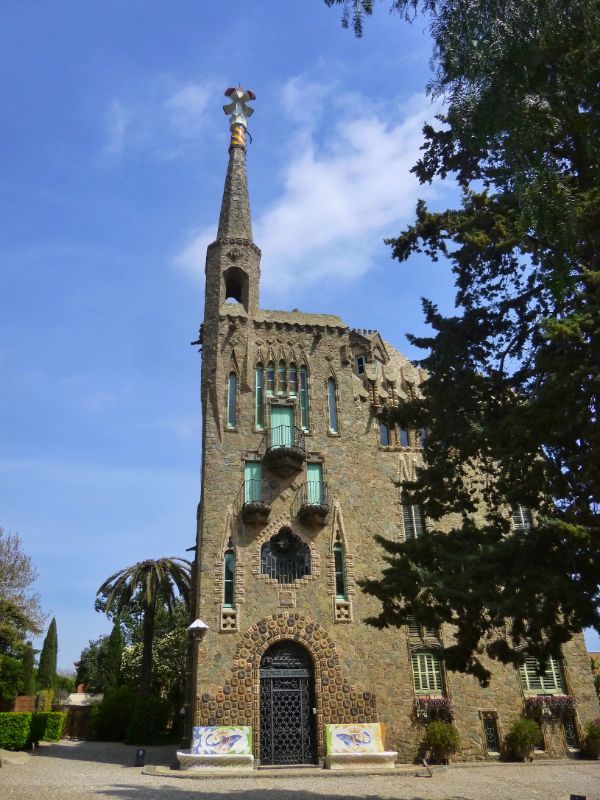
Bellesguard is another Gaudí building that hardly ever gets mentioned, which is why it has to be one of Barcelona’s hidden gems. It is owned by a private family who open up part of the house for tours, and other occasional events.
It isn’t as easy to visit as some of Gaudí’s other works though, with opening hours limited to between 10am – 2.30pm from Tuesday to Sunday when you are best to pre-book for the audio tour.
Guided tours of the interior are only offered on Saturdays and Sundays, with the English tour at 11am.
Torre Bellesguard is a small building, one of the unique features is the tall tower with views of the city and the rooftop which is designed in the shape of a dragon, one of Gaudí’s favourite motifs.
You can buy tickets for just the exterior and audioguide from €12 per person, but the tours have to be reserved and cost €20 per person. ➡️Book on the official website here.
The Pedralbes Neighbourhood
The whole area of Pedralbes could be classified as a hidden gem, as it is far enough out of the city that most people skip it! However, if you make the trip there (about 30 minutes on the metro from Catalunya) you could easily spend a full day exploring the area as there are several unique places to visit off the beaten track.
Pedralbes Monastery
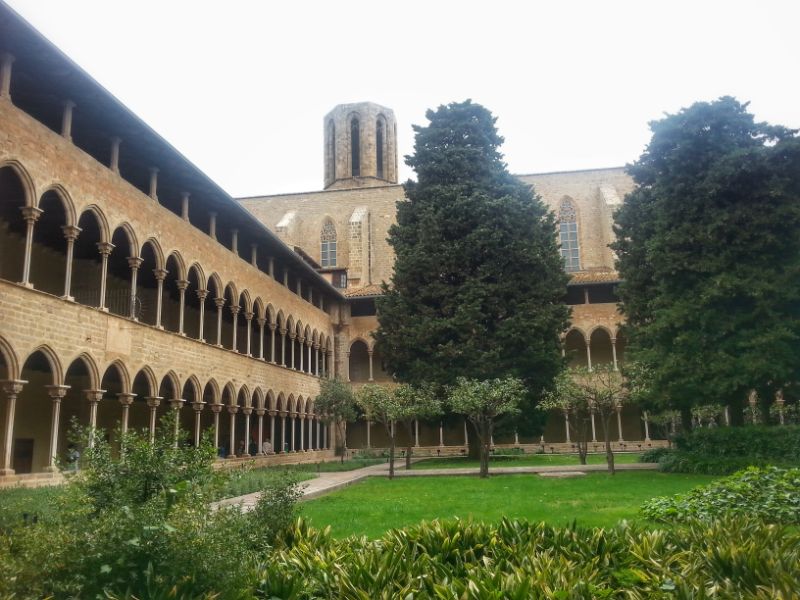
If you are a lover of religious buildings, then the Pedralbes Monastery should be on your list of places to visit in Barcelona. Even if not, it makes for a very peaceful afternoon. There is free entry every Sunday after 3pm, or on the 1st Sunday of the month there is free entry all day.
Ask the attendant on the way in for the audio guide, as they don’t seem to volunteer them on the free days, but some people did have them so perhaps you just have to ask. The pretty gardens in the centre of the monastery are filled with flowers and herbs, and you can get some nice photographs of the arches around the outside.
The highlights for me included La Capella de Sant Miquel, St Michael’s Chapel, showcasing the beautiful painted murals by Ferrer Bassa in 1346. An accompanying exhibition shows the painstaking process of restoring the murals to their former glory.
A short visit of 45 mins to an hour is plenty to wander around the grounds, and although I wouldn’t say this is a must-see for every visitor, it certainly is a hidden gem in Barcelona that I would recommend if you are craving some peace and quiet in a relatively tourist-free part of the city.
Cervantes Park and Rose Garden
If you visit Barcelona in the spring and summer, make sure you go to the beautiful rose garden at Parc de Cervantes. It is a little way out of the city, at the end of the Green Line metro at Zona Universitaria, but it is worth the journey – especially when the roses are in bloom.
The park contains some 2,000 rose species and varieties that make up a collection of more than 10,000 rose bushes. They reach full bloom between May and July, which is the best time to visit the garden.
Even if it isn’t the season, it is still a pleasant park with grassy areas and a fountain, as well as some beautiful white statues and fountains among the 4 hectares of the park. The nearby Parc de Pedralbes has more lovely gardens and a fountain to enjoy too, and you could combine it with a visit to the Pedralbes Monastery mentioned above.
Entry is free, the park is open from 10am to 7pm from 1st November to 31st March, and from 1st April to 31st October from 10am to 9pm.

Hidden Gaudi Works in Pedralbes
Gaudí left his mark all over Barcelona, and although his finest works are the most popular places to visit, you can see some interesting pieces in Pedralbes. They were all very quiet when I visited!
Pavellons Guell (Guell Pavillions) – this was originally a large complex for a factory and staff housing for Finca Guell, owned by Gaudí’s patron. All that remains now is the gateway and two buildings (a gatehouse and stables) showing some of Gaudí’s early experiments with Modernism. You can’t go inside, unfortunately, but the magnificent dragon on the wrought-iron gates is worth a look!

Font D’Hercules (Hercules Fountain) – this fountain was undergoing renovations when I visited, and I must say I was underwhelmed – but it’s a short walk from the Pavillions gate so if you’re in the area you may as well pop in. This fountain was designed by Gaudí in 1884 and is set in the gardens of Pedralbes Palace.
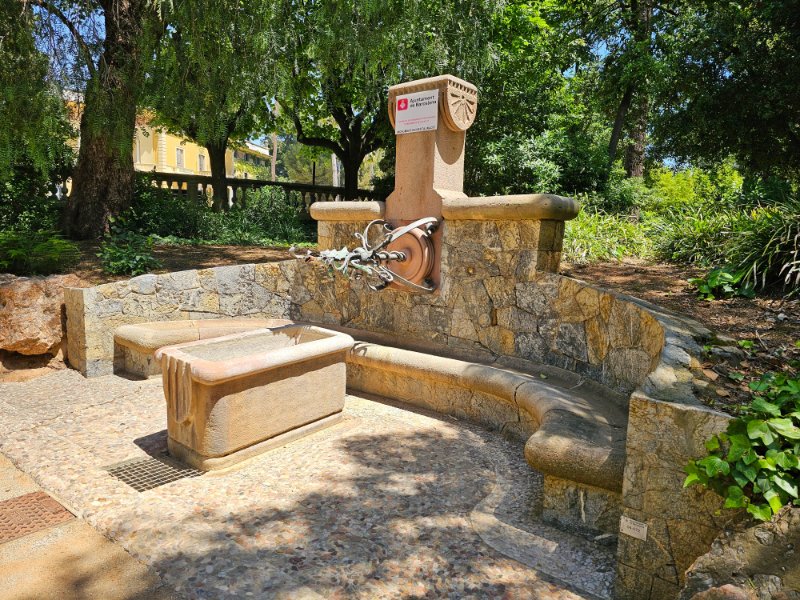
Portal Miralles – This stone gateway was designed by Gaudí in 1901 as part of a farm fence, and now stands at the entrance to a housing area filled with modern apartments. Similarly, I wouldn’t make a special trip out here just to see this, but while you’re in the area, you can stop by. There is also a statue of Antoni Gaudí so you can take a selfie with the man himself if you like!

La Monumental Bullring
This is a bit of a strange place to recommend, as I would never suggest going to watch a bullfight, but this beautiful, if sombre, place is one of Barcelona’s secrets that most Catalans don’t like to shout about since Bullfighting was banned in 2012.
The Plaza de Toros Monumental de Barcelona, more commonly known as La Monumental, hasn’t been used for bullfighting since 2011 and is now an eerie monument standing empty but completely intact.
It was the last bullring in Catalonia to host a bullfight, and everything seems like it is waiting to host an event like that again, with rows and rows of plastic seats surrounding the central sandy arena. It is occasionally used for concerts, but there are still faded posters on the walls of the last few bullfights.
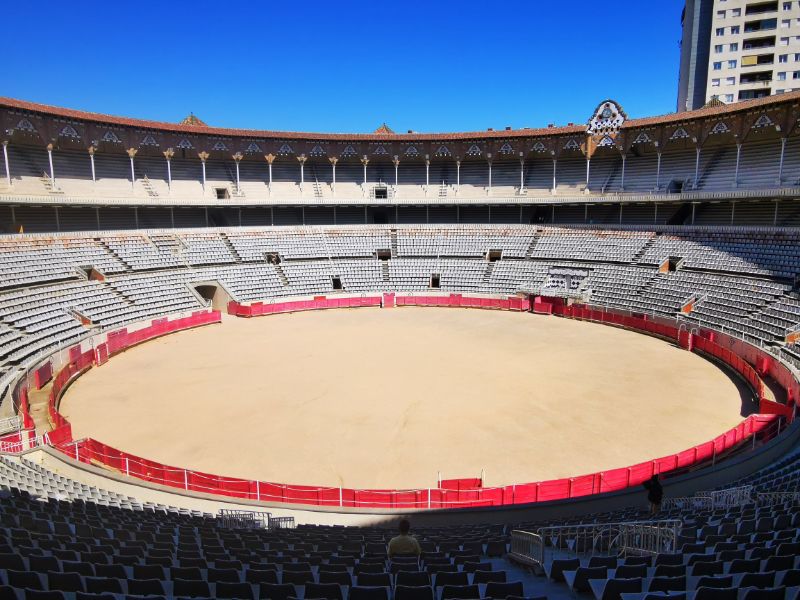
It costs 6 euros to go inside, and you can explore freely, going out onto the arena or climbing up to the seats to imagine what it might have been like to watch the spectacle.
You can also enter the area where the bulls were kept, and I noticed horn marks on the metal gates, opened by a pulley system operated from above, safely out of reach. It was a strange experience to walk through the concrete rooms, seeing where the horses were fed and a bar where the toreadors would have celebrated after their fights.
There is also a museum above the stables with photos of famous bullfighters, intricately decorated costumes and taxidermy heads of some poor bulls, who were frequently missing ears as they were kept as prizes. I am most certainly against bullfighting but coming here was morbidly fascinating to see how bullfighters were revered as celebrities.
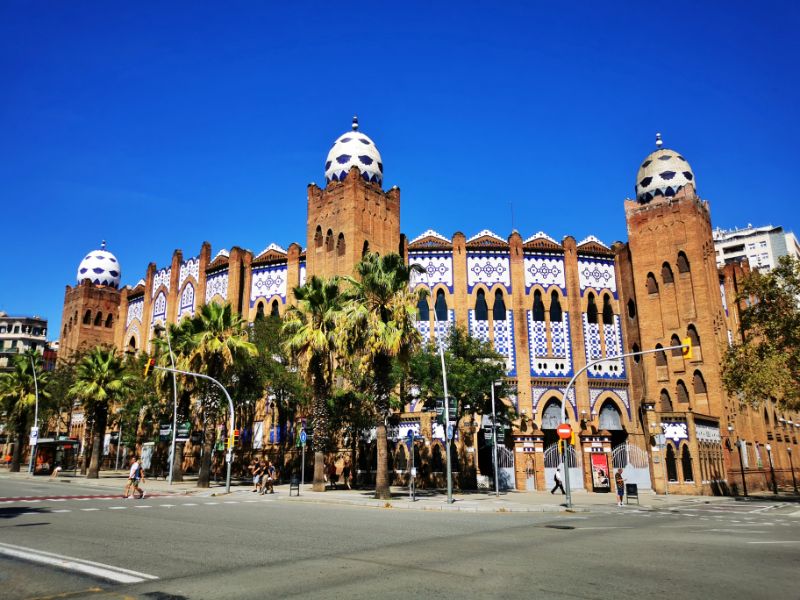
From the outside, La Monumental is a beautiful building, with blue and white tiles and striking towers. You can get some nice photos from across the road if you don’t want to venture inside.
Poble Nou Cemetery
When I first lived in Barcelona as a student (more than 20 years ago – eek!) I lived on the street next to this beautiful cemetery for a whole year yet never went inside. Perhaps that’s because I found walking around graves and tombs to be a little morbid when there are so many other fun things to do in Barcelona!
However, when I finally visited Poble Nou Cemetery, I enjoyed the peace and quiet here, and found the experience quite moving. It is certainly a non-touristy thing to do in Barcelona, and be sure to treat the area with respect.
There are rows of memorials to people who have passed away, some with photos, flowers and candles burning in memory of those who are no longer with us. Some of these are very recent, until you move into the older sections of the cemetery.
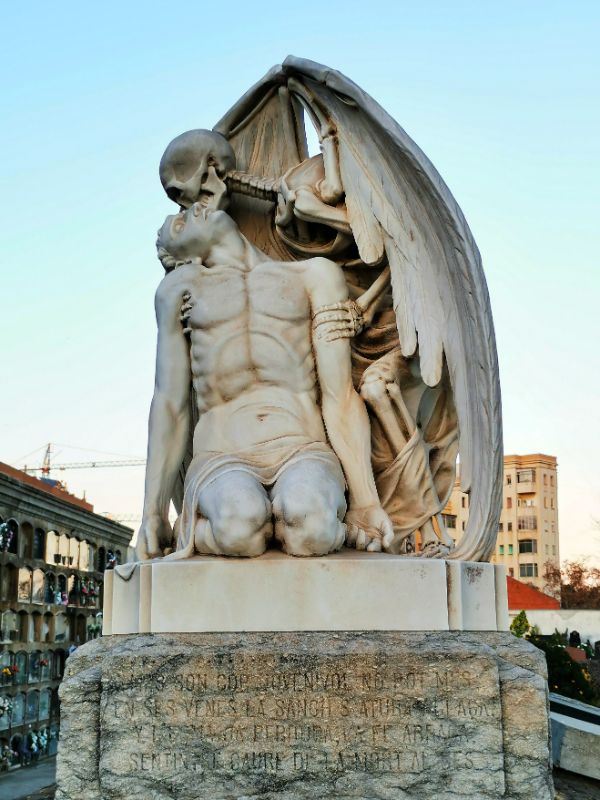
Here you will find more elaborate tombs and mausoleums, decorated with statues of angels and intricate stone carvings. One tomb in particular caught my eye – the Kiss of Death. At this grave, a winged skeleton cradles a young man, leaning over him and kissing him on the forehead.
The grave belongs to the son of the Llaudet family, who were important textile manufacturers. Josep Llaudet Soler died in 1930 when he was young and seemingly so full of life until disease and death took him, and his father wanted a memorial to him that embodied that.
This Barcelona hidden gem is certainly worth a visit if you are in Poble Nou, the beach is close by, and Poble Nou has some great bars, restaurants and clubs to enjoy, as well as some excellent street art.
Carrer de Blai
This street in Poble Sec is not in the typical tourist areas of Barcelona and it is great fun to visit and eat and drink your way down. While it’s not a hidden gem among locals, it is more of a local area and one of my favourite places in Barcelona to have a few drinks and some tasty snacks.
Carrer de Blai is a whole street that is full of pintxo bars. Pintxos are a traditional type of tapas originally from the Basque Country, which are chunks of bread with a variety of tasty toppings that cost a couple of euros each.
The best way to enjoy pintxos is to move from bar to bar and order a drink and a couple of pinchos in each place. My personal favourite bars here are La Tasqueta de Blai and Taberna Blai Tonight, but Blai 9 and L’Atelier de Blai are also excellent, and there are lots to choose from!

A Hidden Gem Near Barcelona: Alella Wine Region
This is actually the closest wine region to Barcelona, yet most people don’t even know it exists (myself included until recently!). As much as I love the Penedes region, the unique thing about Alella is that you can take a bike ride to Alella along the coast, enjoy some wine tasting at local vineyards then cycle back to the city.
You could also join a wine tour which combines a boat cruise along the coast with wine tasting as you explore on eBikes – doesn’t that sound wonderful? I also enjoyed a fantastic wine tasting and vineyard picnic as well as a wine tasting in this Alella winery, it was amazing!
From Barcelona: Sailing and E-bike Winery Tour with Tastings
- Guide
- Olives, cheese, salami, and crackers
- Soft drinks, beer, wine, cava, and sangria (2 or 3 drinks per person)
- Wine tasting at a vineyard in the Alella Wine Region
- e-bike or car between Alella Port and the winery (depending on option selected)
- One-way sailing between Barcelona and Alella Port
- Chance to swim in the sea before going to the winery
- Hotel pickup and drop off not included
CHECK AVAILABLE DATES AND PRICES
A Bonus Hidden Gem on La Rambla
A hidden gem that I wouldn’t go out of my way to visit, but is worth popping in as you pass, is inside the unlikely Ale Hop store near the bottom of La Rambla (get the exact location here), which has an incredible ceiling in the back section of the shop. It’s a stunning design that you certainly wouldn’t expect by looking at it from the outside!

These are just a few of the many hidden gems in Barcelona that are worth visiting. By exploring Barcelona off the beaten path, you can discover the unique and authentic side of the city that most tourists never see, so take your time here and get to know the real Barcelona beyond the typical tourist sites!