
You can’t come to Barcelona and not visit one of Gaudí’s magical creations. Antoni Gaudí designed several notable modernist works in Barcelona, from lampposts to housing estates and his unfinished masterpiece, La Sagrada Familia Basilica. However, in this article, I’m going to focus on the houses he designed for some of Barcelona’s wealthiest families. If you want to see some of the best modernist architecture in Barcelona Spain, you are in the right place! Let’s learn more about the most famous and iconic Gaudí houses in Barcelona!
Who Was Antoni Gaudí?
Antoni Gaudí (full name: Antoni Gaudí i Cornet) was a Catalan architect who lived from 1852 to 1926. He is widely regarded as one of the most significant figures in the history of architecture and is known for his distinctive style and innovative approach to design, which was way ahead of his time.
Gaudí’s designs went beyond conventional architectural styles of the period, and he was a key figure in the Catalan Modernism movement. His work featured organic forms and intricate detailing, drawing inspiration from nature, religion, and Catalan culture to create designs that no one had ever thought of before.
He was passionate about creating buildings that were in harmony with their natural and cultural surroundings and left an incredible legacy in Barcelona and the world of architecture as a whole.
Gaudí Houses in Barcelona You Should Visit
These 6 Gaudí houses in Barcelona showcase the remarkable talent and skill of Antoni Gaudí, with each building strikingly different but bearing some of the same traits common in all his work, such as wrought ironwork and creative use of materials and natural light.
Casa Batlló
Location: Passeig de Gràcia, 43 08007 Barcelona
➡️Buy Casa Batlló entry tickets here
This stunning modernist building is known for its distinctive and imaginative design. Gaudí renovated it in the early 20th century, and it is often seen as one of the architect’s masterpieces, as well as a personal favourite of mine!
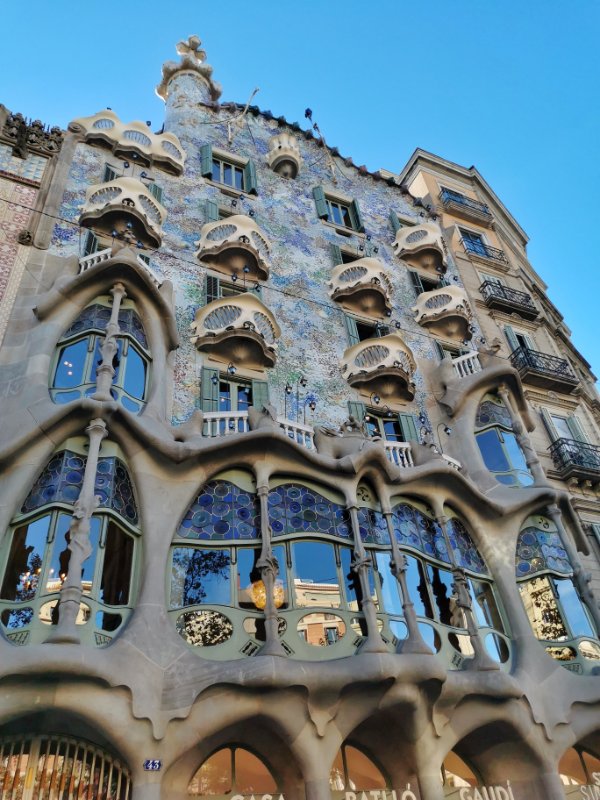
Located in the heart of the city’s Eixample district, Casa Batlló is renowned for its extraordinary façade, which resembles a curvy and colourful dragon’s back.
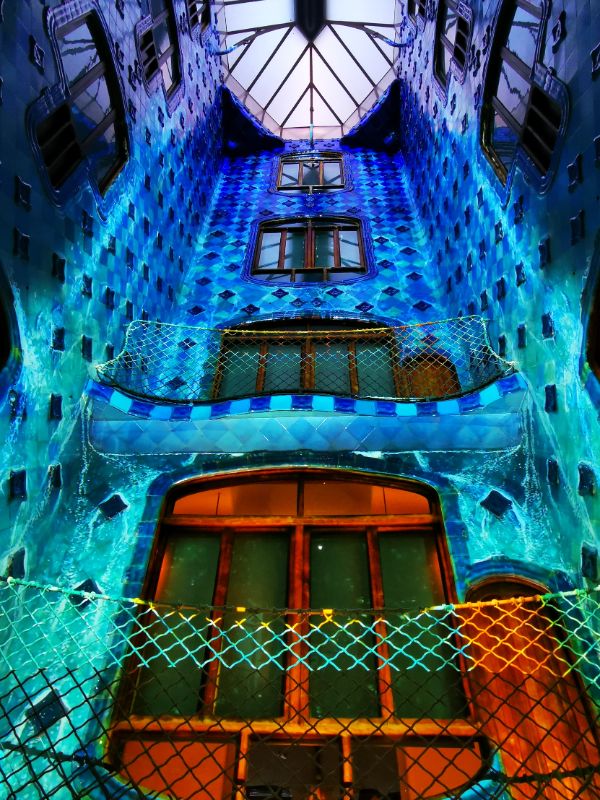
Gaudí transformed what was originally a conventional 19th-century townhouse into a fantastical masterpiece, incorporating organic shapes, colourful mosaic tiles, and stained glass windows throughout the building.
Casa Batlló is not just a beautiful building; it’s also an early example of sustainable design. Gaudí’s vision included innovative ideas for natural ventilation and lighting, showing a commitment to eco-friendly methods and principles that were unheard of at the time.
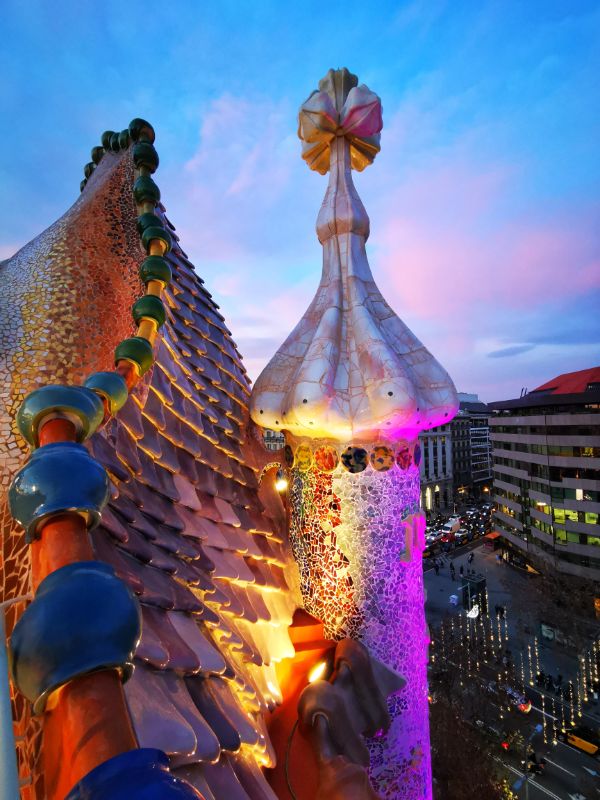
Every aspect of Casa Batlló, from its chimneys on the rooftop terrace to the spacious interior, is a testament to Gaudí’s talent and his ability to blend art, architecture, innovation and nature into one flawless design.
My favourite part of Casa Batlló is the curvy colourful façade and the rooftop terrace where you can clearly see the scales running along the dragon’s back and the small tower representing the spear of St George (Sant Jordi in Catalan).
I read once that Gaudí’s teacher once said he was either a genius or a madman – I think it is definitely the former!
How to Visit Casa Batlló
You can admire Casa Batlló from the outside for free, where you can see the different colours on the façade. Casa Batlló is often decorated with a light show or other unique decorations like roses for Sant Jordi festival on 23rd April, so at the very least I’d recommend coming here to see it.
However, going inside is well worth it, when you can see how Gaudí worked his magic on the interior as well. Buy your tickets in advance to avoid long queues or missing out entirely! Early bird tickets are available for entry first thing in the morning, or you can join a guided tour.
➡️Buy Casa Batlló Entry Tickets with Self-Audioguide Tour
➡️Casa Batlló Early Access Entry with Self-Audioguide Tour & Virtual Reality Tablet
➡️Fast Track Casa Batlló Guided Tour
Casa Milà (La Pedrera)
Location: Pg. de Gràcia, 92, L’Eixample, 08008 Barcelona
➡️Buy Casa Mila La Pedrera entry tickets here
Another one of Gaudí’s famous residential buildings, Casa Milà is renowned for its undulating stone facade and wrought-iron balconies.

Casa Milà is also known as La Pedrera, which means stone quarry, in reference to the shape and design of the building, resembling a quarry. I’m not sure about that, but it is another Gaudí house you definitely need to see! It’s also just a couple of blocks away from Casa Batlló, so it’s easy to walk to from there.
Gaudí designed Casa Milà in 1906-1912, and it was the final work he completed before his death. It was commissioned by Pere Milà and Roser Segimon, and the name ‘Casa Milà’ means “house of the Milà family”.
The couple occupied the main floor and rented out the other apartments, and there are still people living in Casa Milà today!
Gaudí was the first to incorporate an underground car park in a residential building, and Casa Milà had space for 20 vehicles, including horses and carriages, and automobiles. Gaudí consistently demonstrated his talent in these innovative designs, which showed just how ahead of his time he was!
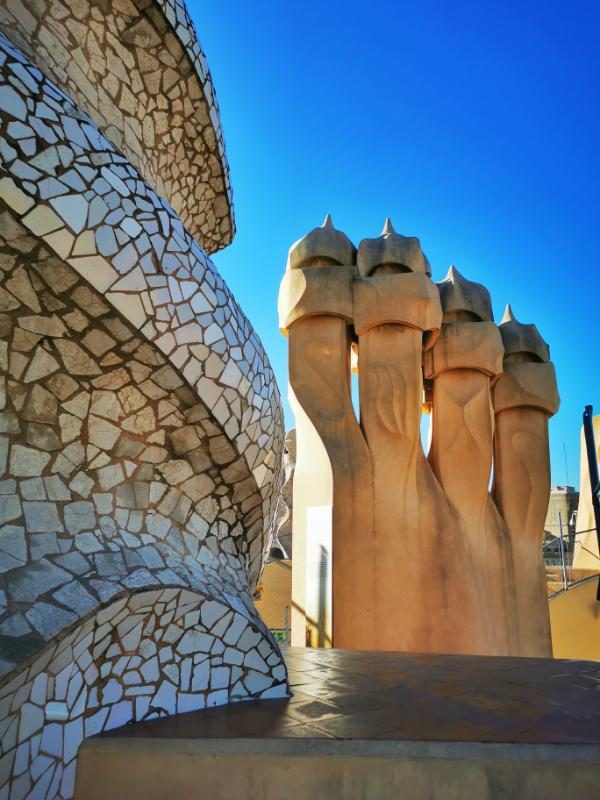
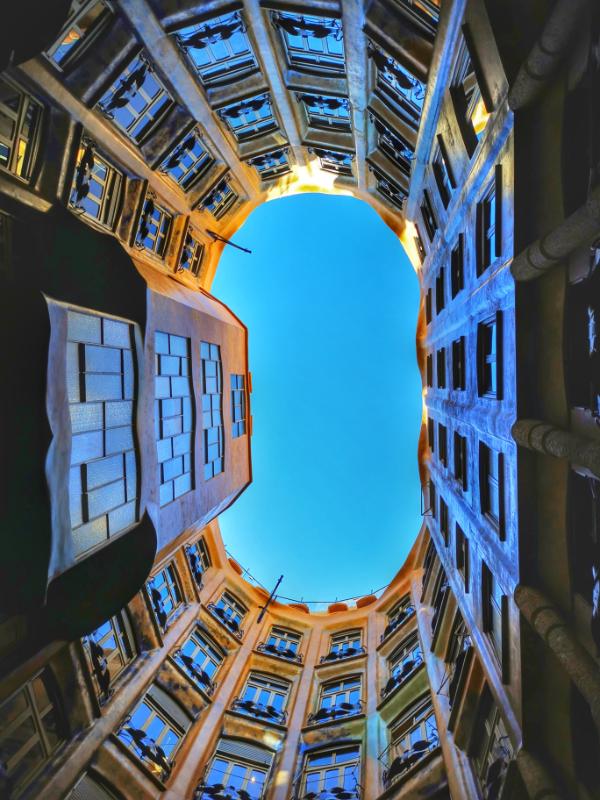
The building’s rooftop is another highlight – a surreal landscape dotted with sculptured chimneys resembling warriors standing guard. Inside, La Pedrera features a series of fluid, organic spaces characterised by curved walls, twisting staircases and natural light streaming through skylights and inner courtyard.
How to Visit La Pedrera-Casa Milà
Similar to Casa Batlló, you can see the outside of La Pedrera for free, but you’ll need to buy tickets to go inside. Book your preferred time online, and you’ll also get an audioguide with your ticket and access to the famous rooftop terrace.
You also have the option to add a new Mixed Reality experience where you get a special pair of mixed reality glasses so you can see holographic elements among the design. I haven’t tried that myself so if you have please let me know what you think of La Pedrera Virtual Experience!
Early birds will love the Sunrise Guided Tour which includes early entry to La Pedrera before the crowds and access to areas not usually included in the standard tour. There is also an opportunity to join La Pedrera Night Experience which involves an audiovisual display on the roof terrace and a glass of cava.
➡️La Pedrera Entry with Self-Audioguide Tour
➡️La Pedrera Sunrise Guided Tour
Casa Vicens
Location: Carrer de les Carolines, 20-26, Gràcia, 08012 Barcelona
➡️Buy Casa Vicens entry tickets here
Casa Vicens is Antoni Gaudí’s first masterpiece and a unique design that incorporates Moorish and Oriental influences.
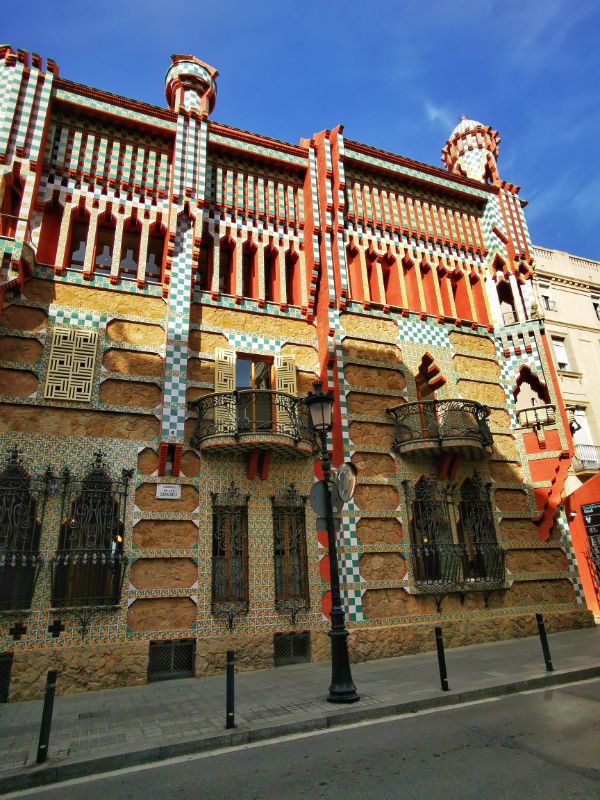
This was one of Gaudí’s earlier works and is considered one of the first buildings of the Art Nouveau / Modernist movement in Spain. It is still one of the hidden gems in Barcelona that many visitors overlook, opting to stay with the more famous Gaudí houses, but don’t miss this wonderful place!
Completed in 1888, Casa Vicens is another unique building in Barcelona and has a striking façade covered with colourful ceramic tiles and intricate wrought-iron balconies, showcasing Gaudí’s fascination with natural forms and ornamentation.
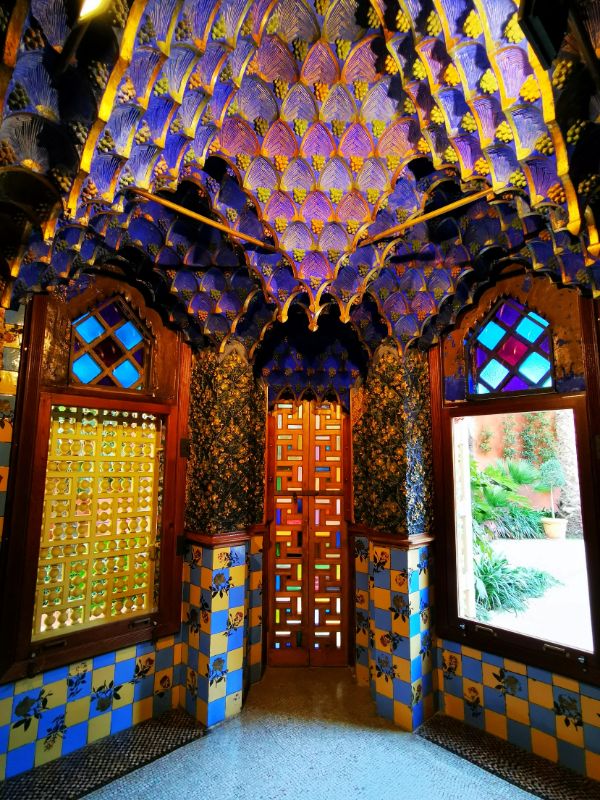
The interior of Casa Vicens is equally impressive, with richly decorated rooms that reflect the eclectic tastes of its original owner. The house also has lush gardens with some great photo opportunities and a rooftop terrace.
How to Visit Casa Vicens
Again, you can see part of the exterior of Casa Vicens from the street, but this is just a small part of the house which is one of my personal favourite Gaudí buildings in Barcelona. Buy tickets online in advance, entry includes an audio guide with your ticket. You can also join a guided tour which then allows free time to explore anything you want to go back to.
➡️ Gaudi’s Casa Vicens Entrance Ticket
➡️Gaudi’s Casa Vicens Guided Tour

Palau Güell (Güell Palace)
Location: C/ Nou de la Rambla, 3-5, Ciutat Vella, 08001 Barcelona
➡️Buy Guell Palace entry tickets here
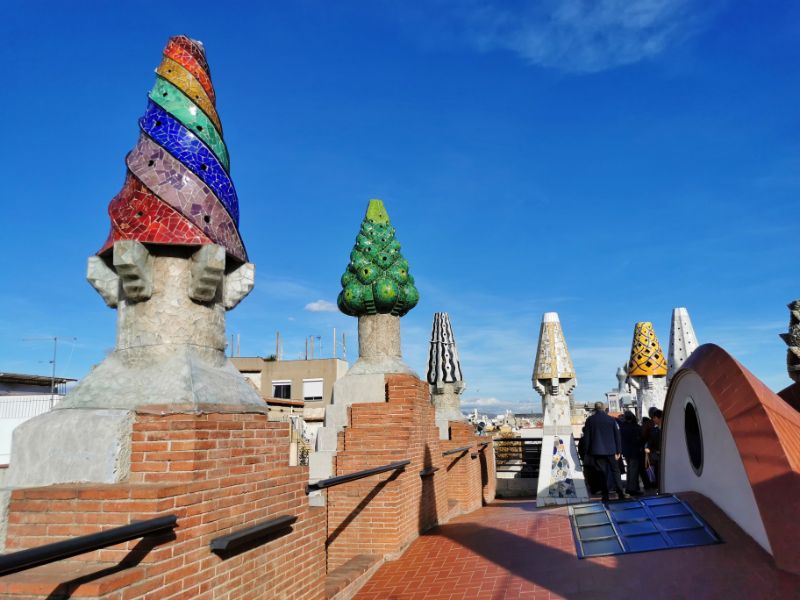
Gaudí designed this mansion for the industrial tycoon Eusebi Güell, who also commissioned him to design Park Güell. The colourful chimney pots on the roof and the ornate central hall are the highlights of this Gaudí house.
Palau Güell or Güell Palace is in Barcelona’s Raval neighbourhood, just off La Rambla. It was one of Gaudí’s early works, completed in 1890, and features distinctive architectural elements unique to this building.
Güell Palace was designed as a private residence for Güell and his family, and Palau Güell showcases Gaudí’s innovative approach to architecture and his mastery of space, light, and materials.
The mansion is characterised by its ornate façade with wrought-iron detailing, and the rooftop terrace with colourful mosaic chimney pots, reflecting Gaudí’s fascination with organic forms and the trencadis mosaic technique, which would also feature in his later designs.
Inside, Palau Güell features a series of opulent rooms decorated with intricate woodwork, elaborate ceilings, and rich furnishings, all designed to impress and entertain guests of the Güell family.
The highlight of Palau Güell is its stunning central hall, crowned by a parabolic dome with a skylight in the centre, decorated with intricate geometric patterns which draw the eye up towards the ceiling.
How to Visit Palau Güell
The austere façade is all you can see from the outside, although you can catch a glimpse of the chimney pots from the street. Book skip-the-line tickets to avoid long wait times, with an audioguide included.
➡️Palau Güell (Güell Palace): Entry Ticket
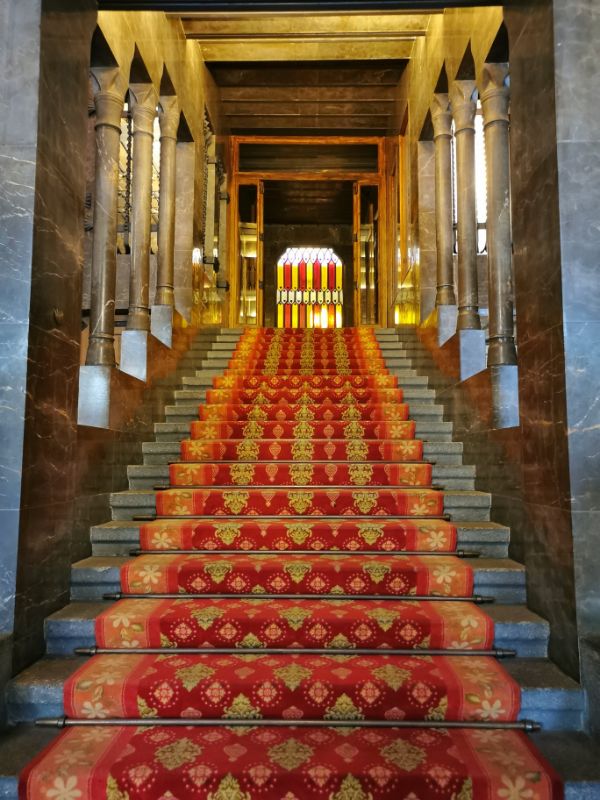

Bellesguard
Location: Carrer de Bellesguard, 20, Sarrià-Sant Gervasi, 08022 Barcelona
➡️Buy Bellesguard entry tickets here
Bellesguard, also known as Casa Figueres, is a lesser-known architectural gem designed by Antoni Gaudí that combines a unique blend of medieval and modernist influences and looks more like a castle than a modern home!
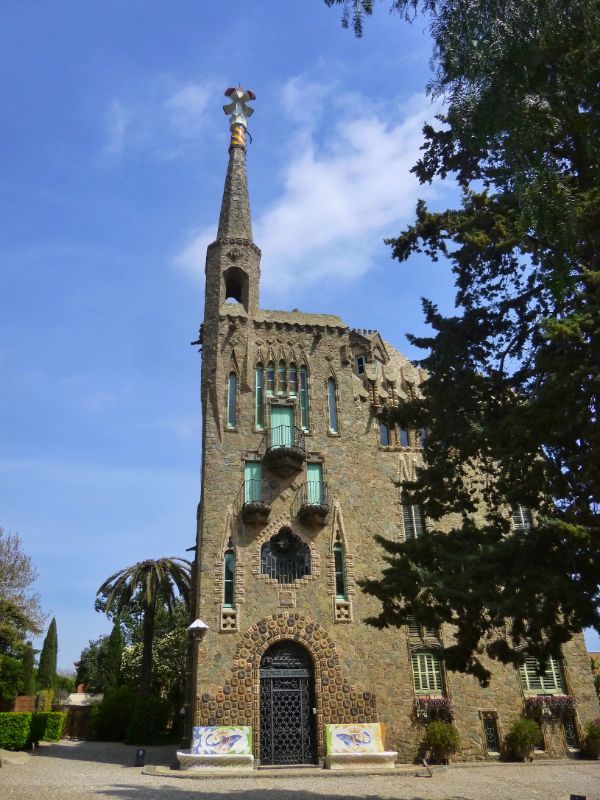
Built on the slopes of the Tibidabo mountain in Barcelona, Bellesguard was completed in 1909 and served as a private residence for the Figueras family. It is currently owned by the Guilera family, who still live in part of the house.
The building’s design is characterised by its medieval-inspired features, including pointed arches, battlements, and stone facades, which pay homage to the site’s history, which is believed to have been the location of a medieval castle.
Gaudí’s signature touches are evident throughout the building, with modernist details such as twisted chimneys, colourful ceramic tiles, and intricate wrought-iron work adding a touch of Gaudí flair to the design.
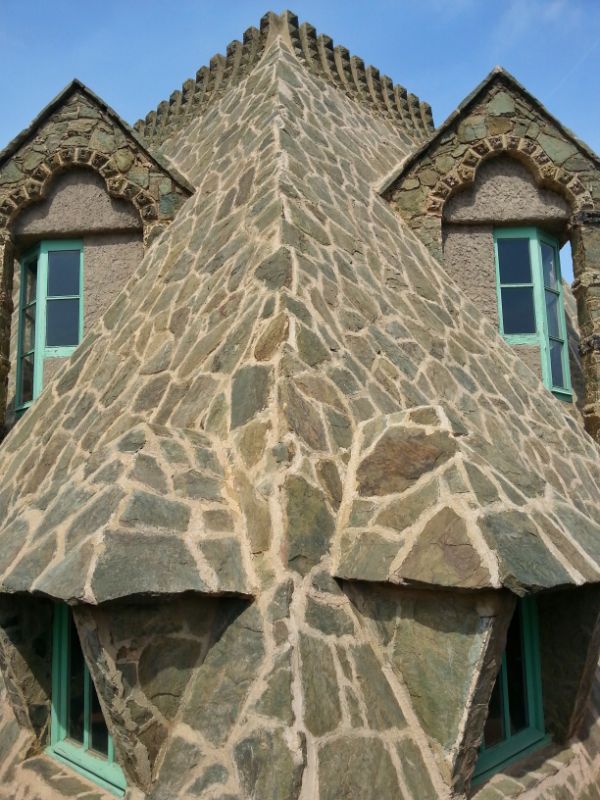
One of the most striking features of Bellesguard is its distinctive tower, which rises above the surrounding landscape, offering panoramic views of Barcelona and the Mediterranean Sea. Go up onto the rooftop to see it is built in the shape of a dragon’s head with eyes as windows staring at you.
Inside, the building features a series of spacious rooms and corridors adorned with elaborate woodwork, stained glass windows, and decorative motifs inspired by nature and Catalan folklore, and a lovely entrance hall.
How to Visit Bellesguard
Access to this unusual Gaudí house is only available if you book a ticket in advance. Bellesguard is closed on Mondays, but you can buy a ticket for most other dates (except holidays) for entry between 10am and 2pm. Guided tours in English, Spanish and Catalan are also available at the weekend.
➡️ Bellesguard Entry Ticket with Optional Guided Tour
Casa Calvet
Location: C/ de Casp, 48, Eixample, 08010 Barcelona
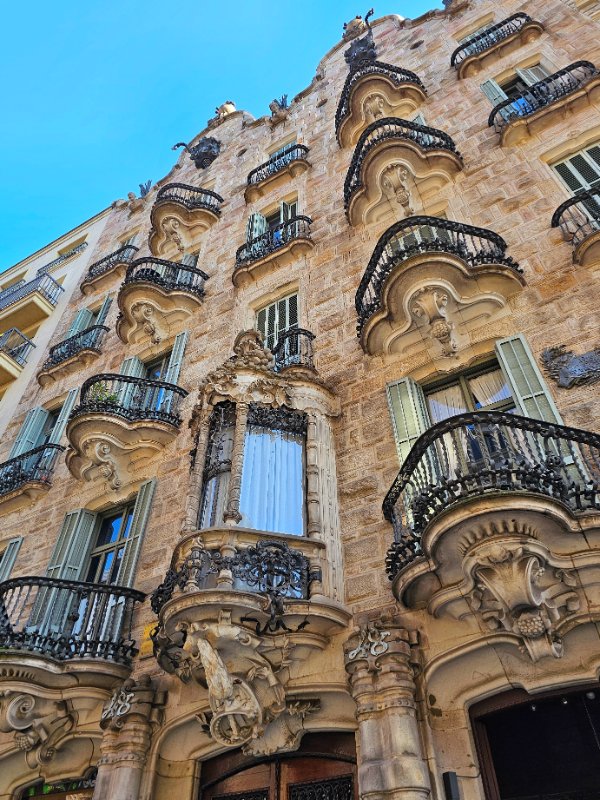
Casa Calvet is one of Gaudí’s earliest and most conservative designs, with a more conventional appearance compared to Gaudí’s later works, and you could easily walk past it and not realise it is a Gaudí house at all!
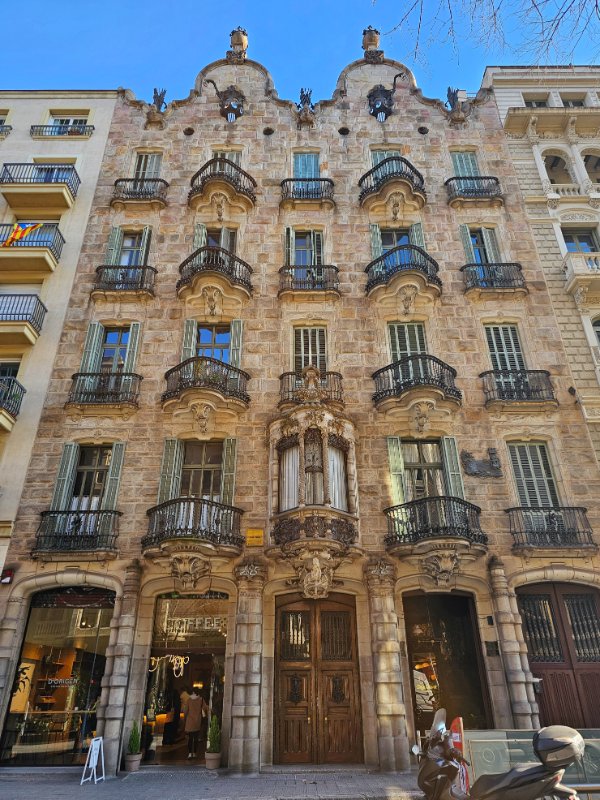
That said, when you look closer, Casa Calvet still bears the architect’s distinctive touch, with nods to nature and innovative elements that set it apart from the surrounding buildings.
Commissioned by textile manufacturer Pere Màrtir Calvet, Casa Calvet was completed in 1899. The lower level and basement were used as business premises for Calvet, and the upper floors were his private residence.
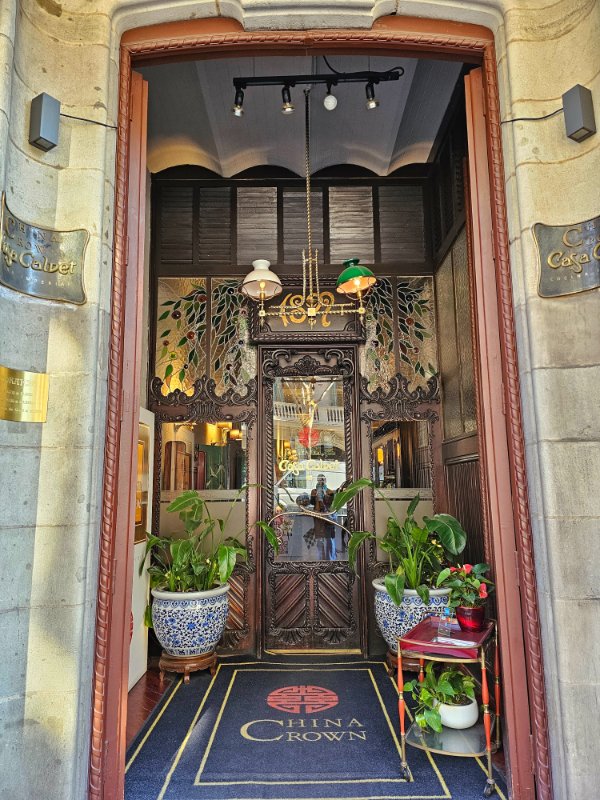
Casa Calvet has ornate balconies, sculptural reliefs, and intricate ironwork showing Gaudí’s attention to detail. Gaudí also incorporated references to Calvet and his career like the columns at the entrance designed in the shape of cotton bobbins, and the initial “C” over the house’s door.
Inside, the building features a series of elegantly proportioned rooms and corridors, with richly decorated ceilings, stained glass windows, and decorative tilework.
How to Visit Casa Calvet
You can’t visit the interior of Casa Calvet unless you dine at the Chinese restaurant that now occupies the ground floor. However, it is worth passing by to see Gaudí’s more restrained architectural style if only to contrast it with his more flamboyant designs!
Other Gaudí Works in Barcelona You Cannot Miss!
I know this article is about the Gaudí houses in Barcelona, but I can’t talk about Gaudí and not mention his most famous designs!
Sagrada Família (Basilica and Expiatory Church of the Holy Family)
Location: C/ de Mallorca, 401, L’Eixample, 08013 Barcelona
➡️Buy Sagrada Familia entry tickets here
This is perhaps Gaudí’s most famous work, begun in 1882 and still under construction more than 100 years later. La Sagrada Familia is one of the most iconic landmarks in Barcelona, and a symbol of the city. No visit to Barcelona is complete without at least admiring this incredible Gaudí building from the outside.
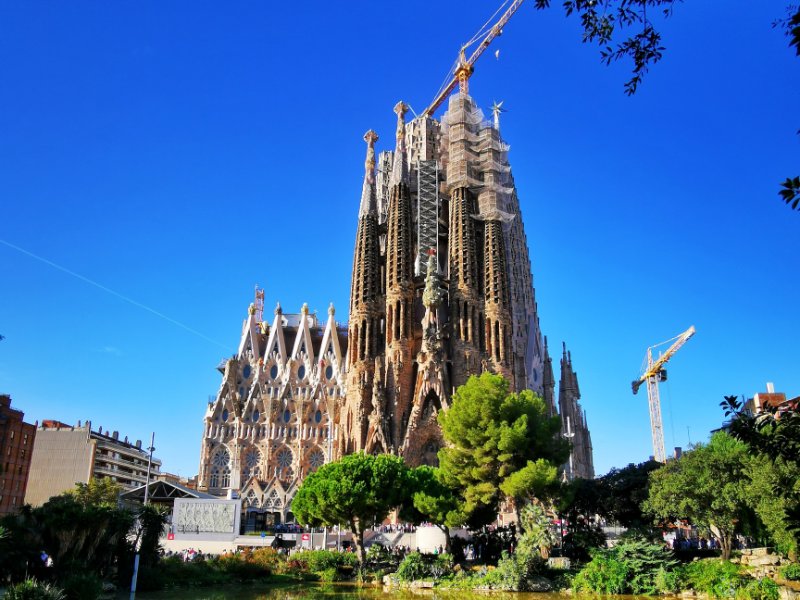
La Sagrada Familia is a huge cathedral in Barcelona, known for its unique design, which features a combination of Gothic and Modernist architectural styles and draws heavily on the influence of nature.
Gaudí dedicated his life to the construction of the Sagrada Familia and worked tirelessly for 43 years to realise his dream of building a “temple of light” in honour of the Holy Family. Unfortunately, he was killed by a tram in 1926 and never got to see his masterpiece completed.
The basilica’s towering spires, inspired by the forms of trees and natural rock formations, reach towards the heavens, and when it is completed, the central and tallest tower, dedicated to Jesus Christ, will be a whopping 172.5 metres high, making it the tallest building in Barcelona.
Yet the tower will not surpass God’s own work – Gaudí believed that whatever humans did, they should never aim higher than God or nature – so Montjuïc Hill at 177 metres high, set a natural limit for Gaudí’s designs for the Sagrada Familia.
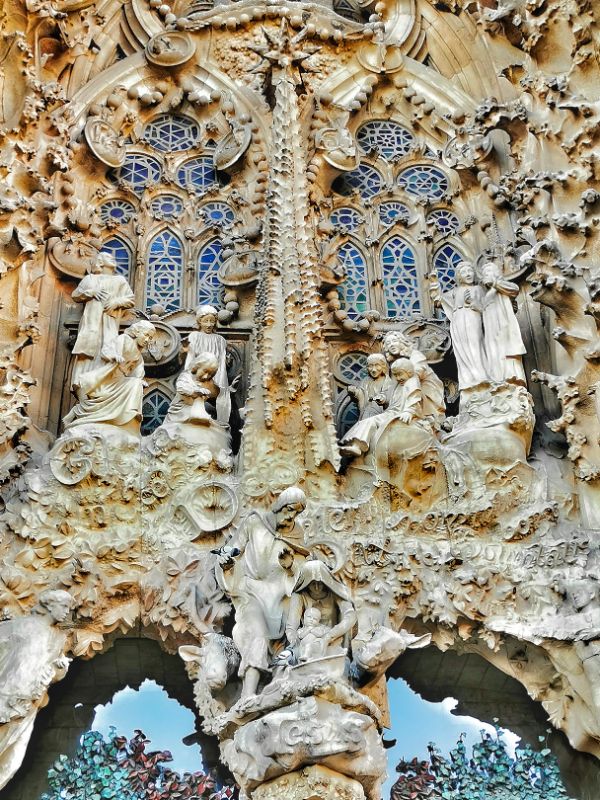
The two main façades of the cathedral – the Nativity and the Passion Façades – are covered with intricate sculptures and decorative elements that narrate the story of Christ and the Christian faith, from his birth on the Nativity Façade to his death and resurrection on the Passion Façade.
Inside, awe-inspiring columns resembling a forest canopy support the roof, and stained-glass windows cast a rainbow of light which changes colour as the sun shines on different sides of the Cathedral. It is also possible to climb the Sagrada Familia towers for views of Barcelona.
How to Visit La Sagrada Familia
It is hard to miss La Sagrada Familia as it stands tall above the city. Take time to stroll around the parks on either side of the Sagrada Familia to enjoy different views of the Basilica – My favourite views of the Sagrada Familia are from across the pond in Plaça de Gaudí where you can view the Nativity Façade, but you can also get nice views from the opposite side, the Passion Façade and the park across the street.

While this will give you a glimpse into Gaudí’s immense talents as an architect, it is definitely worth going inside La Sagrada Familia to get the full experience. It is one of the most popular things to do in Barcelona, so I’d highly recommend booking your tickets in advance as queues to buy tickets on the day can be horrendous.
Tickets are allocated for specific times, so book your tickets online to guarantee you can enter at the time you want. Tickets include fast-track access to avoid the queues and an audio guide for your phone.
There is also an extra option to add access to one of the Sagrada Familia towers to your ticket – either the Passion Façade or the Nativity Façade Towers, which both have gorgeous views of the city. Access to the tower will be exactly 1 hour after your selected time to access the Basilica.
To learn more about Gaudí’s designs and to spot details you might miss alone, a guided tour is a great way to get more information about the Sagrada Familia than it is possible to get on your own. Your guide will point out hidden gems and secrets of the basilica as you walk around the interior and exterior of the Sagrada Familia.
After the tour, you have as much time as you like inside to revisit areas of the basilica at your own pace. There are two options for guided tours, one without access to the towers, and one which includes tower access.
➡️Sagrada Familia Entry Ticket with Audio Guide
➡️Sagrada Familia: Fast-Track Access Guided Tour
➡️Fast-Track Sagrada Familia and Towers Guided Tour

Park Güell
Location: Park Guell, Gràcia, 08024 Barcelona
➡️Buy Park Güell entry tickets here
Another one of Gaudí’s most iconic creations and a favourite for visitors, Park Güell was designed to be a housing estate and garden city project on the hill above Barcelona, and shows Gaudí’s visionary approach to urban planning as well as architecture.

One of my favourite places in Barcelona, Park Güell was designed by Gaudí as a kind of housing estate commissioned by Eusebi Güell, and he envisioned houses up on the hillside overlooking Barcelona amidst picturesque gardens.
The idea never quite took off, and only 2 of the anticipated 60 houses were built when construction was abandoned in 1914. Sr Güell passed away in 1918, and his heirs sold the park to the City Council which opened it as a municipal park in 1926.
Now visitors can enjoy walking around the park and admiring Gaudí’s famous mosaiced tilework (known as trencadis) on the large terrace and serpentine bench, and the dragon statue that adorns so many postcards of Barcelona.
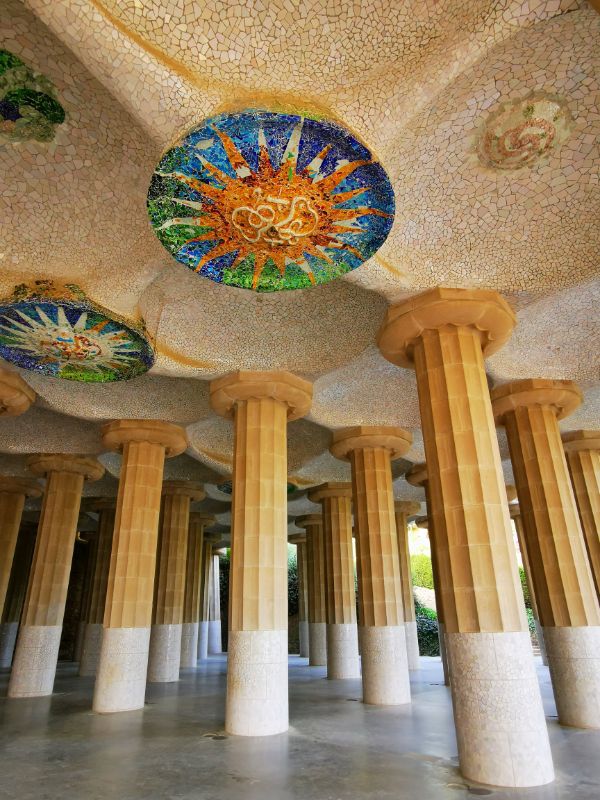
Throughout the park, you’ll encounter a series of structures that at first glance appear to be purely cosmetic yet also have a practical function, such as the Hypostyle Room with its forest of twisting columns, which was originally envisaged as a marketplace.
The terrace above has wonderful views of Barcelona and the Mediterranean Sea, and was designed as a catchment area for rainwater washing down the hillside, where the water is filtered through stone and sand and drains down the columns to an underground cistern.
Take time to explore the rest of the park as well as the famous parts, the views get better and better the further up you go. Once you’ve had your fill, I’d recommend leaving through one of the exits at the top to visit the Mirador de Joan Sales, one of the best views in Barcelona.
How to Visit Park Güell
You can only access Park Güell with a ticket. Entrance used to be free, but then a fee was introduced for the “monumental area” and now the whole park is restricted to ticket holders only. You can see the outdoor wall which runs around the bottom section of the park, and part of the gateposts from the outside, but it’s only €13 to go inside so it’s worth the money!
Park Güell is quietest in the morning, which is best for photos of the Dragon Statue and other monumental areas like the Hypolyte Room without crowds of people, but the sun shines down directly on the terrace area which makes photos of the iconic mosaic and view from the terrace difficult with the glare from the sun.
I prefer to visit in the late afternoon, when most of the tour groups have left, and the sun has moved around enough to allow for photos of the blue sky and Mediterranean without the glare.
You will have to buy entry tickets for a specific time slot when you must enter the park, but you can stay for as long as you like to explore. Entry tickets include an audio guide. Alternatively, join a guided tour to Park Güell.
➡️ Park Guell Guided Tour with Skip-the-Line Access

Lesser-Known Barcelona Gaudí Designs
Colònia Güell Crypt
Location: Carrer Claudi, Carrer Reixach, s/n, 08690 La Colònia Güell, Barcelona
➡️Buy Colonia Güell Crypt entry tickets here
Commissioned by Eusebi Güell in 1890, Colònia Güell was a factory complex and worker’s colony designed to provide housing and amenities for the employees of Güell’s textile factory. The Crypt of the church at Colònia Güell is particularly impressive.
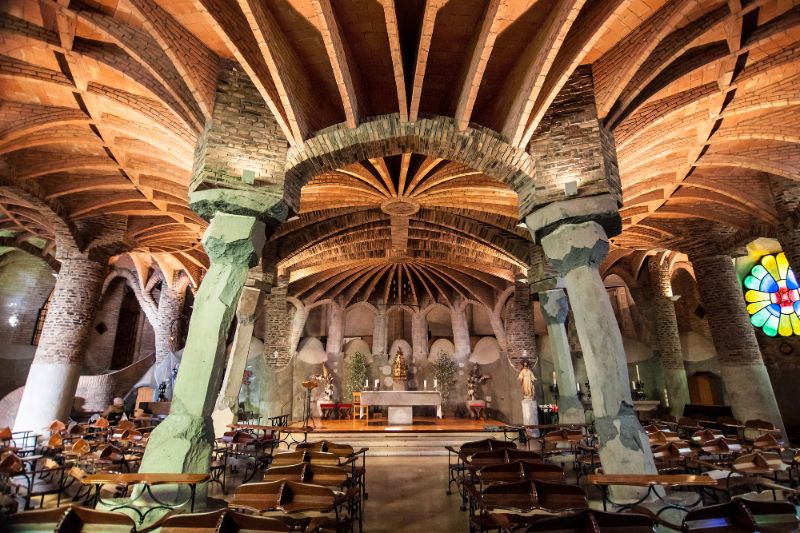
Colònia Güell, in the town of Santa Coloma de Cervelló just outside Barcelona, is a lesser-known yet significant architectural project by Antoni Gaudí.
One of the key features of Colònia Güell is the crypt of the church, known as the Crypt of the Colònia Güell, which Gaudí designed as a prototype for his later masterpiece, the Sagrada Família. The crypt showcases Gaudí’s innovative structural techniques, with a series of hyperbolic paraboloid vaults creating a striking religious space.
The project was never fully completed due to financial constraints, but despite its unfinished state, the crypt remains a testament to Gaudí’s genius and his ability to push the boundaries of architectural design.
In addition to the crypt, Colònia Güell also features a number of residential buildings, a school, a cooperative store, and other amenities designed by Gaudí and his collaborators. While these structures may lack the grandeur and scale of Gaudí’s more famous works, they still reflect his distinctive architectural style, with organic forms, colourful tilework, and intricate details.
How to Visit the Crypt of Colònia Güell
As Colònia Güell is outside of Barcelona city centre it is a bit harder to get to, although it is accessible by public transport. Before making your way there I would recommend buying your entry tickets in advance to make sure you don’t have a wasted trip! Tickets include an audioguide.
➡️Colonia Güell Crypt entry tickets with Audioguide
Lampposts in Placa Reial
Location: Pl. Reial, Ciutat Vella, 08002 Barcelona
The lampposts in Plaça Reial were among the earliest public works commissioned to Antoni Gaudí. Designed in 1878, when he was just 26 years old, these Gaudí lampposts reflect the architect’s early experimentation with organic forms and decorative elements inspired by nature.
Each lamppost features a wrought-iron structure with intricate details, and two snakes coiled around the central post which is topped with a winged helmet. It’s interesting to see the development of Gaudí’s works in Barcelona from a simple lamppost to the iconic Sagrada Familia, which has become a symbol of the entire city!
How to Visit Gaudi’s Lampposts in Placa Reial
The lampposts are in the centre of the square in full view so you can visit these at any time for free. There are also 2 more on the Pla de Palau in El Born here.

The Pavellons de la Finca Güell
Location: Av. de Pedralbes, 7, Les Corts, 08034 Barcelona
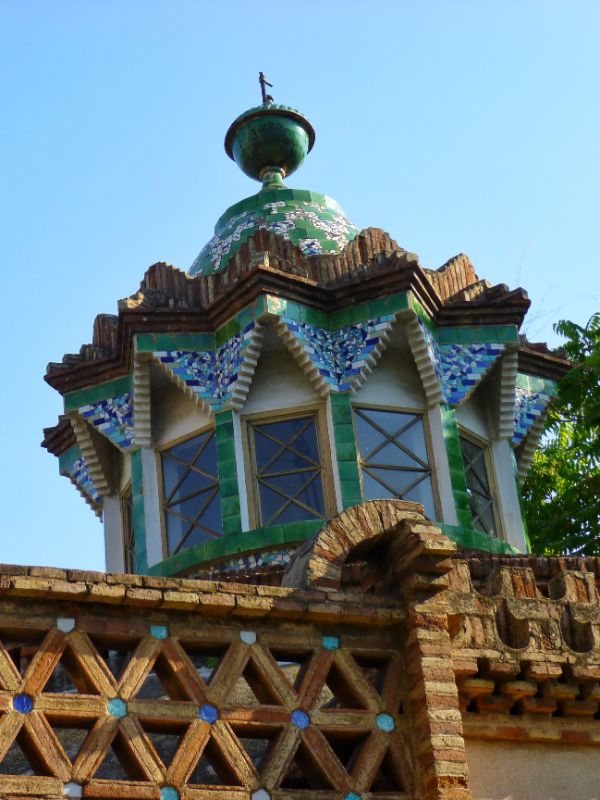
The Pavellons de la Finca Güell, located within the grounds of the Güell estate in the Pedralbes neighbourhood of Barcelona, represent another unique architectural gem designed by Antoni Gaudí.

Another commission by Eusebi Güell in the late 19th century, these pavilions served as gatehouses and stables for the Güell estate, showcasing Gaudí’s innovative approach to architectural design even in smaller-scale projects.
Each pavilion exhibits Gaudí’s distinctive style, with natural shapes, colourful tilework, and intricate wrought-iron detailing, but the stand-out feature is the wrought-iron gate in the shape of a dragon, that connects them.
How to Visit The Pavellons de la Finca Güell
The pavilions are closed to visitors, apparently undergoing renovations, and from the outside, you can only see the gate and the tops of the buildings peaking over the walls.
While it is fascinating to see, as it is outside of the centre of Barcelona I would only recommend visiting if you also plan to visit the Pedralbes Monastery, Pedralbes Royal Palace and/or the Parc de Cervantes which are all in the area.
Finca Miralles Gate
Location: Passeig de Manuel Girona, 55, 57, Sarrià-Sant Gervasi, 08034 Barcelona
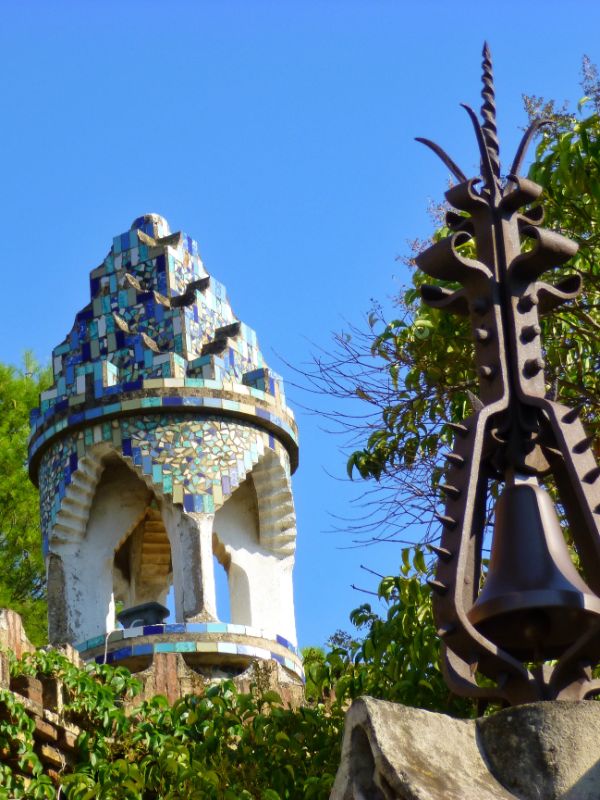
Gaudí designed this entrance gate to the property of the industrialist Hermenegild Miralles in 1901. It is a small and probably the least-known of Gaudí’s designs in Barcelona, but with curved lines and white trencadis mosaics typical of his work.
It was restored in 2000, and while the Finca Miralles property has long gone, the gate remains as another part of Modernist design in Barcelona that you can visit for free. Standing in the gateway, you can find a statue of Antoni Gaudí, made by the Catalan sculptor Joaquim Camps as a tribute to the master of Modernism.

Font D’Hercules (Hercules Fountain)
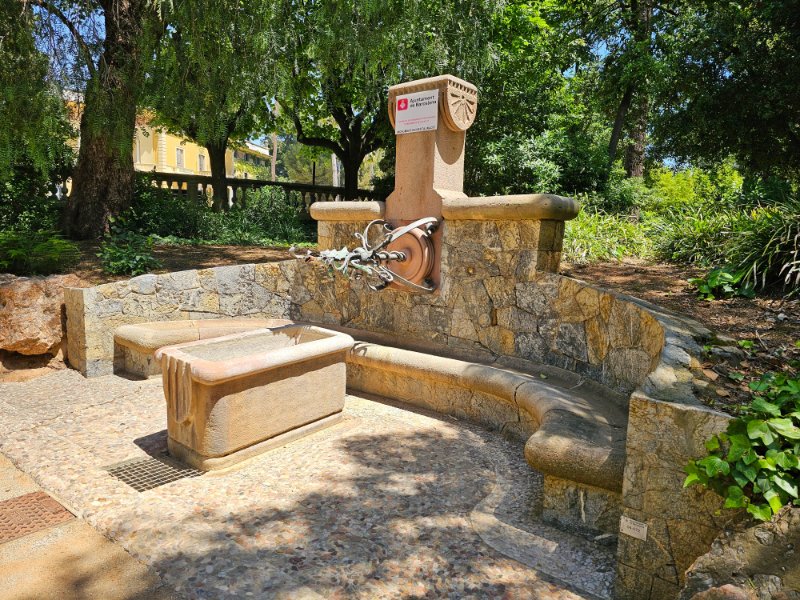
This fountain was undergoing renovations when I visited, and I must say I was underwhelmed – but it’s a short walk from the Pavillions gate so if you’re in the area you may as well pop in. This fountain was designed by Gaudí in 1884 and is set in the gardens of Pedralbes Palace.
Col·legi de les Teresianes
Location: C/ de Ganduxer, 85, 103, Sarrià-Sant Gervasi, 08022 Barcelona
The Col·legi de les Teresianes, also known as the Teresian School, is in the Sarrià-Sant Gervasi district of Barcelona and was designed by Gaudí after he took over initial work from an unknown architect. The building was completed in 1889 and has been a school ever since.
It isn’t open to the public, but it is obvious from the outside that it is unmistakably Gaudí’s work. The façade of the school features colourful ceramic tiles, sculptural reliefs, and wrought-iron work. Inside, Gaudí uses his trademark style to create high ceilings and lots of natural light.
I hope this has given you a good overview of Gaudí’s houses in Barcelona, and shown you how to visit some of Gaudí’s best and least-known works in the city.
If you have more questions about Modernist Architecture in Barcelona I am working on another article which includes more wonderful Modernist buildings by some of the other architects of the period such as the Palau de la Música Catalana and the Hospital de Sant Pau by Lluís Domènech i Montaner, and Casa Amatller and Casa de les Punxes designed by Josep Puig i Cadafalch.
Please leave me a comment below if there is anything else I can help with!