
Most of the 4.8 million people who visit La Sagrada Família every year have no idea that the fastest animal on earth is stalking its prey in the skies above them.
Would you be surprised to learn that a pair of peregrine falcons have been nesting at the Sagrada Família since 2003? They live in a nest box set up there as part of a project that the Barcelona City Council and Galanthus Natura launched in 1999 to reintroduce the falcons to the city, and get along well despite the ongoing building work!
These magnificent birds of prey can reach speeds of up 280km an hour (around 174 miles an hour) in a hunting dive, folding their wings and tucking their feet in to create a perfectly streamlined pigeon-seeking missile!
(Cheetahs are the fastest land animal and can hit around 95–105 km/h (59–65 mph) to put this in perspective!)
La Setmana de la Natura – Catalonia Nature Week
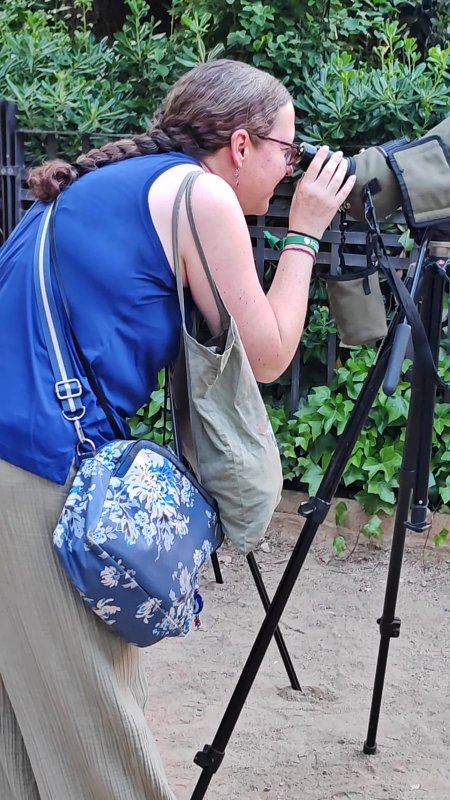
This week I had the chance to observe the Sagrada Família peregrine falcons at a small bird-watching event hosted by Galanthus Natura as part of La Setmana de la Natura (Nature Week) here in Barcelona and Catalonia. It was a free event, and there are lots of other nature events going on this week to discover the natural world in and around the city and across the region.
NB: The events are generally conducted in Catalan, although if you just want to see the birds that doesn’t need words. I asked some questions in Catalan and it definitely helped me learn more about them!
The Peregrine Falcon watching event was hosted by Eduard Durany and Sergi Garcia, two of the main driving forces behind Galanthus and the re-introduction of the falcons, and they were kind enough to share their knowledge (and telescopic gear!) with us.
I knew there was a nest in the Sagrada Familia, but I didn’t know exactly where it was, and it was fascinating to see the birds through a high-powered telescope as well as my own binoculars.
Peregrine Falcons in Barcelona
Peregrine falcons used to nest naturally in Barcelona in various high sites, including sites Santa Maria del Mar church tower, and La Sagrada Família, but the last confirmed breeding pairs in Barcelona disappeared in the 1970s.
Their decline and subsequent disappearance were mainly due to persecution by humans, in the form of shooting and egg collection, and the wider issues linked to pesticides like DDT.
La Sagrada Familia was chosen as a new nest box site specifically because it was one of the last places these birds nested and fledged chicks before disappearing from the city.
The project has been a success, and there are now around 7 breeding pairs of peregrine falcons in the city of Barcelona, and more in the surrounding areas.
The exact nest locations aren’t all publicly advertised (to protect the birds) but several sites are well known, including La Sagrada Familia, a natural nest established by a pair on the cliffs around Montjuic, Torre de Collserola communications tower on Tibidabo and Torre Jaume I cable car tower by Port Vell.
La Sagrada Familia Peregrine Falcon Nest
The Sagrada Familia is a well-protected site, so I’m happy to reveal the exact location of the nest so you can look out for the birds yourself.
We set up in the Plaça de la Sagrada Familia, on the Passion Façade side of the basilica, on the edge of the park in front of the Michael Collins pub (Google Maps location here). There is a clear view of the façade from here, and we had space to set up the telescopes.
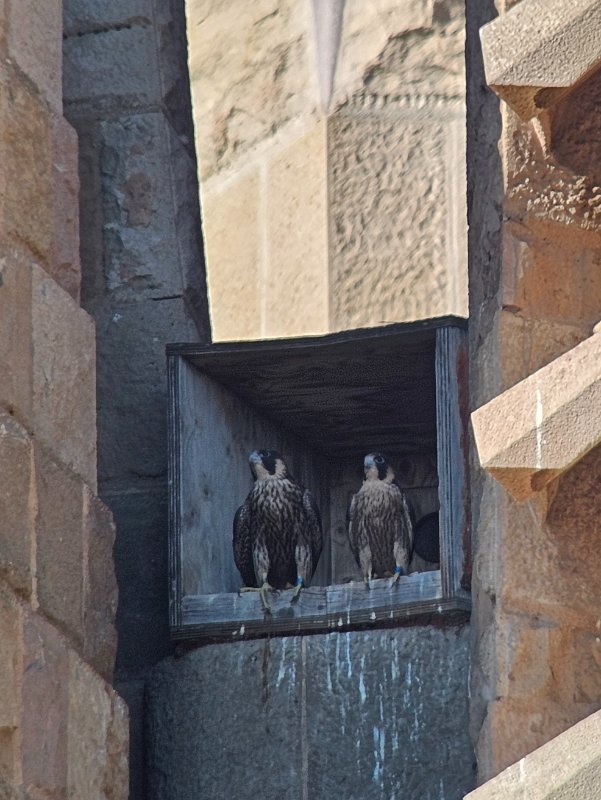
The nest is between the two left-hand towers, around half-way up the left tower. If you didn’t know it was there you would never see it, and I wonder how many people have a photo of this and no clue what is hidden in plain sight!
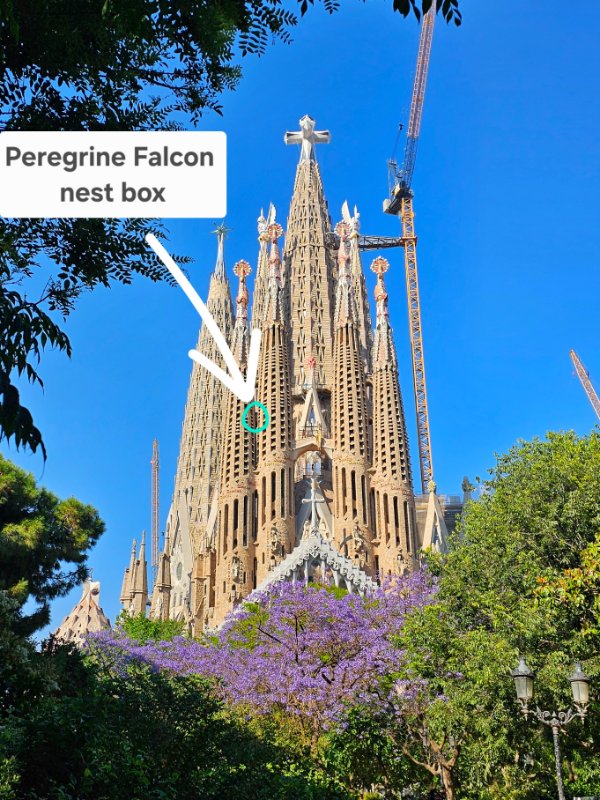
You can just about see the nest with the naked eye, but I got a decent view with my binoculars, and a much better view through the telescopes. If you move closer to the basilica, knowing where the nest is, you can get a closer look, but from here, with the right gear, you can see them without straining your neck!
You can also spot the adults flying overhead (listen out for their screeching calls) and if you’re lucky you might catch them in a hunt. We weren’t that lucky but did see one of the adults flying, and the adult female snacking on a tasty pigeon, perched on one of the tower’s mosaic decorations.
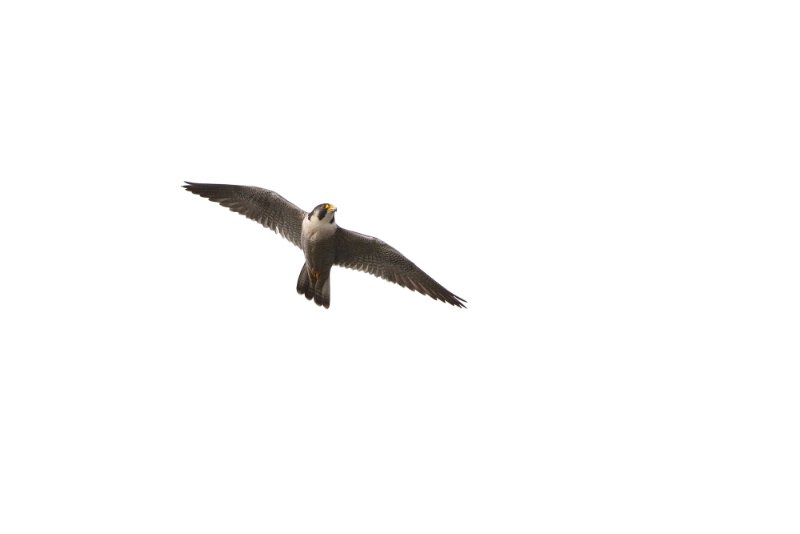
What to Look For
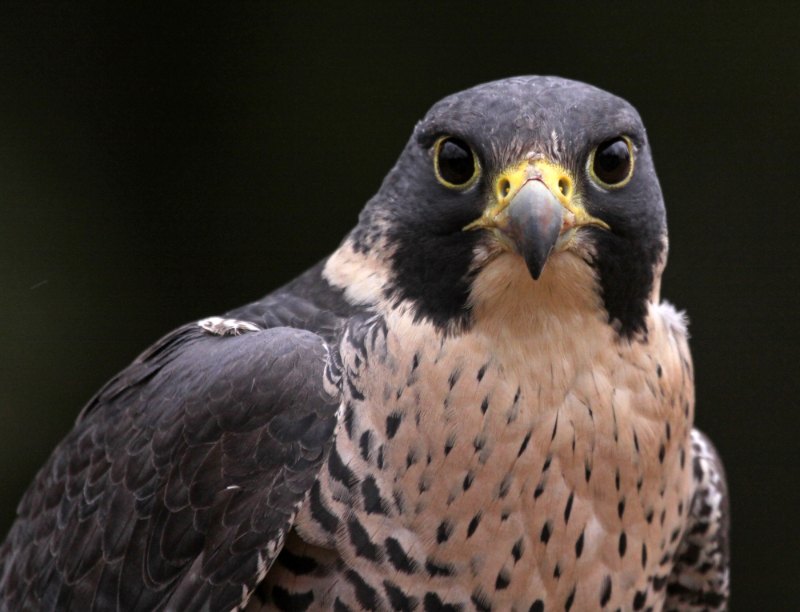
Peregrine falcons are medium-sized birds of prey, around 34-58 cm long with a wingspan from about 74-120 cm. Females are noticeably larger than males, but otherwise they look very similar.
They have blue-grey back and wings, a pale underside with fine dark stripes, with a distinctive black “moustache” mark (called a malar stripe) on its white face and a hooked beak typical of raptors.
The wings are long and pointed, and the tail is relatively short, giving it a compact, aerodynamic shape in flight.
A Peregrine Falcon Success Story
Between 2005 and 2025, 54 chicks were born at La Sagrada Familia, and this year there are 2 chicks in the nest, and they are almost ready to leave. The two chicks hatched on 12th April 2026, along with another which sadly died after falling from the nest shortly after.
View this post on Instagram
The chicks stay in the nest for 6 to 7 weeks, before taking their first flight above Barcelona. You can watch the chicks’ progress live on a webcam installed in the nest. They have grown a lot in the last few weeks, from fluffy white chicks to large birds which look like they could fly at any minute!

I’ve been keeping an eye on them and can see them start to stretch their wings and build up the flight muscles before the take the plunge! You can see how they are doing on the Youtube Livestream here:
UPDATE 25 May 2026: I just looked at the livestream and the chicks have fledged and are no longer in the nest! I was so lucky to see them just before they left – you may still be able to see them and their parents flying around the area of La Sagrada Familia as they learn to hunt over the next few weeks, so keep your eyes peeled.
Look out next spring for the next batch! The livestream will be back next year when the adults lay eggs again.
After fledging the young falcons will stay in the area for several weeks while they practise flying and hunting. They often roost on nearby buildings, or trees rather than returning to the nest itself, and the parents continue feeding them until they become fully independent, usually a couple of months later.
Then they begin their lives on their own, and hopefully find a mate and begin breeding in 3 or 4 years, if they secure a nesting site. Suitable nesting spots on tall buildings and churches can be limited, so younger birds often have to wait until an established adult dies or moves away before they can claim a territory. Having a project like this with some man-made nest sites helps the birds find a good spot to nest.
Peregrines are generally monogamous and often return to the same nesting site with the same partner year after year. A successful pair may breed together for many seasons.
In cities like Barcelona, the falcons are well fed with a diet of pigeons, and other birds such as swifts, starlings, parakeets and doves. Looking at the mass of feathers and bits of wings left in the nest, pigeons and doves are their favourite!
A breeding pair of peregrine falcons can take anywhere from 500-1,000 birds per year, and there is no shortage of those in Barcelona, in fact, the falcons help to control their population.

Bird Watching in Barcelona
I discovered a love for birdwatching during the pandemic, when a walk through a small wood near the house was my only escape! I love listening to birds and watching them glide through the air.
Other birds I have spotted in Barcelona include kestrels, which I’ve been lucky to see from my apartment window (I live on the top floor), and also around the Escola Industrial in Eixample.
Any parks and gardens are good places to spot birds, around Park Guell is a nice area to explore; I saw some hoopoes there.
Ciutadella Park is home to a surprising number of species, most famously the cute green monk parakeets, but also little egrets, grey herons (that I’ve also seen flying over the city), mallard ducks and greylag geese on the pond, and lots of smaller resident birds like blackbirds, robins, starlings and more.

Please don’t feed the birds, there is enough for them to forage naturally. There are several people who tempt tourists with sunflower seeds to have the parakeets feed from their hands, but that can’t be good for these little birds to gorge themselves on seeds and apples all day! And then these men will demand money from you, so as cute as they are snap a photo of them feeding naturally instead of giving them something.
After this wonderful experience getting to know the Sagrada Familia peregrin falcons, I’m looking out for more nature-related activities in Barcelona and beyond. It’s reminded me that there is more of Barcelona to explore, and even in the most unlikely of places, nature thrives. Have you seen the falcons at the Sagrada Familia? Let me know in the comments!